
The price on the invoice seems fine. Then you pull last month’s invoice and realize the same case is more expensive. Has the contract changed? And the distributor used a different pack? Or has nobody looked at the rate recently? For restaurant teams buying hundreds of things, those questions come up more often than anybody wants. Price benchmarking can help answer them with actual purchasing data, not a hunch.
What Is Price Benchmarking in Foodservice?
For foodservice, price benchmarking is the comparison of your costs to a relevant comparison. This could be your negotiated rate, a quote from another distributor, a price from a similar location, or your own purchase history. It’s not about finding the smallest number on a spreadsheet. It’s about knowing you’re paying the right price for the product you’re actually getting.
Why Price Benchmarking Matters for Restaurant Operators
Restaurant prices move. That’s normal. What’s harder to accept is paying more than you should because the difference got buried in a pile of invoices. A regular price benchmarking check gives purchasing teams a chance to catch those gaps while there’s still something to do about them.
Identify Unfavorable Pricing
Imagine two restaurants buying the same brand and size of fryer oil. One pays noticeably more. There might be a legitimate delivery or volume difference, but you should know what it is before accepting the price.
Improve Purchasing Decisions
The cheapest item isn’t automatically the better buy. Yield, consistency, delivery reliability, and the work a substitution creates in the kitchen all matter. Benchmarking puts price into that bigger decision.
Monitor Supplier Pricing
A distributor can update a rate without anyone on the operations side noticing right away. Reviewing prices over time makes it easier to spot changes and ask about them before the next few orders go through.
Protect Food Cost Margins
A few extra cents per pound won’t look dramatic on one invoice. Across a high-volume protein, several stores, and a full quarter, it can add up fast. Catching that shift gives you options before it eats into margin.
What Should Foodservice Operators Benchmark?
Start with what you buy most, what costs the most, and what has been jumping around recently. Or trying to review all products at once is a great way to make this project no one’s favorite job.
Purchase Prices by Product and Category
Check the big categories—proteins, dairy, produce, oils, paper goods—but don’t stop at category totals. A single frequently ordered SKU can explain more of a cost increase than the rest of the category combined.
Supplier Prices
Look at prices from distributors that can supply the same approved item. Make sure you’re comparing delivered costs, not just the number printed next to the product description.
Contract Prices
Put the agreement beside the invoice. If the contracted price is $38 and the billed price is $41, the first question is whether the contract changed. The second is whether the invoice needs fixing.
Location-Level Prices
For multi-unit brands, location comparisons are especially useful. One store may have a different distributor, order pattern, or freight arrangement. Price benchmarking helps separate explainable differences from ones worth chasing.
How to Benchmark Foodservice Purchasing Prices
You don’t need a perfect system to begin. Pick a manageable group of products, gather recent purchases, and work through the differences. The trick is making the comparison fair.
Define the Products and Categories to Benchmark
Choose a few high-spend or high-volume products first. Chicken, cheese, cooking oil, and packaging are common places to look. Expand once the team knows what information it needs.
Standardize Product Specifications and Units
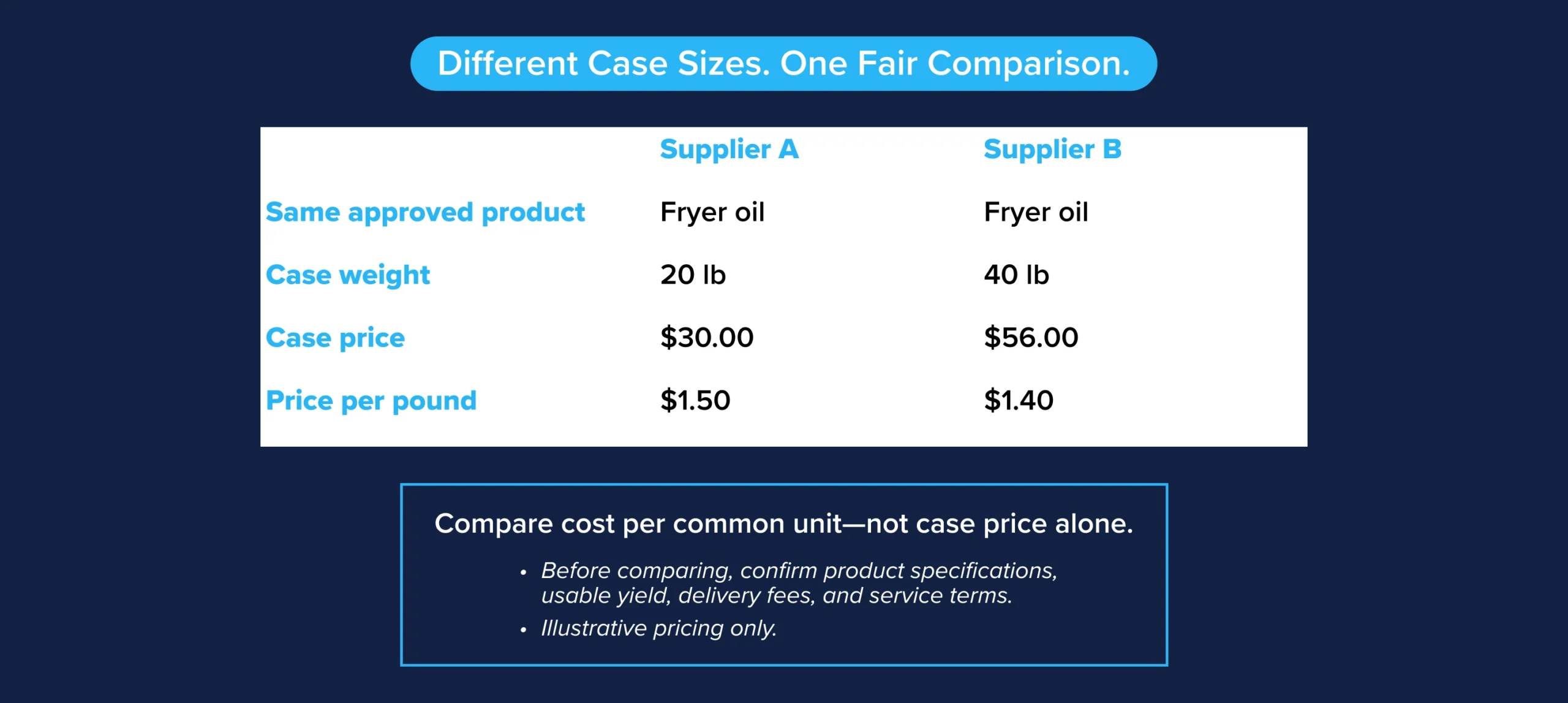
A 20-pound case and a 40-pound case don’t belong in the same comparison without some math. Match brand, grade, cut, count, and usable yield where relevant. Then compare cost per pound, ounce, or each.
Collect Comparable Pricing Data
Pull invoices from similar dates, contract records, and current quotes. If you’re comparing fresh produce, even a few weeks can make a difference. Record when each price applied.
Establish a Relevant Benchmark
Decide what ‘right price’ means for the item. It might be the active contract, a like-for-like supplier quote, or the average paid across similar stores. Different questions need different benchmarks.
Analyze Pricing Differences
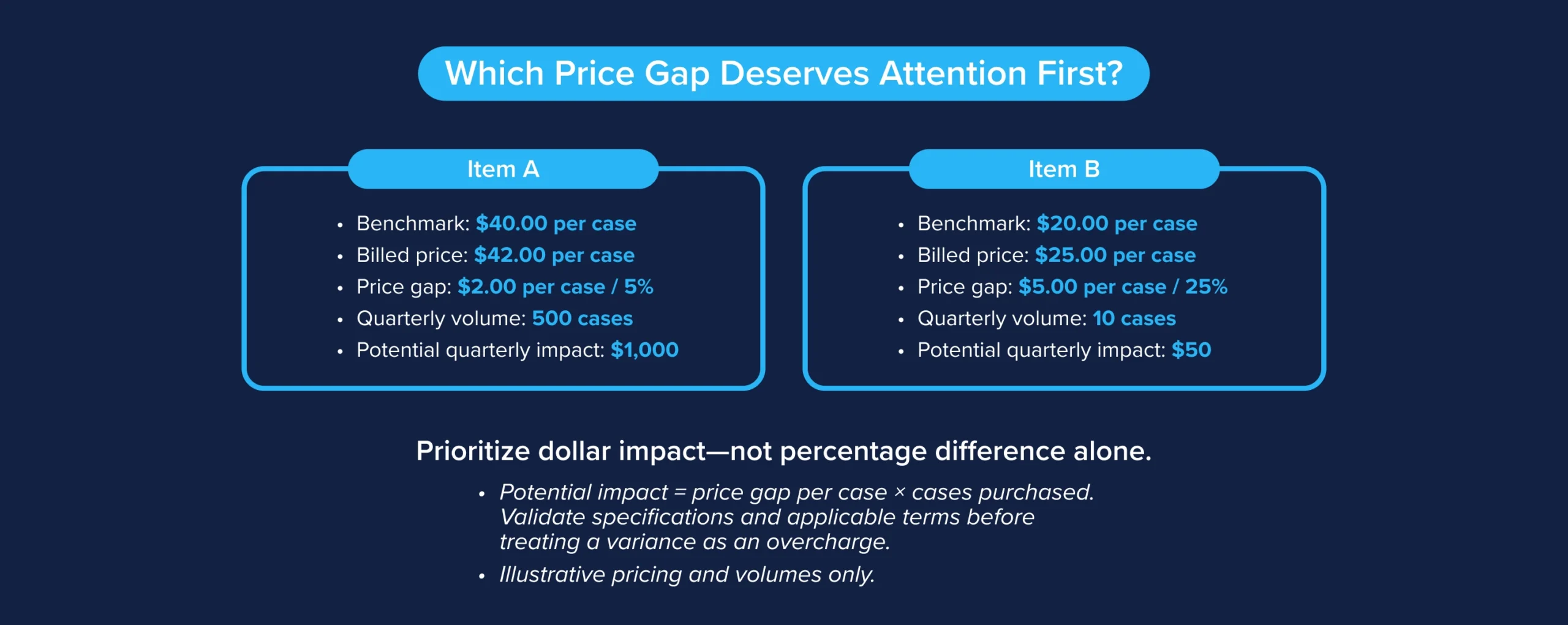
Work out the dollar and percentage gap, then look at purchasing volume. A $2 difference on a case bought twice a year is one thing. The same difference on 500 cases is another. Prioritize accordingly.
What Data Do You Need for Price Benchmarking?
This is where the work can get messy. Product descriptions, contracts, and invoice lines rarely arrive in one tidy format. Good price benchmarking depends on being able to tell which records belong together.
Product and Pack-Size Information
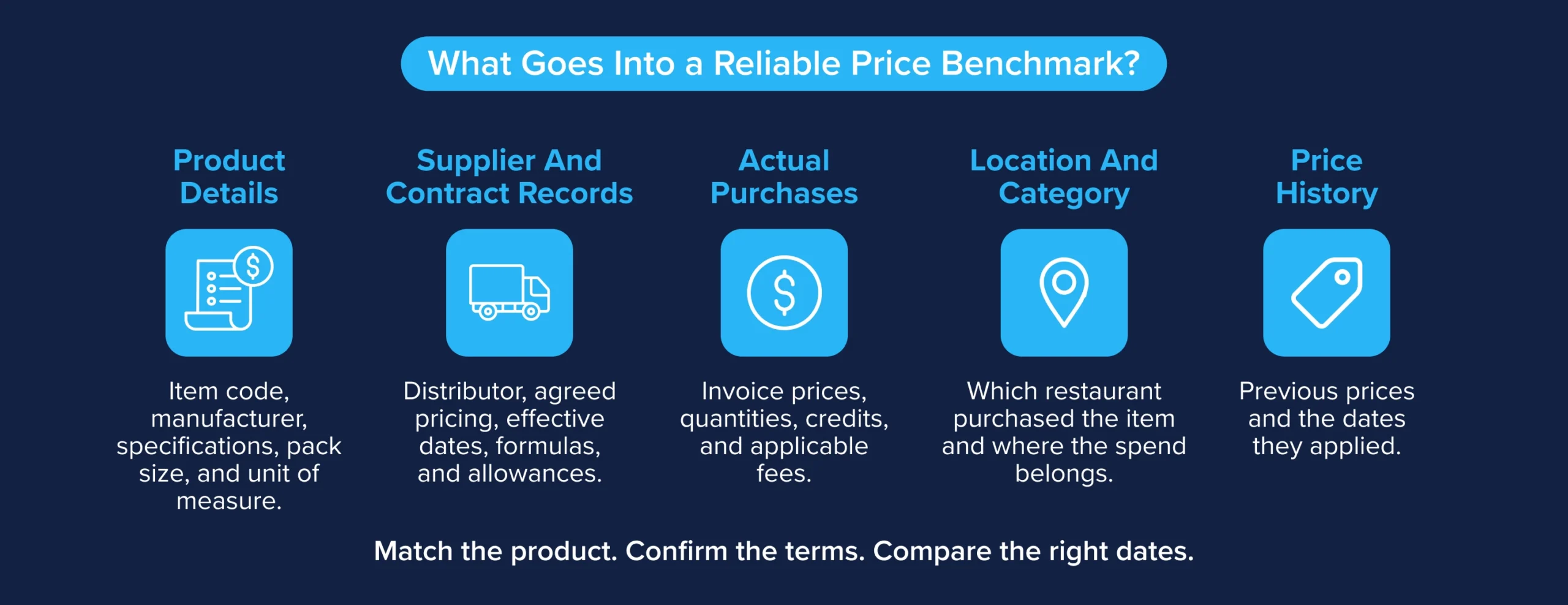
Keep the item code, manufacturer, description, case count, weight, and pack details. ‘Mozzarella’ won’t tell you whether two distributors are selling you the same cheese.
Supplier and Contract Data
Save agreements, effective dates, approved products, distributor assignments, and any pricing formulas or allowances. An expired rate can make a perfectly correct invoice look wrong.
Invoice and Purchase Data
Use what was actually billed, including quantities, credits, and relevant fees. A quoted price is useful context, but the invoice shows what left the budget.
Location and Category Data
Know which store bought the item and which category it belongs to. Otherwise you may spot a price problem without knowing where it happened or how much spend it affects.
Historical Pricing Data
Hang on to older invoice prices. Last week’s number might be unusual; three months of increases tells a different story. History also helps when a supplier says a change has been in place for a while.
How to Compare Prices and Identify Variances
A variance is simply a gap between two prices. It might point to a billing error, a contract update, a different product, or a valid regional cost. Don’t assume every gap is an overcharge.
Supplier Price Variances
Compare the same item, same unit, and similar buying period across suppliers. If one rate is higher, check freight, order minimums, and service terms before treating it as an apples-to-apples difference.
Contract Price Variances
A contracted rate and a billed rate don’t always match. Check the agreement’s start and end dates, pricing formula, and any approved adjustments before opening a dispute.
Location and Category Variances
Look for patterns rather than isolated outliers. If five stores pay one rate and a sixth pays more for the same approved item, there’s a useful question for the purchasing team.
Invoice-to-Contract Price Variances
Take the exact invoice line and match it to the applicable contract line. Confirm the item and unit, then document the difference. Clear records make a credit request much easier to resolve.
Common Price Benchmarking Challenges
Most benchmarking headaches start long before the analysis. One supplier calls an item ‘6/5 lb,’ another uses ’30 lb,’ and a third leaves out the brand. The numbers may be there, but the context isn’t.
Inconsistent Product Specifications
Two products can share a description and still have different grades, trim levels, or performance in the kitchen. Check the specs before labeling one supplier expensive.
Different Pack Sizes and Units of Measure
A case price tells you very little when the case sizes differ. Convert to a common unit and, when it matters, account for how much usable product you get.
Incomplete Supplier Data
Missing codes and vague invoice descriptions turn a quick check into a guessing game. Fix recurring data gaps with distributors rather than cleaning up the same problem every month.
Outdated Pricing Information
A quote from last season may be useless for a fast-moving category today. Keep dates attached to every benchmark and refresh the volatile ones regularly.
Lack of Comparable Pricing Data
Sometimes there isn’t a perfect outside comparison. Use a recent internal price or active agreement as a starting point, and note where the comparison has limits. An imperfect benchmark can still prompt a useful question.
How Price Benchmarking Supports Better Purchasing Decisions
The value isn’t in producing a beautiful report. It’s in knowing which phone call to make, which invoice to question, and which purchasing habit needs to change.
Investigate Significant Price Differences
Sort variances by their likely dollar impact. A modest difference on a top-selling menu ingredient deserves attention before a huge percentage jump on something you barely buy.
Support Supplier Negotiations
A supplier conversation goes better with specifics: item, pack, dates, billed prices, and volume. ‘This seems high’ is easy to dismiss. A documented pattern is harder to ignore.
Identify Opportunities Across Locations
If one restaurant has a better rate, find out why. Maybe it orders full cases or buys through a different agreement. Some opportunities can be shared across the system; others are location-specific.
Improve Purchasing Strategy
Use what you learn to update approved items, review contract terms, and plan category buys. Price benchmarking should influence purchasing decisions, not sit in a monthly report nobody opens.
How Often Should Restaurants Benchmark Food Prices?
Weekly review may make sense for high-volume items and volatile categories. For more stable purchases, a monthly check can work. Re-check every time a contract is renewed, a distributor announces a new price list, or a product substitution becomes the norm. Consistency is more important than choosing a flashy schedule you can’t maintain.
Concluding Words
Nobody has time to manually question every invoice line. But when you connect prices, contracts and purchase histories it’s a lot easier to find the differences that really count. ArrowStream Central helps foodservice teams consolidate that information, monitor pricing accuracy and make better purchasing decisions.
Want a clearer view of what you’re paying? Click here to contact ArrowStream to talk about your pricing and supply chain goals.
FAQ’s
What Is Price Benchmarking in the Restaurant Industry?
It’s checking the prices a restaurant pays against relevant references, such as contract rates, comparable supplier prices, or past purchases.
How Do Restaurants Benchmark Food Prices?
Start with important items, match the product specs, compare prices from the same period, and follow up on meaningful differences.
What Should Restaurants Include in a Price Benchmark?
Include product details, pack size, unit cost, invoice date, supplier, location, contract terms, and any applicable delivery fees.
How Can Price Benchmarking Help Identify Supplier Price Variances?
It shows where the same approved product is billed at different rates, so teams can check whether the difference is justified.
How Can Price Benchmarking Improve Restaurant Purchasing Decisions?
It gives buyers concrete information for supplier discussions, product choices, and decisions about where to focus cost-control work.
How Often Should Restaurants Benchmark Food Prices?
Review volatile or heavily purchased items weekly when practical. Monthly checks may be enough for more stable categories, with extra reviews after pricing changes.