

Foodservice manufacturers have access to plenty of data. The challenge is knowing what operators are actually buying and where demand is changing. Manufacturers also need to know which shifts deserve the sales team’s attention.
Consumer trends and menu activity offer useful food and beverage industry insights. So do distributor reports, commodity forecasts, and purchasing data. But fragmented or delayed information can leave manufacturers unaware of changes at the operator level. That might mean lost contract volume or an opportunity to win new business.
Demand visibility connects that information to what operators are buying now. Sales teams can spot changes sooner and focus on the accounts where those changes matter.
What Are Foodservice Insights?
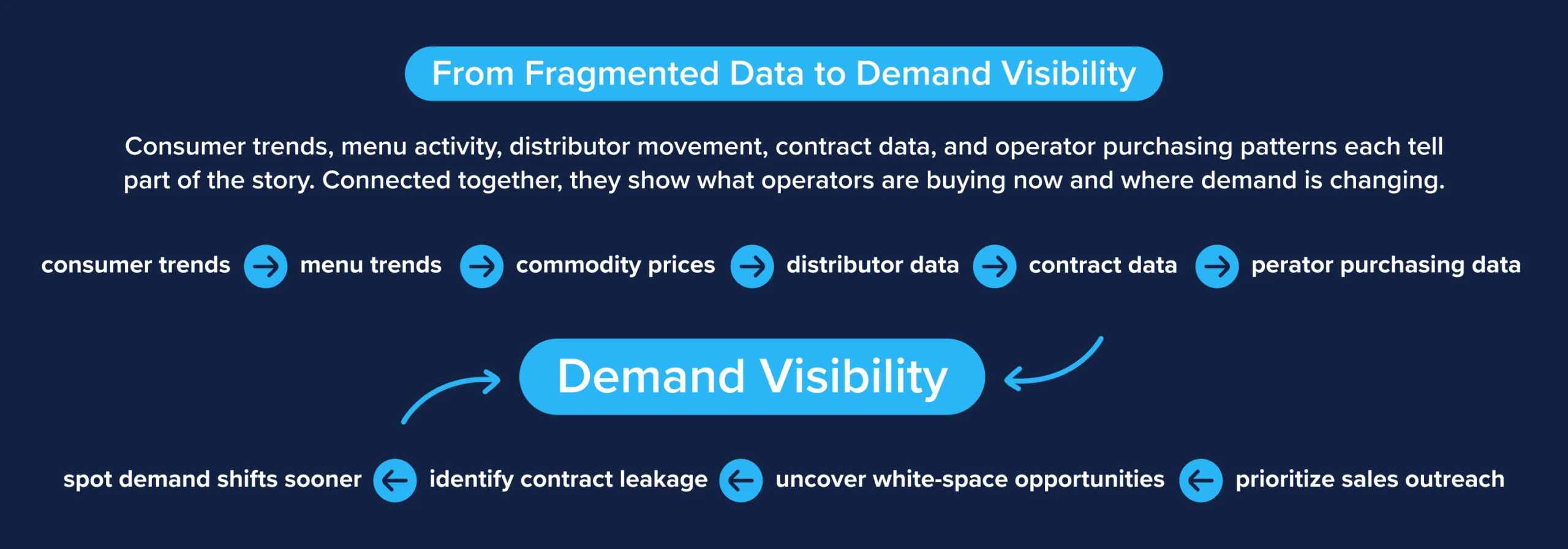
Foodservice insights help manufacturers understand what operators need and what they’re buying as demand changes. The information comes from a variety of sources including consumer research, menu trends, commodity prices, and operator purchasing patterns.
Different types of data tell different parts of the story. Consumer and menu research can point to emerging trends, and purchasing data shows whether those trends are influencing what operators buy. Distributor movement data tracks products through distribution, while operator-level data shows where those products ultimately go.
Together, these signals show manufacturers what is happening across foodservice and how those changes affect their own products and customers.
How Demand Impacts Manufacturer Revenue
Consumer preferences influence foodservice menus and eventually affect what operators source from manufacturers and distributors. Right now, those decisions are happening in a market where both consumers and operators are watching their spending.
Datassential reports that 72% of consumers have become more selective about where they spend money on food. In response, operators are focusing on value and tighter menus, and paying close attention to margins.
As operators rethink their food spend strategies, manufacturers need to know how those decisions might affect demand for their products. A menu change at a national chain might reduce volume for one SKU while creating demand for another, while a new value offering could require different portions or product specifications.
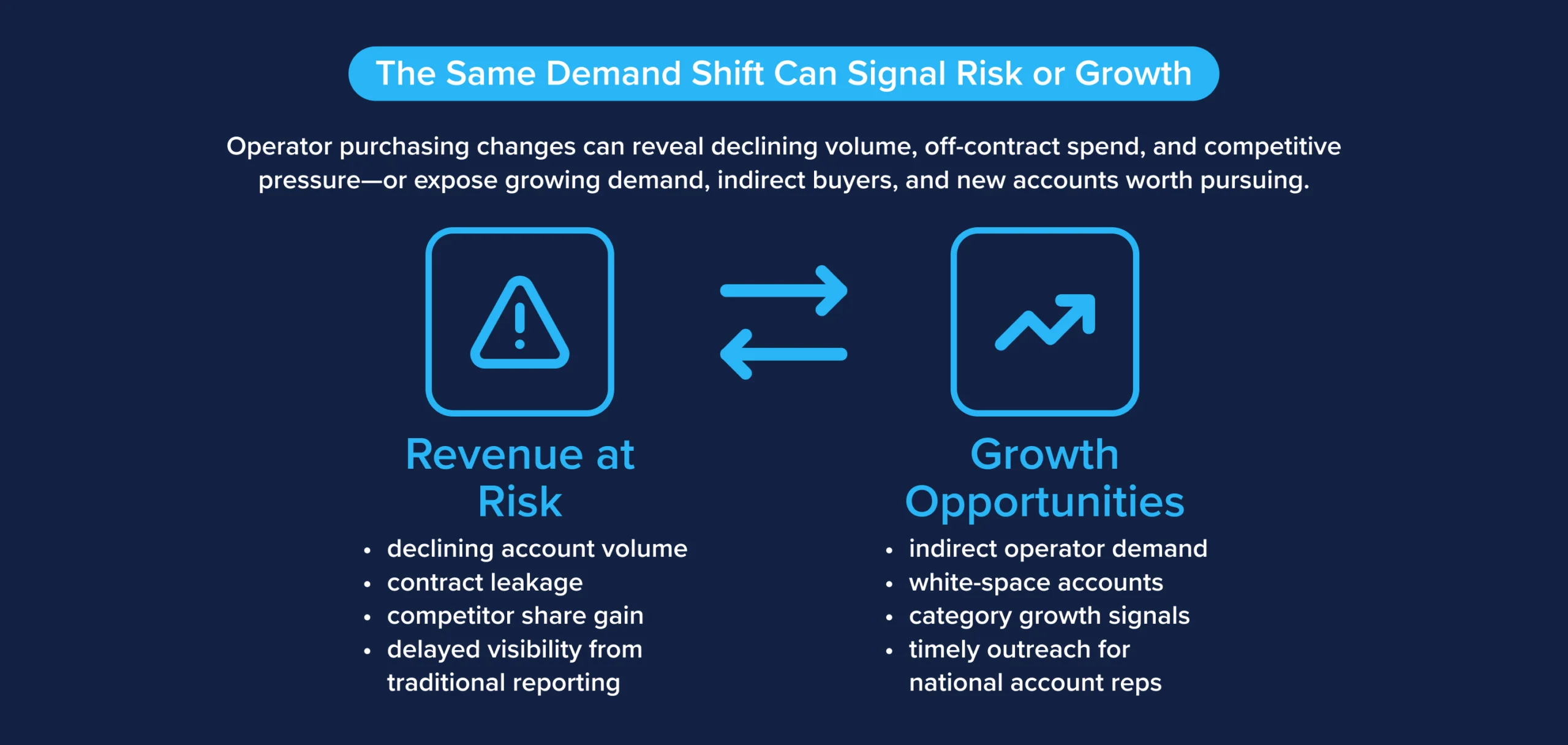
Purchasing data shows how those changes play out at the account level. Sales teams no longer have to wait for a quarterly report to discover lost volume. Instead, they can track purchasing patterns and investigate when an account starts moving in the wrong direction.
Key Market Drivers Impacting Strategy
Cost is one of the biggest forces shaping operator decisions. More than 70 percent of operators surveyed by Datassential cite food costs as a top operational challenge. More than half point to labor costs.
Those pressures influence both menu and purchasing decisions. Operators trying to reduce labor may look to prepared or portioned products that simplify kitchen operations, while higher ingredient costs can prompt substitutions.
Convenience influences foodservice demand as well. Innova Market Insights points to ongoing consumer interest in delivery and other convenient dining options, alongside expectations for freshness, reliability, and restaurant-quality food. Those preferences can influence how operators build their menus and the products they need, from ingredients designed for dine-in service to products that hold up during delivery.
Sustainability and ingredient transparency also factor into purchasing decisions. Innova’s research points to continued consumer interest in sourcing and food waste. Manufacturers that compare those broader trends with purchasing behavior have better insight into whether consumer interest is showing up in operator demand.
Data Streams Powering Foodservice Insights
Manufacturers rarely get everything they need from a single source. Restaurant sourcing activity and distributor data each reveal something about demand. Menu performance and commodity prices add context, while contract information shows what operators agreed to purchase.
Distributor point-of-sale and movement data tracks product flow through distribution networks. Operator purchasing data shows who bought those products and how buying patterns change over time. Menu and category data can help explain changes in volume, while commodity benchmarks provide context when costs begin affecting sourcing decisions.
Contract information is especially useful when paired with actual purchasing behavior. An agreement with a restaurant chain does not guarantee that every location consistently buys the contracted product. Comparing the contract with operator purchases can reveal off-contract spend or volume that has moved to a competitor.
Combining these data sources gives manufacturers a detailed view of where products are selling and where revenue may be at risk. Predictive analytics can take that information a step further, using historical data and current market trends to anticipate changes in demand.
Uncovering High-Value Demand Opportunities
Current purchasing data can reveal sales opportunities that traditional reports miss.
Up-to-date supply chain data lets sales teams track growing categories and changes in operator sourcing while there is still time to respond. A restaurant chain may already be buying a manufacturer’s product indirectly through a distributor without having a direct contract. That purchasing history gives a national account rep a reason to start a conversation.
The same data can expose white-space opportunities. A manufacturer might find a chain buying significant volume within its category from another supplier. Instead of pursuing a cold lead based on company size or another broad characteristic, the rep now has a prospect with demonstrated demand.
Purchasing patterns can also inform production planning. Changes in volume across products and accounts show manufacturers where demand is moving so they can adjust priorities based on current activity.
Converting Insights Into Sales Opportunities
National account reps have limited time. Purchasing signals help them decide which accounts deserve their attention based on actual activity rather than treating every prospect or customer the same.
Those signals also give reps something specific to bring into sales conversations. An operator buying more labor-saving products may be receptive to an item that reduces prep work. An existing customer shifting purchases to a competitor requires a different approach.
Operator-level insights can also help sales reps make existing interactions more relevant. Before an account review, reps can use purchasing patterns to identify changes in volume, category mix, or sourcing. Those insights can help them tailor outreach, prepare more targeted questions, and focus sales conversations on what is actually happening within the account.
Foodservice insights are especially valuable when they lead to these decisions. Sales teams know which accounts to pursue and which existing relationships need attention because the purchasing behavior gives them a reason to act.
Overcoming Data and Visibility Challenges
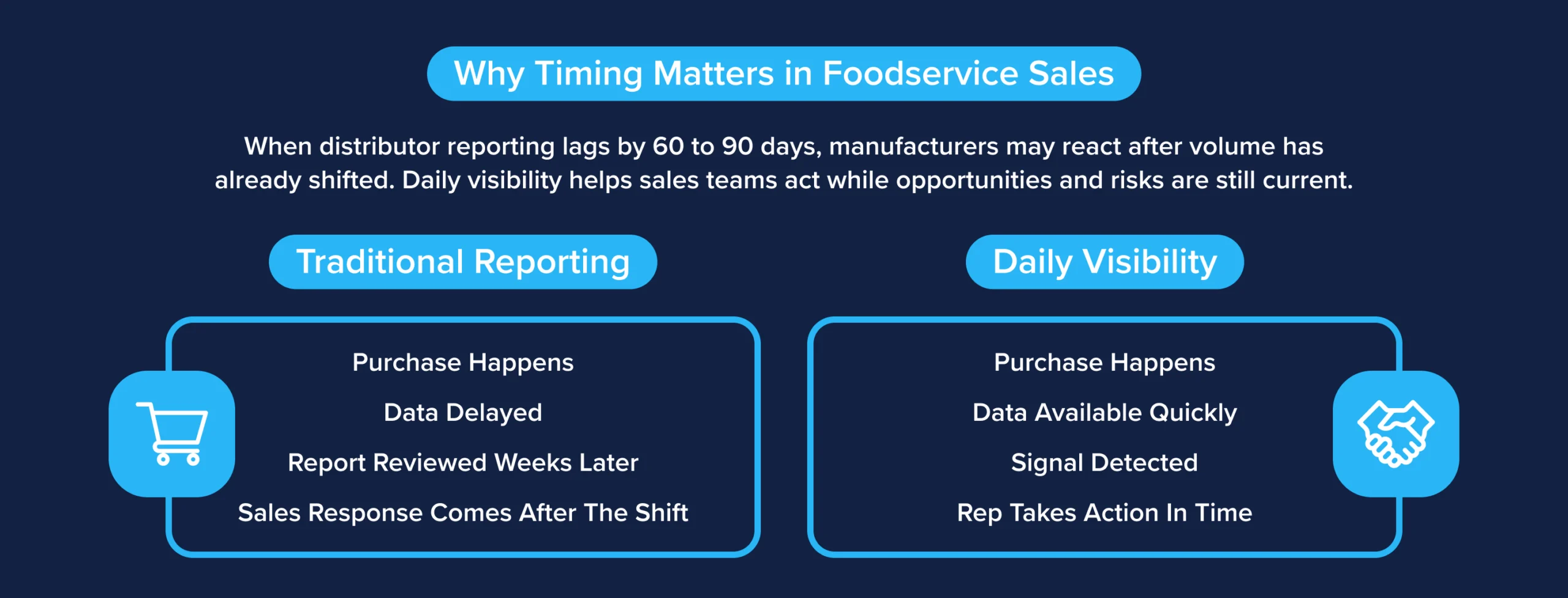
For many manufacturers, the problem is seeing what happens after a product is sold to a distributor and before it reaches the operator.
Distributor reports often come from multiple sources and use different formats. They may also arrive weeks after purchases occur. Traditional distributor reporting can lag 60 to 90 days, which means sales teams may be analyzing changes that happened months earlier.
Distributor data alone may not show true operator demand, either. Knowing how much product a distributor purchased does not necessarily tell a manufacturer which restaurant locations bought it. It also does not show whether contracted customers purchased the agreed-upon products or whether an unknown operator is already buying enough volume to warrant a sales conversation.
Broader industry trends can’t answer those questions. While consumer surveys and menu forecasts can help manufacturers understand what is happening in the market, they can’t tell a national account rep that a chain increased purchases this month or that an existing customer started shifting volume elsewhere.
Predictive analytics can help manufacturers anticipate future demand, but forecasts depend on the information behind them. Current operator purchasing data grounds those forecasts in actual buying behavior and helps sales teams decide where to focus.
Leveraging SalesStream to Drive Sustainable Market Expansion
Sustainable growth starts with knowing where demand is proven, protecting revenue within existing accounts, and focusing sales resources on opportunities with real purchasing activity. Demand visibility gives manufacturers the information they need to make those decisions consistently, rather than relying on outdated reports or broad market signals.
SalesStream connects distributor and operator purchasing data so foodservice manufacturers can see where their products are selling. Daily data gives teams access to current purchasing activity without waiting weeks or months for traditional distributor reports.
This information can reveal contract leakage and changes in account volume. It can also identify unknown purchasers and white-space opportunities so national account reps know which operators warrant attention.
This turns market intelligence into something sales teams can use throughout the day rather than a report reviewed after the fact. A drop in customer volume gives a rep a reason to investigate. Increased category purchases at another operator could signal an opportunity worth pursuing.
Foodservice will keep changing. Manufacturers can’t control every shift in consumer preferences or restaurant menus, but they can see how those shifts affect operator purchasing and use that visibility to protect existing revenue and pursue growth opportunities as demand develops.
FAQ’s
How do manufacturer-focused foodservice insights differ from general consumer trends?
Consumer trends show where preferences may be heading. Manufacturer-focused foodservice insights connect those signals to actual operator purchasing behavior. That means manufacturers can see which products are moving, where demand is changing, and which accounts need attention based on real buying activity, not just broad market indicators.
How can manufacturers identify which restaurant chains are driving category growth?
Manufacturers can identify category growth leaders by analyzing operator-level purchasing data alongside distributor activity. This helps reveal which chains are increasing purchases within a category, where volume is accelerating, and which operators already show meaningful demand. The result is a clearer path to sales opportunities backed by actual purchasing behavior.
What role does distributor movement data play in tracking contract compliance?
Distributor movement data helps manufacturers see how products flow through distribution, but it only tells part of the story. When paired with operator purchasing data, it becomes easier to spot contract leakage, off-contract purchases, and missed volume. Together, those signals show whether contracted business is actually converting into operator purchases.
How does SalesStream help sales teams prioritize high-value operator prospects?
SalesStream helps teams focus on the operators showing real purchasing activity. By connecting distributor and operator data, it highlights unknown purchasers, category growth, contract leakage, and shifting account volume. That gives reps a stronger reason to act, prioritize warmer opportunities, and spend time where demand is already taking shape.
How frequently should demand signals be evaluated to maximize sales agility?
Demand signals should be evaluated as frequently as possible. In foodservice, purchasing patterns can shift quickly due to menu changes, cost pressures, or competitive movement. Daily visibility gives sales teams the best chance to respond early, protect existing volume, and pursue opportunities while demand is still active and actionable.