

Restaurant sales keep moving upward on paper, but walk into any back-of-house office, and you’ll hear a different story. Between stubborn inflation, rising menu prices, and unpredictable guest traffic, operators are feeling the squeeze. With household budgets tightening and economists regularly debating the next downturn, the old question naturally resurfaces: Can the restaurant industry weather a recession?
To understand what the future holds, we have to look past simple sales totals, study what historical cycles actually delivered, and examine what separates brands that merely survive from those that protect their margins and expand market share during tough economic times.
What Does “Recession-Proof” Mean for Restaurants?
Let’s be honest about the term itself—no business that depends on discretionary consumer spending is truly 100% “recession-proof.” When unemployment rises, disposable income drops, and household costs climb, people will inevitably alter their spending.
However, foodservice has consistently proven to be recession-resistant.
The reason comes down to human psychology and the “affordable indulgence” factor. During economic strain, families may postpone buying a new vehicle, cancel a major vacation, or pause home renovations, but giving up everyday simple pleasures entirely is far harder. A quick takeout meal on a stressful weeknight, a specialty coffee before work, or a casual burger run provides a low-cost mental lift when larger luxuries are off the table.
Because of this dynamic, recessions rarely stop consumers from eating out; they simply trigger massive behavioral shifts:
- Frequency vs. Check Size: Some consumers cut visits by 10% but spend the same amount when they do go out. Others maintain their visit cadence but eliminate appetizers, alcohol, and desserts.
- The Trade-Down Phenomenon: Fine dining dollars slide into polished casual; casual dining traffic migrates toward fast-casual; fast-casual diners look toward quick-service (QSR) value menus.

A restaurant’s ability to remain resilient isn’t determined by whether foot traffic slows across the broader economy—it’s determined by whether the brand offers the right price-to-value proposition to catch guests as they adjust their spending habits.
How Restaurants Performed in Past Recessions
History offers clear, empirical insight into how the foodservice sector behaves under real financial strain.
The Great Recession (2008–2009)
During baseline economic expansion, restaurant industry metrics follow steady historical averages (year-over-year sales gains hovering near 4.9% with traffic up roughly 2.1%). When the 2008 Great Recession hit, that momentum ground to a halt:
- Traffic Slumped: Customer traffic turned negative, dropping an average of 3.2%.
- Top-Line Sales Stalled: Annual industry sales growth flattened to just 0.8% across 2008 and 2009.
Full-service and fine-dining operations bore the brunt of the pain as corporate travel accounts evaporated and celebratory high-ticket meals were eliminated. Meanwhile, limited-service operators and pizza chains demonstrated remarkable consistency, holding steady or gaining share as consumers traded down for comfort and affordability.
The Pandemic Shock (2020)
The 2020 economic shock presented a different kind of challenge—a sudden demand shock coupled with mandatory in-person dining restrictions. Quick-service brands with robust drive-thrus, carryout, and digital infrastructure retained volume far better than dining-room-centric concepts, proving that access to guests is just as critical as menu pricing during a crisis.

The takeaway from history is simple: recessions do not eliminate dining out. They redistribute consumer spend toward operators who deliver convenience, price certainty, and perceived value.
How Operators Can Recession-Proof Their Restaurant
You cannot control Federal Reserve rate cuts or national consumer sentiment. What you can control is the operational discipline inside your supply chain and back-of-house operations.
1. Enforce Absolute Contract Price Compliance
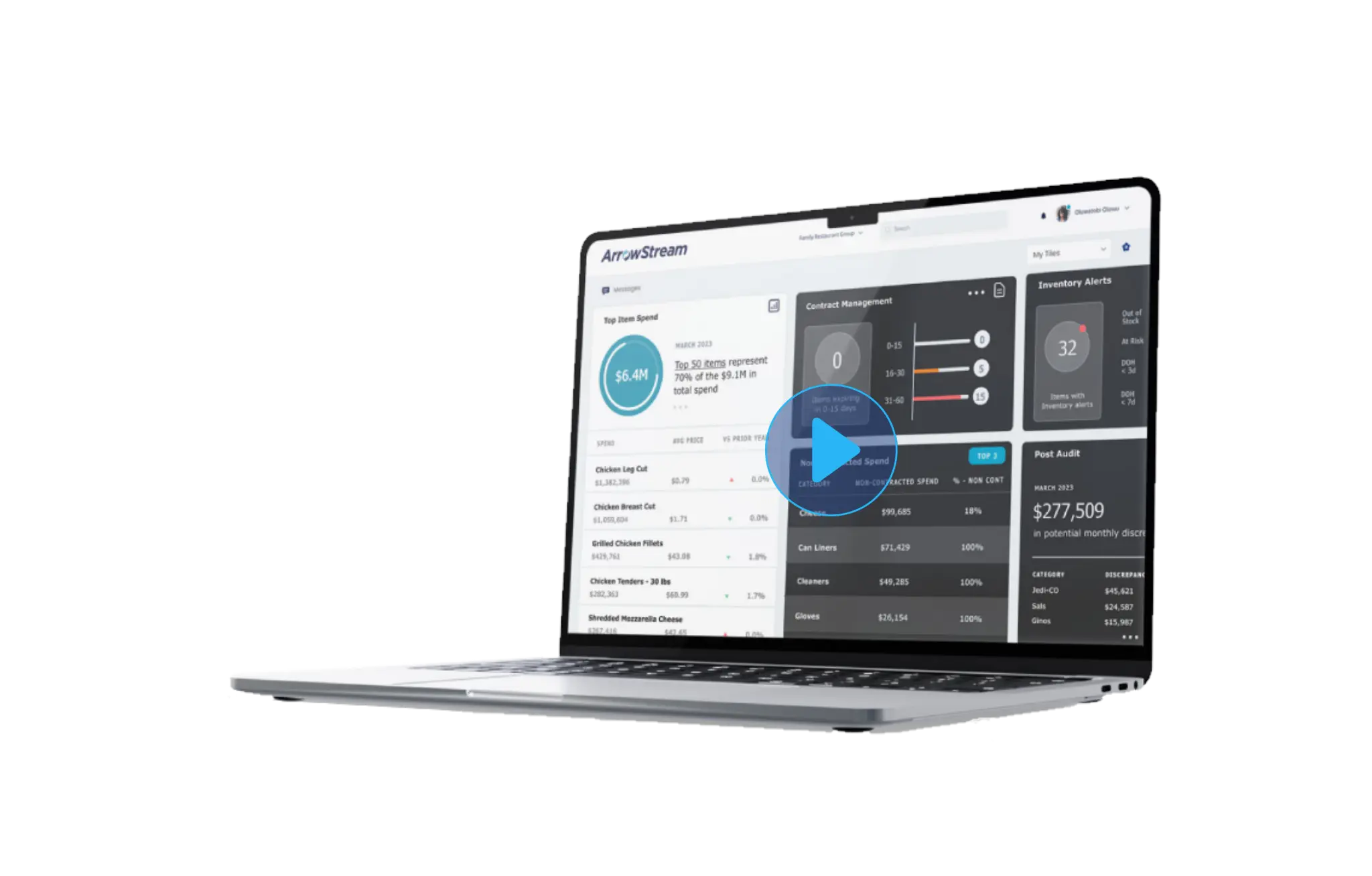
During economic uncertainty, distributor pricing errors and off-contract purchases silently bleed restaurant margins. Even a small variance on contracted ingredients can obliterate unit-level profitability. Multi-unit operators need automated audit tools to monitor every inbound invoice against contracted pricing, catching overcharges before checks are cut.
2. Rationalize SKUs and Cross-Utilize Ingredients
Bloated inventories tie up critical cash flow in walk-in coolers. Simplifying the master menu and eliminating slow-moving, single-use ingredients frees up working capital. Review your menu architecture: can three different specialty cheeses be replaced by one high-performing SKU across multiple builds? Every redundant SKU carries ordering overhead, carrying costs, and waste risk.
3. Rethink Value Beyond “Discounting”
When times get tough, the instinctive reaction for many operators is to slash prices. But aggressive price-cutting eats away at already thin margins and conditions your guest base to wait for coupons. Instead, focus on engineering value: bundle high-margin items (sides, fountain beverages) with core entrees, or introduce tiered portion sizes. Protect the guest’s sense of portion equity—diners notice “shrinkflation” quickly, and feeling shortthought destroys brand loyalty faster than a modest, honest price adjustment.
4. Gain Real-Time Visibility into Food Costs
Waiting until month-end P&L reports to discover that your food cost percentage spiked is an unacceptable risk during an economic slowdown. Resilient operators leverage supply chain intelligence platforms to monitor commodity trends, freight volatility, and distributor inventory levels daily, allowing procurement teams to adjust builds or activate alternative sourcing before margin erosion occurs.
5. Build Alternative Plans Before You Need Them
Identify ingredients and suppliers that would be difficult to replace, and document approved alternatives ahead of time. Involve culinary and operations teams early: a lower purchase price is useless if a replacement changes yield, adds preparation time, or disappoints guests. Furthermore, put a downside plan in writing—decide in advance what your team will review if transactions decline by 5%, 10%, or 15%.
Final Thoughts
The restaurant industry has never been truly recession-proof, but it has consistently proven to be recession-resistant.
Economic cycles will continue to come and go. Recessions are an unforgiving filter that penalizes operational bloat and loose inventory tracking. However, operators who maintain tight supply chain visibility, protect contract compliance, and keep a sharp pulse on consumer value don’t just survive downturns—they use them to capture market share from slower competitors.
Preparation beats prediction every time. You can’t control when guests tighten their budgets, but you can build a clearer plan for how your restaurant responds.
Frequently Asked Questions
Is the restaurant industry recession-proof?
No. Restaurants depend on consumer spending, and tighter household budgets can mean fewer visits or smaller orders. But a clear value proposition and disciplined cost management can help operators weather a downturn.
Which restaurants do best during a recession?
Value-focused concepts, including quick-service restaurants and pizza chains, tend to be better positioned as diners look for affordable options. Format alone isn’t enough, though—convenience, consistent execution, and tight food cost controls matter, too.
How did restaurants perform in the 2008 recession?
Restaurant traffic declined and sales growth slowed sharply. Full-service and fine-dining concepts faced particular pressure, while many lower-priced operators benefited as guests traded down to more affordable meals.
Do people eat out less during a recession?
Many do, but cutting back looks different for every guest. Some make fewer visits; others choose lower-priced restaurants, skip extras, or look for meals that stretch across multiple servings.
Are fast food restaurants recession-proof?
Not entirely. Affordable menus and convenient service can help fast food brands attract budget-conscious diners, but rising costs and weaker spending still put pressure on margins. Value needs to work for both the guest and the operator.
How can restaurants prepare for a recession?
Start with the costs and risks you can control. Check contract pricing, reduce unnecessary SKUs, track food costs closely, and approve backup suppliers before disruptions hit. Build a response plan for declining transactions rather than waiting for margins to slip.
What makes a restaurant recession-resistant?
A strong guest value proposition backed by sound operations. Operators are better prepared when they know what they’re buying, catch pricing discrepancies, limit waste, and understand how menu decisions affect profitability.