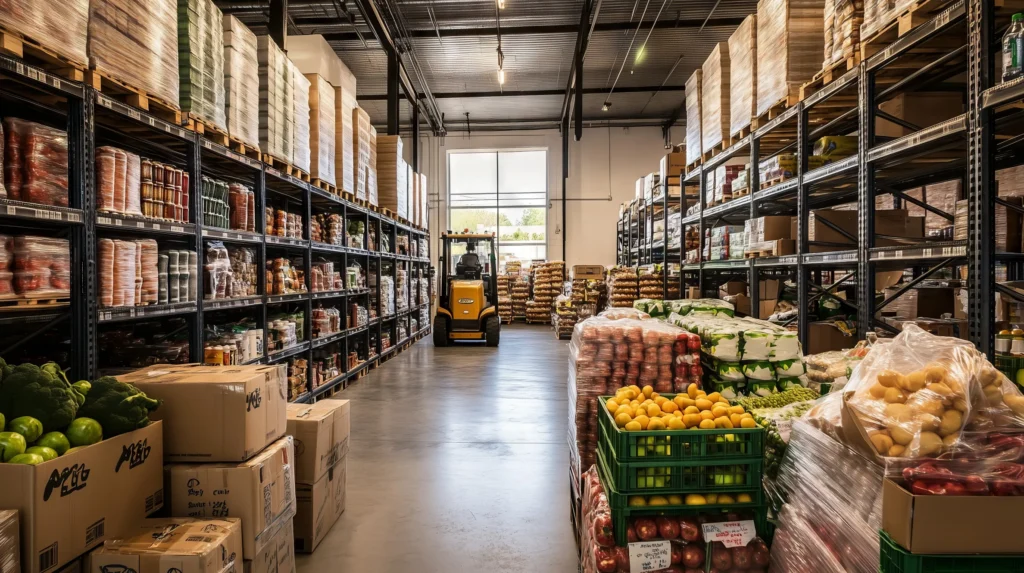
The foodservice supply chain is uniquely complex. Distributors are managing thousands of SKUs, dozens of suppliers, strict freshness standards, temperature-sensitive products, and constant pressure on margins all at the same time. Despite that complexity, many companies still rely on spreadsheets, outdated tools, and disconnected systems to manage inbound freight, making it harder to maintain visibility, control costs, and keep operations running efficiently.
A modern Transportation Management System (TMS) built specifically for foodservice helps close those gaps. In this blog, we’ll break down what a TMS is, why it matters for foodservice distributors, and where traditional transportation platforms often fall short.
What Is a Transportation Management System (TMS)?
A Transportation Management System (TMS) is a logistics platform designed to help manage the physical movement of goods across the transportation lifecycle, from planning and execution through delivery and payment. It gives distributors better visibility into freight activity while helping transportation teams improve coordination, control costs, and manage day-to-day execution more efficiently.
For foodservice distributors, a TMS needs to go beyond standard carrier routing. It should support PO-to-load automation, carrier connectivity through EDI portals, real-time track-and-trace, invoice audit, and matched-pay accounting workflows, so inbound freight is visible and auditable from purchase order through payment.
Why Transportation Management Is Critical for Foodservice Distributors
In foodservice distribution, transportation management is about a lot more than getting products from one place to another. It is about profitability, reliability, and how well teams across purchasing, logistics, and finance stay aligned. A modern TMS is no longer a ‘nice to have’. For many distributors, it has become a core operational and profitability tool.
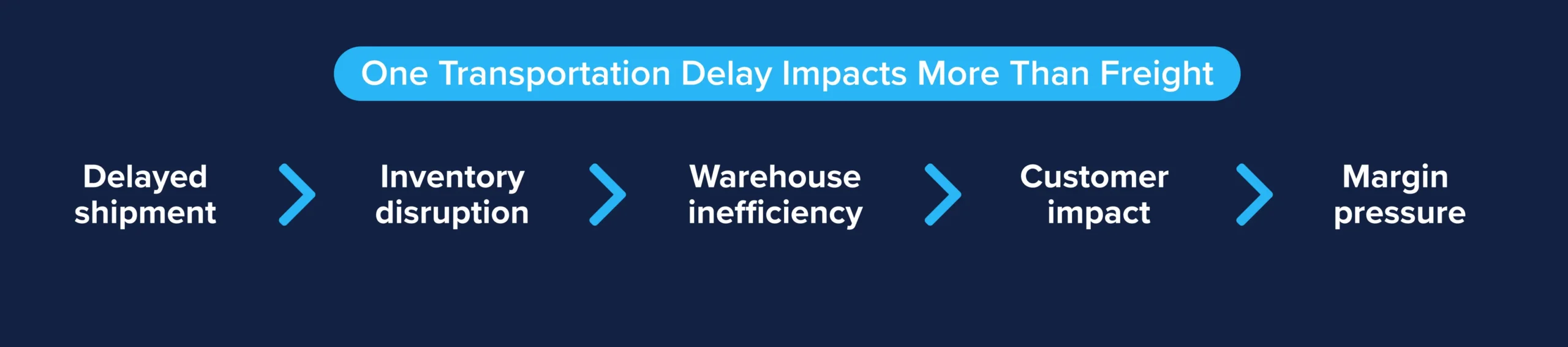
Transportation issues also tend to snowball quickly in foodservice. One delayed shipment can impact warehouse schedules, inventory availability, labor planning, and customer orders all at once.
Manage Complex Supplier Networks
Foodservice distributors work with large supplier networks, each operating a little differently. Shipping requirements, delivery schedules, ordering patterns, and freight practices can vary significantly from vendor to vendor.
That complexity makes load planning harder than it looks.
Transportation teams need rules that can turn buyer plans into consolidated loads while still accounting for SKU mix, temperature requirements, and DC limitations. A TMS helps bring those moving pieces together by centralizing inventory data, PO rules, allowances, and carrier rates in one place.
Control Rising Freight Costs
Freight is still one of the biggest controllable costs distributors deal with.
Fuel volatility, accessorial charges, inconsistent carrier pricing, and inefficient routing decisions can quietly drive transportation spend higher overtime. A TMS helps reduce some of that pressure by automating routing, improving consolidation, and helping transportation teams make more informed carrier decisions.
Distributors that improve consolidation discipline and operational processes often see meaningful reductions in freight spend overtime.
Ensure Timely and Reliable Deliveries
Real-time visibility is non-negotiable in foodservice. Track-and-trace capabilities, delivery scheduling, and automated alerts help DCs stay ahead of delays, and identify issues before they turn into larger service problems.
When purchase order activity and carrier updates live in the same system, logistics and procurement teams can coordinate more effectively and avoid last-minute expedited freight whenever possible.
Improve Visibility Across Inbound Logistics
A unified TMS gives logistics, procurement, and finance teams a shared view of inbound freight activity, purchase orders, and load performance. Item- and PO-level dashboards make it easier to track compliance, monitor cases under management, and measure transportation performance over time. More importantly, teams gain better visibility into how freight decisions are affecting margins across the full lifecycle of a purchase order.
Common Transportation Challenges in Foodservice Distribution
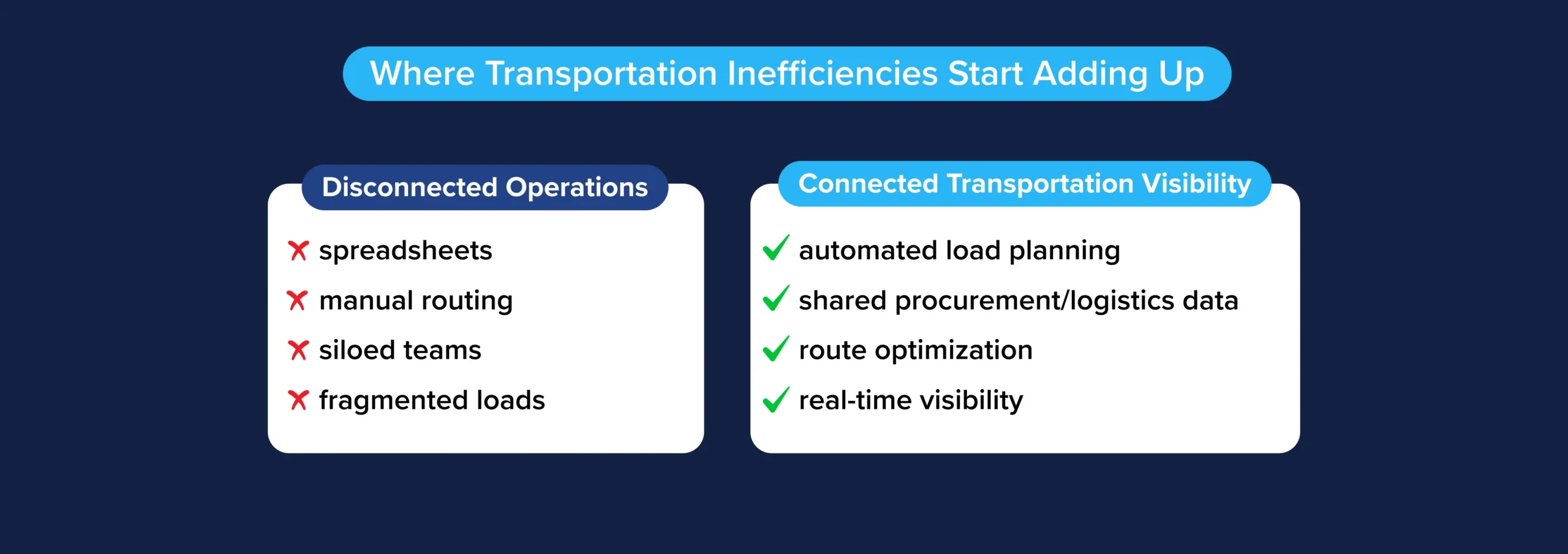
Most distributors deal with the same transportation headaches, and a lot of them come back to the same issue: planning and execution are happening in separate systems that don’t really connect with each other.
Fragmented Supplier Shipments
Buyers do not always have visibility into available truck capacity when orders are placed. Over time, that can lead to too many partially filled trucks moving through the network. Suppliers also tend to ship on different schedules and timelines, which can increase lane costs and create dock flow that is harder for DCs to manage consistently.
Inefficient Routing and Scheduling
Routing tends to become reactive when teams are working without preplanned route guides or current carrier performance data. Instead of following a structured transportation plan, loads often get handled individually, which can make trailer utilization less consistent and add unnecessary miles over time.
Lack of Freight Cost Control
Manual invoice processing can create a lot of small gaps over time. Excel reconciliations, copy-and-paste workflows, and outdated macros do not always catch incorrect carrier payments or missed rebates consistently. Paper invoices and limited AR/AP integration usually make the problem even harder to manage.
Poor Coordination Between Procurement and Logistics Teams
When procurement teams and transportation planners are working separately, decisions that make sense during purchasing can end up increasing freight costs later on. If logistics teams do not have visibility into procurement plans, consolidation opportunities are often missed, and premium freight starts becoming more common.
Static Plans That Go Stale
One challenge distributors do not always notice right away is how quickly transportation plans become outdated. A routing guide, carrier contract, or consolidation strategy that worked six months ago may no longer reflect current conditions. Without systems continuously monitoring freight activity and performance, teams can end up making decisions based on assumptions instead of current operational data.
How a TMS Improves Transportation Efficiency for Distributors
A modern TMS built for foodservice is meant to do more than replace manual transportation processes. It gives distributors better visibility into planning, execution, shipment monitoring, settlement, and day-to-day decisions that impact freight efficiency over time.
Plan Shipments and Optimize Routes
Load planning usually includes preplanned route guides, stored carrier rates, and contract records to support more consistent execution. Automated PO-to-load matching, route planning, consolidation logic, and lane-level rules can also help improve trailer fill rates and reduce unnecessary miles across the network.
Select Carriers and Track Performance
Carriers can be assigned to lanes using stored rate information and current performance data instead of relying on manual routing decisions alone. Automated tendering through EDI and carrier portals also reduces the amount of back-and-forth communication happening through email while giving teams better visibility into carrier reliability and cost performance over time.
Monitor Shipments in Real Time
Track-and-trace dashboards, EDI status updates, and carrier portal feeds give logistics managers visibility into shipments while they are still moving through the network. That makes it easier to spot delays and other exceptions early, before they turn into larger customer-facing issues or increase claims and detention costs.
Manage Freight Costs and Audits
Automated invoice matching, matched-pay workflows, and rebate management help reduce billing leakage and speed up the reconciliation process. Integration with ERP systems like NetSuite, PeopleSoft, and SAP, also helps connect transportation and accounting workflows while reducing the amount of manual reconciliation finance teams have to manage.
Optimize Supplier-to-Distribution Center Shipments
When routing plans and ordering rules are managed through the same platform, distributors can move away from reactive load building and toward more proactive freight consolidation. That can create more opportunities to combine shipments, reduce the number of trucks moving through the network, and still maintain service expectations and delivery windows.
Increase Freight Consolidation and Load Utilization
Systematic load building helps identify when multiple purchase orders can move together more efficiently, improving trailer utilization and lowering per-case freight cost. Focused planning and automated load building can reduce the number of smaller fragmented shipments moving through the network by turning them into fewer, fuller loads over time.
Reduce Empty Miles and Improve Load Utilization
Route optimization and cross-PO consolidation help improve load fill percentages while reducing unnecessary miles and overall transportation inefficiencies.
Align Procurement and Logistics Decisions
When procurement and logistics are working from the same real time data, ordering decisions and routing plans stay more aligned instead of creating issues downstream. Inventory levels, service expectations, and freight costs can then be monitored and adjusted continuously rather than discovered after the fact.
Where Traditional TMS Platforms Fall Short
Not all TMS platforms handle foodservice distribution particularly well. The gaps usually start showing up once transportation operations become more complex and inbound freight requires more coordination than standard logistics software was originally built for.
Lack of Foodservice-Specific Design
A lot of TMS platforms were designed around outbound parcel or LTL shipping environments, not foodservice distributors managing inbound freight across multiple suppliers, delivery schedules, and temperature categories. That can create challenges when teams need visibility into PO allowances, off-invoice rebates, pallet programs, or temperature requirements that are common in foodservice operations.
Limited Inbound Freight Optimization
Many TMS platforms still separate freight execution from inbound planning activity. Purchase orders, vendor compliance, supplier allowances, and lane economics often sit outside the transportation workflow, even though those factors play a major role in whether freight is operating efficiently and profitably.
Disconnected Procurement and Logistics Data
When purchase order data lives in one system and load information lives somewhere else, it becomes much harder for distributors to measure performance across the full lifecycle of a PO. Teams often end up relying on manual exports, spreadsheet reconciliation, and duplicate data entry just to piece information together.
Complex Systems with Low Adoption
A lot of legacy TMS platforms have not changed much in years. Complex interfaces and heavy manual upkeep can make the systems harder for teams to use consistently, which usually limits adoption and reduces the overall value distributors get from the platform.
No Intelligence Layer
Traditional TMS platforms are usually good at reporting what happened. What they often do not provide is context around what caused the issue, what may happen next, or what actions teams should take. That leaves users spending more time interpreting raw transportation data instead of responding to operational issues.
What to Look for in a TMS for Foodservice Distribution
When evaluating a TMS, foodservice distributors should look for platforms built to support the realities of inbound foodservice operations, not just standard freight management.
Tools Built for Foodservice Supply Chains
Features like multi-temp management, off-invoice allowance handling, vendor compliance scoring, PO-to-load automation, SKU and temperature constraints, and inbound rebate calculations are all important in foodservice distribution. These are not just extra features. They are part of managing inbound freight effectively in complex foodservice environments.
Strong Supplier and Carrier Connectivity
EDI connectivity, carrier portals, automated tender workflows, and carrier bid tools reduce manual communication, and improve responsiveness across the transportation process. They also provide the shipment and status data needed for better visibility and smarter transportation decision-making.
Flexibility Across Distribution Networks
A strong TMS should be able to adapt to different distribution models, including multiple DCs, ownership structures, and buying patterns, instead of forcing operations into rigid workflows that do not match how the business actually runs.
Clear, Actionable Reporting Tied to Margin
Interactive KPIs, carrier scorecards, and financial reporting should help teams connect PO revenue back to transportation costs so they can better understand how freight decisions impact margins across the lifecycle of a load.
How Crossbow Improves Transportation Management
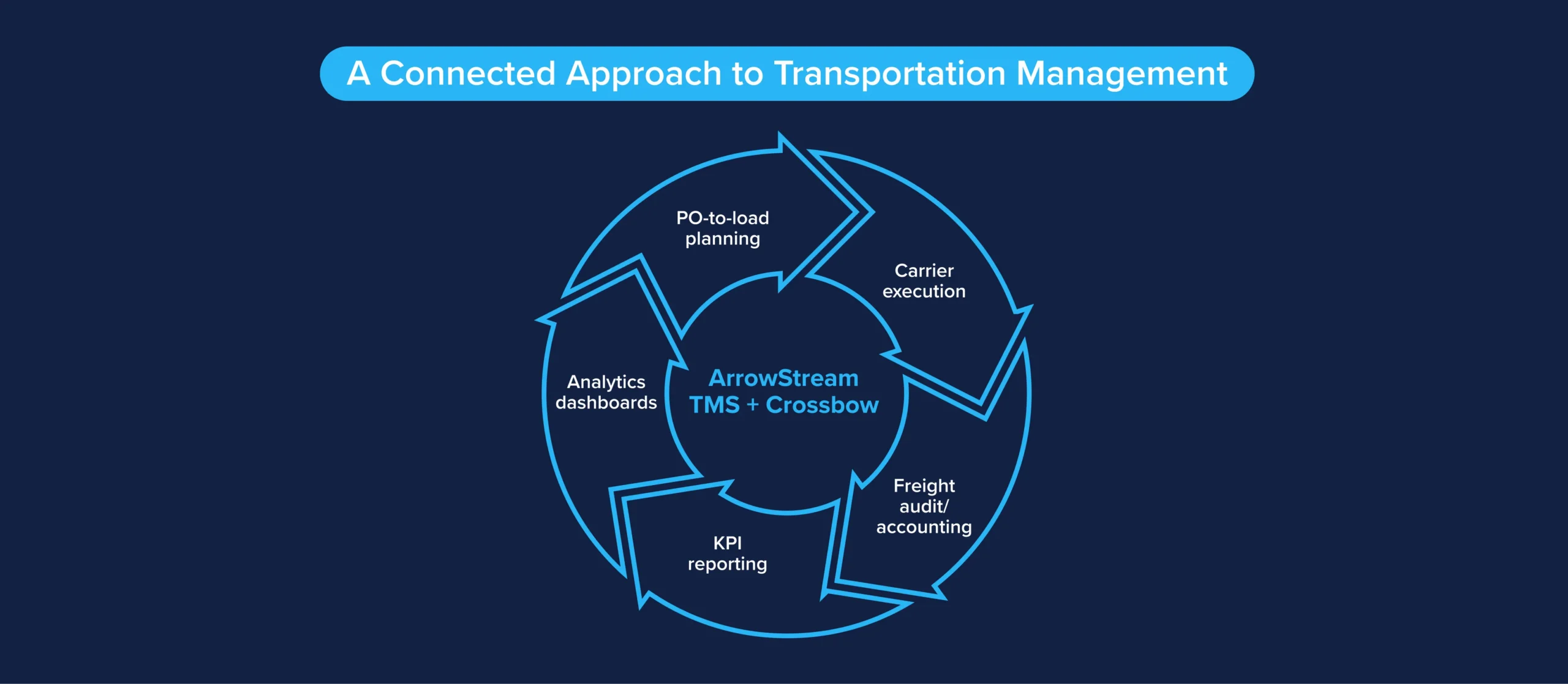
ArrowStream TMS combined with Crossbow brings transportation management and inbound freight analytics together into one connected platform for foodservice distributors. The platform is designed to give distributors better visibility, more control, and stronger operational insight across transportation and freight management workflows, including:
- Analytics: Item- and PO-level dashboards that help teams track cases under management and measure savings opportunities.
- Automated Load Planning: Preplanned route guides, stored carrier rate, and contract management tools that support more consistent transportation execution.
- Load Execution: Automated carrier and fleet assignment, EDI-enabled tendering, and carrier portal connectivity to help streamline transportation operations.
- Payments & Accounting: Invoice auditing, matched-pay invoicing, rebate management, and integrations with AR/AP systems to support freight reconciliation and accounting workflows.
- Reporting: Interactive, real-time KPIs, carrier scorecards and financial reporting that help connect transportation planning back to operation execution.
Together, Crossbow and ArrowStream TMS give logistics managers a more connected way to manage transportation activity from analytics and planning through execution and reporting.
Frequently Asked Questions About TMS for Distributors
What does a transportation management system do?
A transportation management system helps distributors manage the planning, execution, and tracking of freight shipments across the supply chain. It can support load planning, carrier selection, load tendering, shipment tracking, invoice auditing, freight payment, and operational reporting while helping improve visibility and transportation efficiency overall. When connected to procurement and accounting systems, a TMS also helps support PO-to-payment reconciliation across the freight process.
Is a TMS necessary for foodservice distributors?
Foodservice distribution comes with complex supplier networks, strict delivery requirements, temperature sensitive freight, and contract pressure on margins. Effective transportation management helps control freight costs, improve delivery reliability, and give procurement, logistics, warehouse, and finance teams the shared visibility needed to make more aligned operational decisions.
How does a TMS help reduce freight costs?
A TMS helps reduce freight costs through route optimization, automated carrier selection, load consolidation, freight audit automation, and by helping teams catch manual billing leakage more consistently. Many distributors also see stronger cost reductions over time when transportation optimization is paired with better process discipline and operational changes.
How is a TMS different from logistics management software?
While both fall under the broader logistics umbrella, a TMS is specifically focused on transportation planning, execution, and freight optimization. Broader logistics management software may include warehousing, inventory, labor, and other supply chain functions, but it does not always connect PO-level inbound planning with freight execution and settlement workflows in the same way a modern TMS can.
Can a TMS help with inbound freight optimization?
Yes. Advanced TMS solutions, especially platforms connected to inbound optimization tools like ArrowStream’s Crossbow, are built to support inbound freight optimization through PO-to-load consolidation and compliance-based automation.
What features should distributors prioritize in a TMS?
Distributors should prioritize features like PO-to-load automation, carrier EDI and portal connectivity, rate and contract management, invoice auditing and match-pay workflows, real-time track-and-trace visibility, and BI reporting that connects PO revenue back to carrier expense.
To learn more about how these capabilities apply to your transportation network, visit ArrowStream.com or connect with an ArrowStream specialist to discuss your inbound freight program.