

If you’ve been in foodservice long enough, you’ve probably noticed this: customers don’t just “like” something anymore. They expect it to check a lot of boxes.
Is it healthy? Is it worth the price? Where did it come from? Can I get it fast?
That shift is what makes consumer behavior in the food industry so important right now. It’s not just about what people are ordering. It’s about why they’re ordering it, how often, and what makes them change their mind.
And whether you’re running a single location or managing a multi-unit operation, those decisions ripple all the way back to purchasing, suppliers, and inventory.
What Is Consumer Behavior in the Food Industry?
If you’ve ever looked at your sales mix and thought, why is this item suddenly taking off… and why did that one fall off a cliff? You’re already dealing with consumer behavior.
It really just comes down to how people decide what to eat, where they’re getting it from, and what they’re willing to pay when they do.
But it’s rarely a clean, logical decision.
Sometimes it’s convenience. Sometimes it’s price. Sometimes it’s just what sounds good in the moment. And a lot of the time, it’s a mix of all of that.
You’ll see it show up in things like:
- Why one menu item keeps outperforming everything else
- How often do customers choose takeout over dining in
- What makes someone trade up… or stick to the lowest-priced option
- How quickly does demand shift when a trend picks up
And the tricky part is, it doesn’t sit still.
What customers wanted six months ago might not be what they’re looking for now. Prices change, routines change, trends come and go. Even something as simple as what people are seeing online can shift demand faster than expected.
Key Factors Influencing Consumer Behavior in the Food Industry
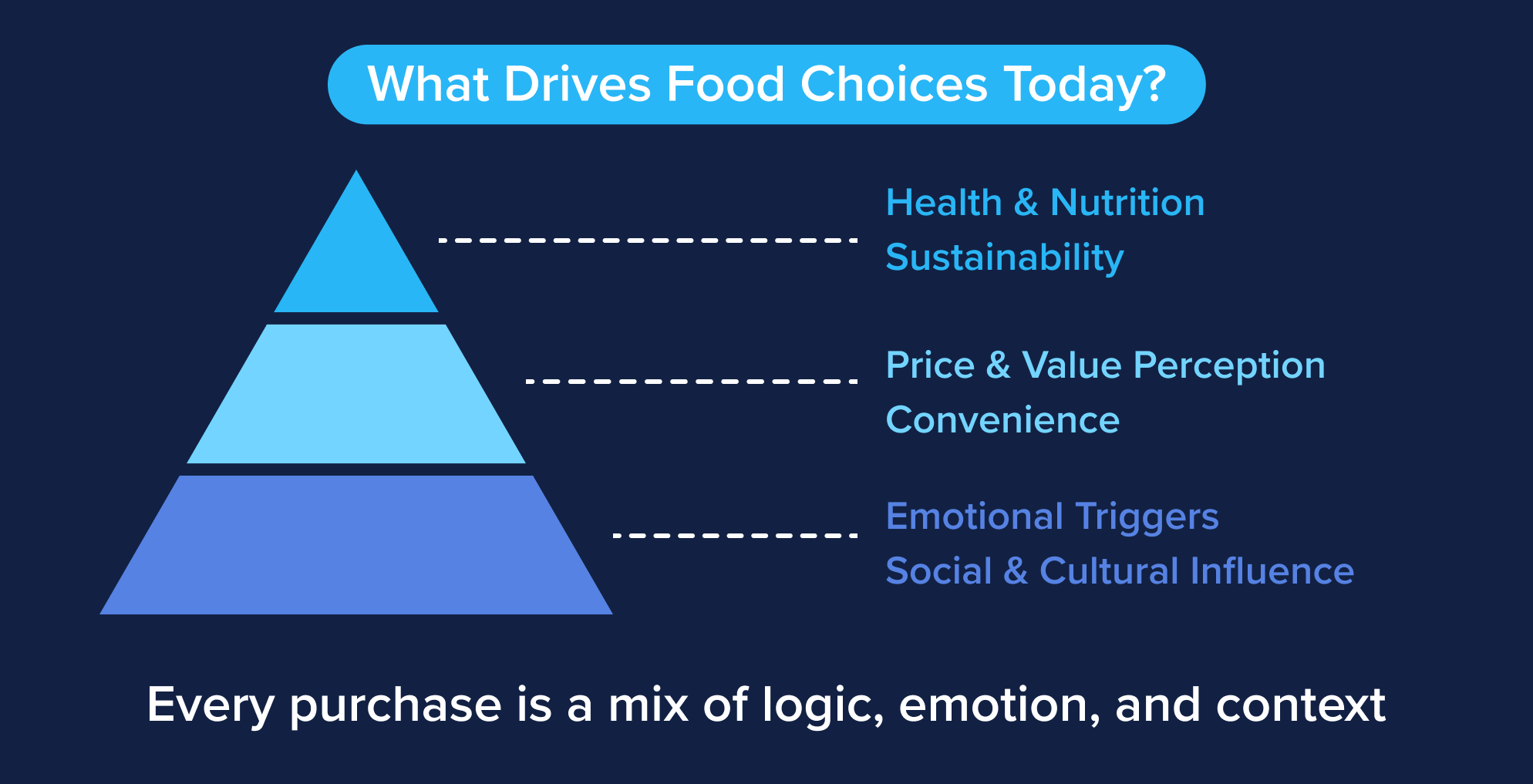
Health, Wellness, and Nutrition Expectations
Health is no longer a niche concern. It’s part of everyday decision-making.
Customers are paying more attention to the ingredients, the size of the portions, and how the food makes them feel after they eat it. Not everyone is ordering salads, but they are looking for balance.
You’ll see it in demand for:
- High-protein options
- Clean-label ingredients
- Lower sugar or lower sodium items
Even indulgent items now get evaluated through a “worth it” lens.
Sustainability and Ethical Consumption
Sustainability has moved from a “nice to have” to something customers actively consider.
That can show up in different ways:
- Preference for locally sourced ingredients
- Interest in packaging that reduces waste
- Awareness of how products are produced
Not every customer is making decisions purely on sustainability, but more of them are factoring it in than they were a few years ago.
Cultural, Social, and Lifestyle Influences
Food trends don’t happen in a vacuum. They’re shaped by culture, social media, and how people live their day-to-day lives.
Busy schedules have pushed convenience higher up the priority list. At the same time, social platforms influence what people want to try next.
That’s why you’ll see demand shift quickly toward:
- Global flavors
- Limited-time offerings
- Shareable or “experience-driven” menu items
Psychological and Emotional Drivers
Sometimes the decision isn’t logical at all.
People order based on comfort, nostalgia, or even stress. A tough day can drive someone toward something familiar. A celebration might push them toward something more indulgent.
Knowing what makes people feel certain ways can help explain why some things always do well, even when trends change.
Price Sensitivity and Value Perception
Price matters more than ever, but it’s not just about being cheap. It’s about perceived value.
Customers are asking themselves:
“Is this worth what I’m paying?”
That includes:
- Portion size
- Ingredient quality
- Overall experience
If something feels overpriced, customers notice quickly. But if it feels like a good deal, they’ll come back.
Transparency, Labeling, and Ingredient Trust
Customers want to know what they’re eating.
Clear labeling, recognizable ingredients, and honest sourcing go a long way in building trust. When that trust is there, it’s easier for customers to stick with a brand or menu item.
When it’s not, they’ll move on just as quickly.
How Digital Channels Are Changing Food Buying Behavior
Growth of Ready-to-Eat and Convenience-Driven Choices
Convenience isn’t just a preference anymore. It’s expected.
Customers are looking for options that fit into their schedules without slowing them down. That’s why ready-to-eat and grab-and-go items continue to grow.
Speed, consistency, and ease of ordering all play into that decision.
Online Ordering and Platform-Led Food Discovery
A lot of purchasing decisions now happen before a customer ever walks through the door.
Online ordering platforms, apps, and reviews influence what people choose and how often they order. In many cases, the platform itself becomes the “menu.”
That changes how items are positioned, priced, and promoted.
Subscription Models and Predictable Purchasing Patterns
Subscription-style models are becoming more common, especially in certain segments.
Meal kits, recurring orders, and loyalty-based programs create more predictable purchasing patterns. That predictability can help businesses better understand demand over time.
It also changes customer expectations around consistency and availability.
How Consumer Behavior Impacts Foodservice Procurement and Supply Chains
Product Sourcing and Menu Innovation
You usually feel this one first in your ordering.
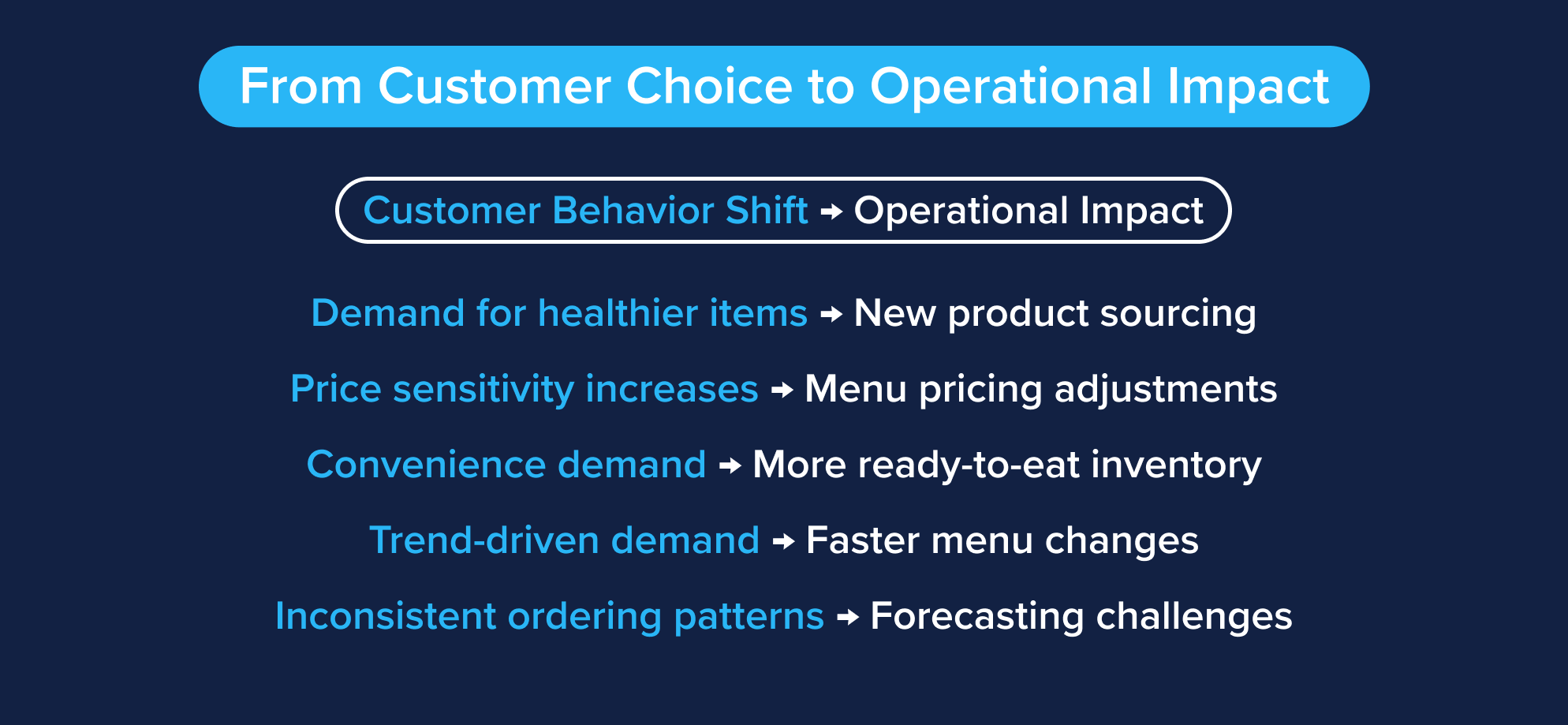
Something starts selling faster than expected, or a new preference shows up, and suddenly what you’ve been buying doesn’t quite line up anymore. Maybe it’s more demand for better-for-you options, maybe it’s a specific ingredient that wasn’t moving before. Either way, you’re adjusting on the fly.
That can mean bringing in a new supplier, swapping products, or rethinking what actually stays on the menu.
Menu changes aren’t just about ideas. They only work if you can consistently get what you need behind the scenes.
Demand Forecasting and Inventory Planning
This is where things can get tricky.
When customer behavior is steady, ordering feels manageable. You know roughly what you’ll go through in a week. But when patterns start shifting, that predictability disappears pretty quickly.
One week you’re short on key items, the next week you’re sitting on too much of something that slowed down.
Finding that balance between having enough and not having too much gets harder when demand isn’t as consistent as it used to be.
Pricing Strategy, Cost Control, and Margin Protection
Customers are paying closer attention to price, but they’re also paying attention to what they’re getting for it.
That puts operators in a tough spot. You can’t just raise prices without thinking it through, but you also can’t ignore rising costs.
So adjustments start happening across the board. Maybe it’s portion sizes, maybe it’s ingredient swaps, maybe it’s how items are positioned on the menu.
The challenge is making those changes without the customer feeling like something’s off.
Supplier Selection, Reliability, and Sourcing Decisions
When things are stable, supplier decisions are mostly about cost and consistency.
When demand starts shifting, reliability becomes a much bigger deal.
You need partners who can keep up, especially if you’re adjusting orders more frequently or bringing in different products. It’s less about finding the lowest price and more about knowing you can actually get what you need, when you need it.
That kind of consistency makes a big difference when everything else feels a little less predictable.
Food Waste Reduction and Supply Chain Efficiency
At the end of the day, most waste comes down to a mismatch.
You brought in more than you needed, or demand didn’t show up the way you expected.
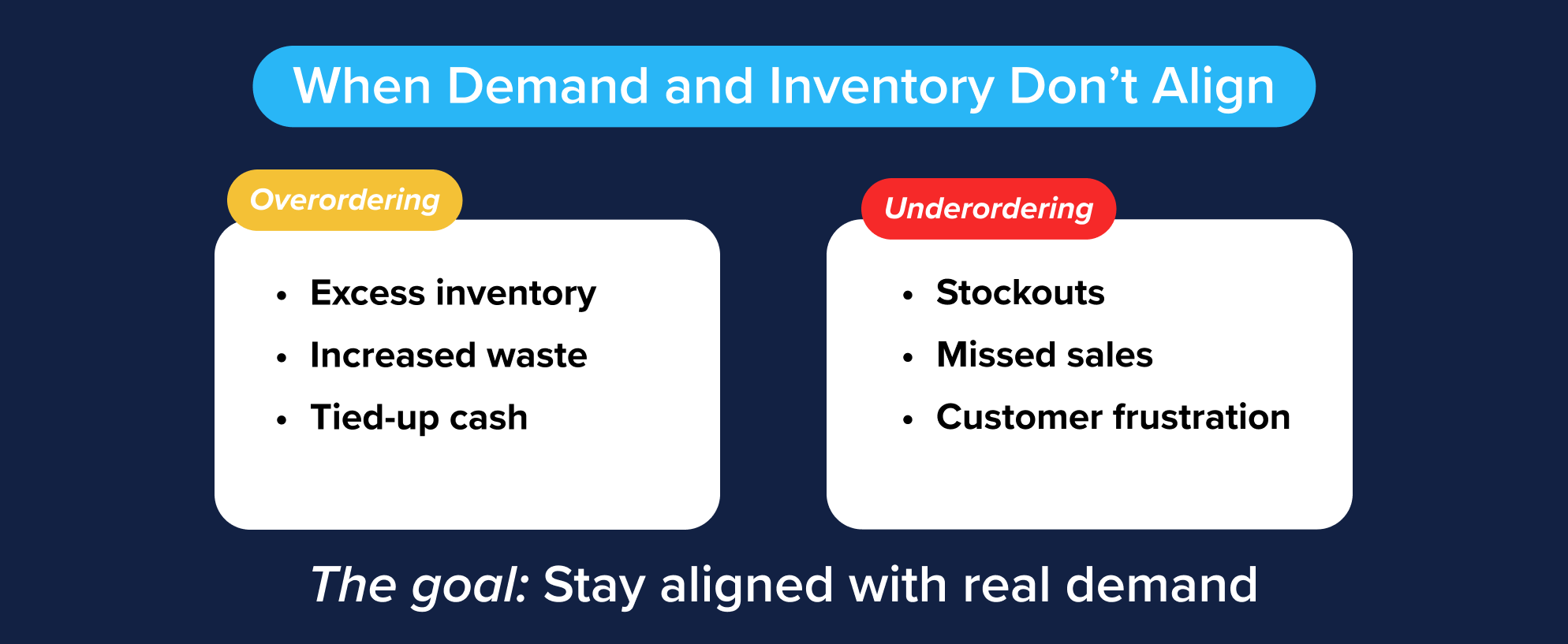
When customer behavior is harder to read, those gaps happen more often. And even small misses add up over time.
That’s why tighter coordination between purchasing, inventory, and day-to-day operations matters more than ever. It’s not about being perfect. It’s about catching those small inefficiencies before they turn into bigger ones.
How Food Businesses Can Adapt to Changing Consumer Behavior
Using Data to Make Smarter Purchasing Decisions
Instinct still plays a role, especially if you’ve been doing this for a while. But it only gets you so far.
What really helps is being able to look back and see what actually moved, what didn’t, and where things started to shift. Sometimes what you think is selling isn’t what’s driving your numbers at all.
When you start paying attention to that, you can spot patterns a lot earlier. You catch when demand is picking up, when something is slowing down, and when it’s time to adjust orders before it turns into a problem.
Aligning Supply Chain Strategies with Shifting Consumer Demand
The operators who struggle the most here are usually the ones locked into doing things the same way every week.
When demand starts to change, that rigidity shows up fast. You either end up short on what’s selling or overstocked on what’s not.
Being able to shift suppliers, adjust orders, or rethink how you’re sourcing products makes a big difference. It gives you some breathing room when things aren’t as predictable.
Building Customer-Centric and Demand-Responsive Strategies
Everything eventually comes back to what the customer is actually doing, not what you planned for them to do.
If something’s consistently selling, there’s a reason. If something isn’t, there’s a reason for that too.
The closer your operation stays to those real patterns, the easier it is to keep things running smoothly. You’re not constantly reacting or scrambling to fix issues after the fact.
It just becomes a more steady way of operating.
Why Understanding Consumer Behavior Creates a Competitive Advantage
Operators who understand consumer behavior don’t just react. They anticipate.
That can mean:
- Adjusting menus before demand shifts
- Securing supply before shortages happen
- Pricing strategically instead of reactively
It creates a level of control that’s hard to achieve otherwise.
The Future of Consumer Behavior in the Food Industry
Consumer expectations aren’t slowing down. If anything, they’re getting more complex.
You’ll likely continue to see:
- Greater demand for transparency
- More personalization in ordering
- Increased reliance on digital platforms
- Ongoing pressure around price and value
The businesses that adapt quickly will be the ones that stay competitive.
Final Thoughts
Understanding consumer behavior in the food industry isn’t about chasing every trend.
It’s about paying attention to patterns, staying flexible, and making decisions based on what customers are actually doing, not just what they say they want.
When that understanding connects all the way back to purchasing and supply chain decisions, operations run smoother, and surprises become easier to manage.
FAQs
What factors influence consumer behavior in the food industry?
It’s usually not just one thing. A customer might be thinking about price, but also whether something feels “worth it,” how convenient it is, and even what they’ve been seeing online lately.
Health plays a role for some people, sustainability matters more than it used to, and trust in ingredients or sourcing can sway decisions too. Most of the time, it’s a mix of all of those hitting at once.
How has health consciousness changed food purchasing decisions?
You can see it in how people scan a menu now. They’re looking a little closer at what’s in something, not just what it costs.
That doesn’t mean everyone is ordering the healthiest option, but they do want to feel better about what they’re choosing. That’s why you’re seeing more interest in things like higher-protein items or simpler ingredient lists.
Why does sustainability matter to food consumers?
For a lot of customers, it’s about feeling like their choices line up with their values.
That could mean where ingredients are coming from, how something is packaged, or how it’s produced. Not everyone is making decisions based on sustainability alone, but it’s definitely part of the conversation more than it used to be.
How is technology reshaping food-buying behavior?
A lot of decisions are happening before someone even shows up anymore.
People are scrolling, ordering through apps, checking reviews, and deciding what they want from their phone. That changes how they discover items and how often they order.
It also raises expectations. Faster ordering, easier access, and consistency all start to feel like the baseline.
How can food businesses respond to evolving consumer trends?
The operators who handle this best are the ones paying attention to what’s actually happening in their own data, not just chasing trends.
That usually means adjusting orders based on what’s selling, staying flexible with suppliers, and making small changes before they turn into bigger problems.
It’s less about reacting late and more about catching shifts early.