

Food fraud isn’t just something that happens at the global manufacturer level. It shows up in day-to-day operations too, usually in ways that don’t get noticed until costs start creeping up or something feels off.
And in 2026, with supply chains more complex than ever, it’s not just a quality issue. It’s a margin issue. A compliance issue. And in some cases, a brand risk that’s hard to recover from.
If you’re responsible for sourcing, purchasing, or managing supplier relationships, understanding where food fraud shows up and how to prevent it is no longer optional. It’s part of running a tighter, more controlled operation.
What is Food Fraud?
At its core, food fraud is intentional deception for economic gain within the food supply chain.
That could mean swapping out a higher-cost ingredient for a cheaper one, mislabeling a product, or adding something that shouldn’t be there at all. The key word is intentional. This isn’t a mistake or a supplier mix-up. It’s done on purpose to cut costs or increase profit.
The challenge is that food fraud doesn’t always look obvious. It can show up in small, subtle ways that are easy to overlook during day-to-day operations.
Why Food Fraud is a Growing Cost and Compliance Risk
Food fraud is becoming more common for a simple reason. Pressure.
Costs are volatile. Supply chains are stretched. Demand shifts quickly. When margins tighten, the risk of someone cutting corners increases.
For operators, that creates a ripple effect:
- You may be paying for something you’re not actually getting
- Product quality becomes inconsistent
- Compliance risk increases, especially with stricter traceability requirements
And the hardest part? You often don’t see it right away. It shows up later in performance, customer feedback, or financials.
Common Types of Food Fraud in the Modern Supply Chain
Food fraud doesn’t show up in just one way. It takes different forms depending on the product, supplier, and where pressure exists in the supply chain.
Economically Motivated Adulteration (EMA)
This is when something is added to a product to increase volume or reduce cost.
Think watering down liquids or adding fillers to extend product yield. It might not be obvious at first, but it impacts quality and consistency.
Ingredient Substitution and Dilution
A higher-cost ingredient gets replaced, fully or partially, with something cheaper.
This happens more than operators realize, especially with items that are hard to visually verify once processed.
Mislabeling and False Claims
Products labeled as something they’re not. That could be origin, grade, organic status, or even species.
This creates both compliance risk and trust issues with customers.
Counterfeiting and Brand Imitation
Products that aren’t authorized but are packaged or labeled to look like a well-known brand.
This is more likely to happen in global sourcing and secondary distribution channels.
Undeclared Additives and Ingredient Tampering
Sometimes, ingredients are added without telling anyone, like to make the color, shelf life, or weight better.
Food fraud and food safety issues start to mix here.
Foods Most Vulnerable to Food Fraud in Complex Supply Chains
Not every product carries the same level of risk when it comes to food fraud.
The ones that tend to get hit the most usually have two things in common. They’re either high in value, or they move through a long, layered supply chain where visibility drops off along the way.
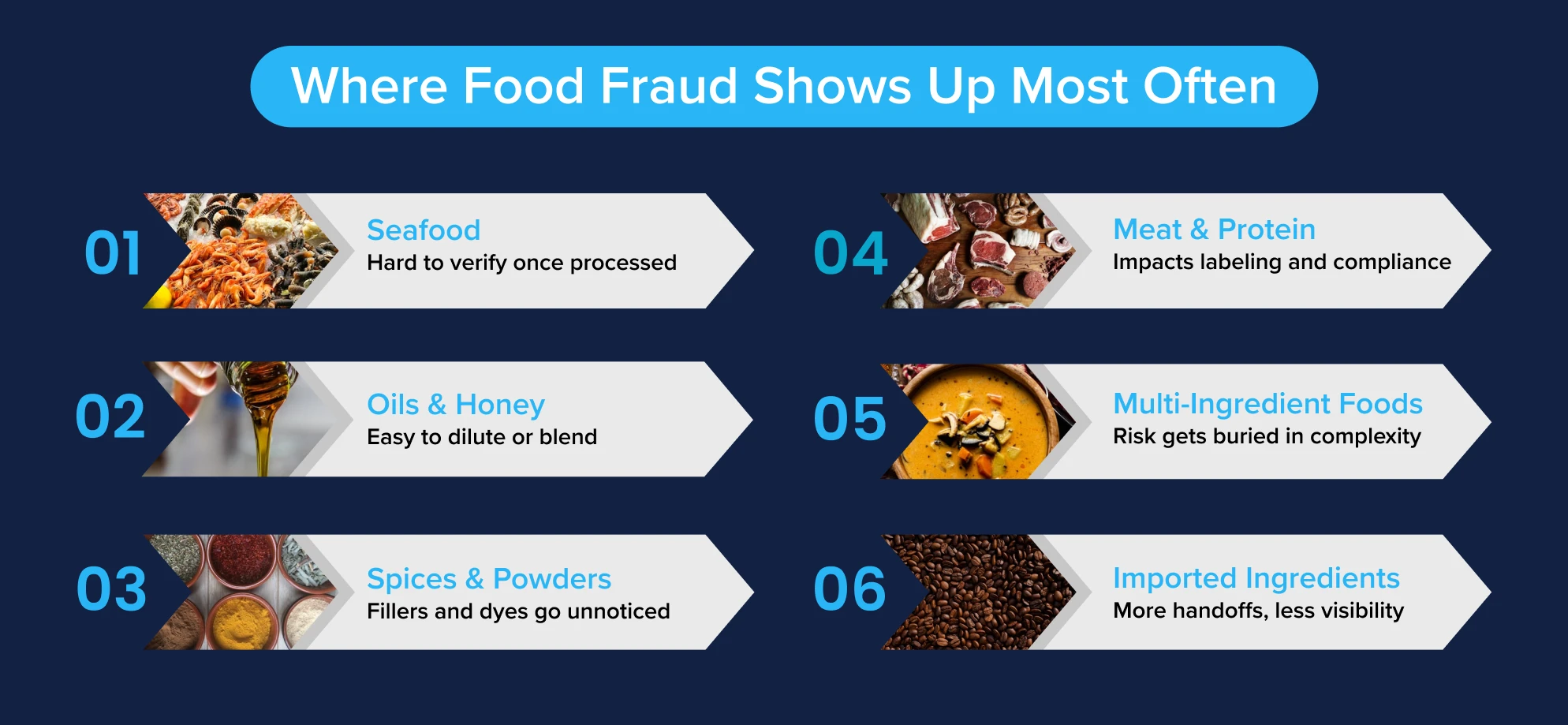
Once you lose that clear line of sight, it gets a lot easier for something to be swapped, stretched, or misrepresented without anyone catching it right away.
Seafood and Fish Species Substitution
Seafood has been dealing with food fraud for years, and it’s still one of the biggest problem areas.
Once fish is filleted, skinned, or portioned, it’s nearly impossible to tell one species from another just by looking at it. That’s where substitution happens. A lower-cost fish gets passed off as something premium, and unless you’re testing for it, you may never know.
Olive Oil, Honey, and Other High-Value Oils
These products are expensive, widely used, and easy to stretch.
A little blending goes a long way here. Lower-grade oils or sweeteners can be mixed in without drastically changing taste or appearance, which makes this type of food fraud harder to catch during normal use.
Spices, Herbs, and Powdered Ingredients
Anything ground or powdered comes with its own set of challenges.
Once you lose the original form of the ingredient, you’re relying on trust and verification. Fillers, dyes, or cheaper substitutes can be added in small amounts and still pass a quick visual check.
Meat, Dairy, and Plant-Based Protein Products
Protein categories carry a different kind of pressure because they’re tied closely to both cost and labeling.
If something is substituted or misrepresented here, it’s not just a pricing issue. It can affect nutrition claims, allergen declarations, and regulatory compliance all at once.
Processed and Multi-Ingredient Foods
The more ingredients involved, the harder it is to trace where everything came from.
In multi-ingredient products, one compromised input can get buried in the final item. That makes food fraud much harder to spot unless you’re actively tracking inputs at a detailed level.
Imported Foods and Globally Sourced Ingredients
Global sourcing opens up access, but it also adds complexity.
Products move through multiple regions, suppliers, and checkpoints before they reach you. With every handoff, there’s another opportunity for documentation gaps or inconsistencies to creep in.
And when something does go wrong, tracing it back can take time you don’t always have.
How Food Fraud Enters the Supply Chain
Food fraud usually doesn’t start with the people who work there. It gets in earlier and moves downstream.
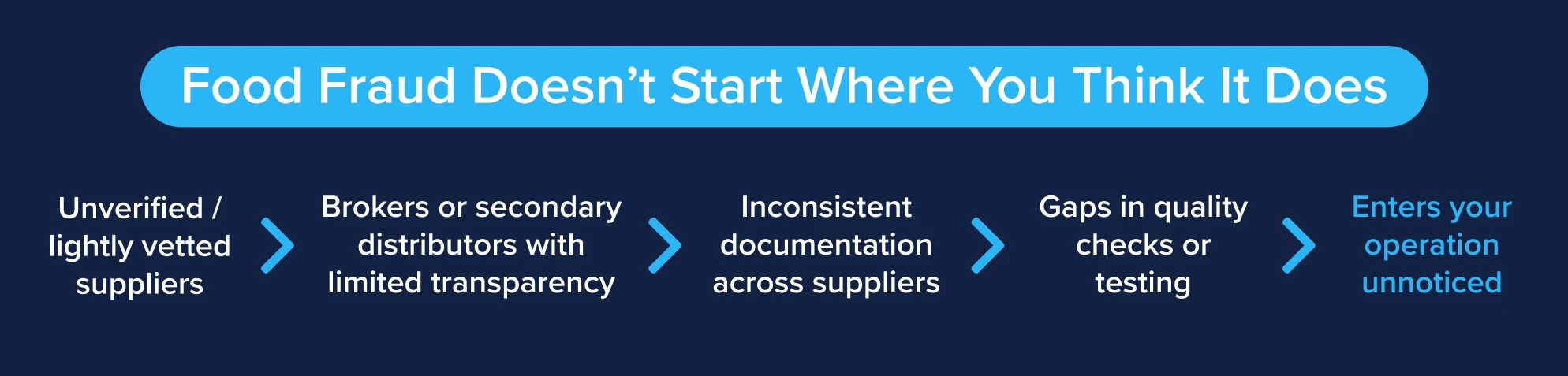
Some common entry points are:
- Buying from suppliers that haven’t been checked out or only lightly checked out
- Working with brokers or secondary distributors who don’t give you a lot of information
- Different suppliers don’t use the same forms of documentation
- Quality checks or tests that aren’t always the same
Once it gets into the chain, it can move quickly between places and products without anyone noticing.
Business and Consumer Impact of Food Fraud
Food fraud doesn’t just sit in one corner of the business. It tends to show up where you least want it, usually after it’s already caused some damage.
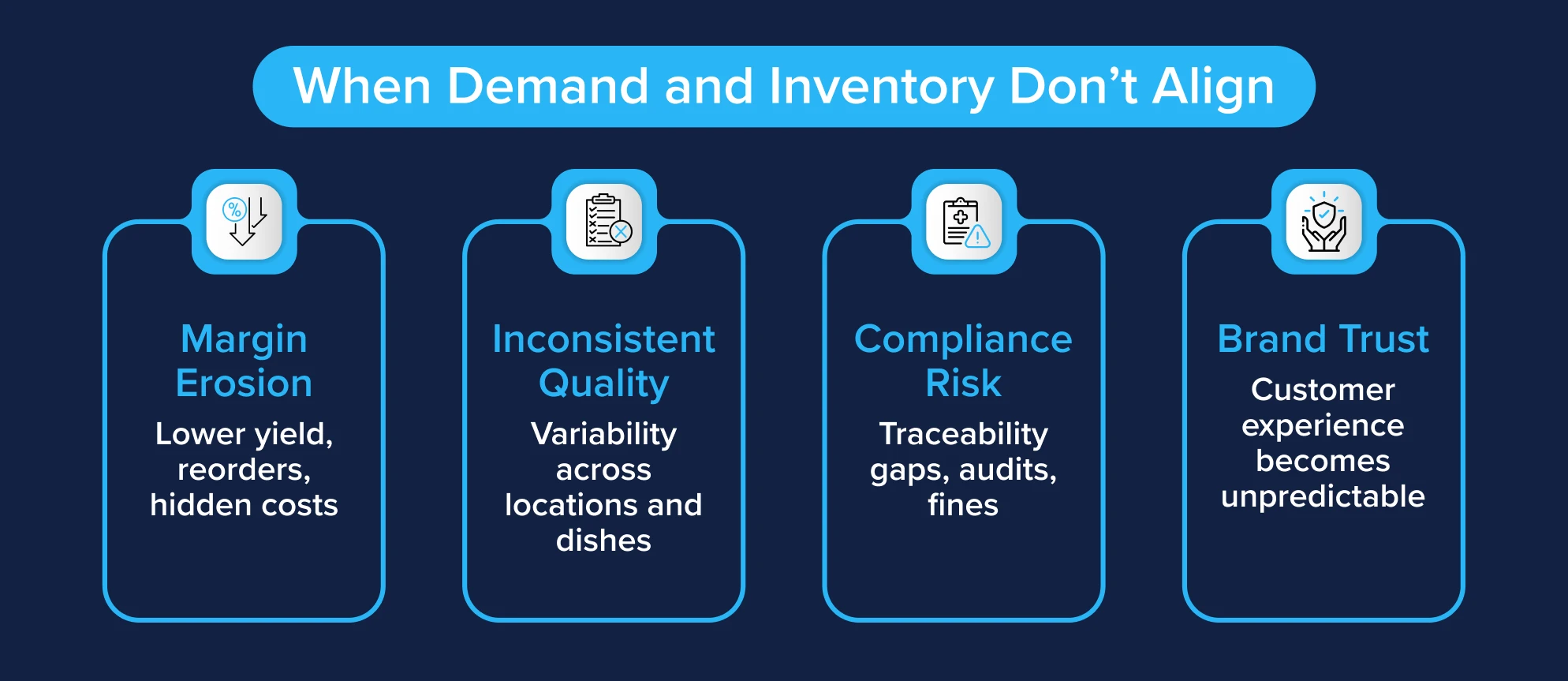
Sometimes it hits your numbers first. Other times it shows up in customer complaints, or worse, in a compliance review. Either way, it rarely stays isolated.
Financial Losses, Chargebacks, and Margin Erosion
This is usually where operators feel it first.
You think you’re buying a certain product at a certain spec, and what shows up doesn’t quite match. Maybe the yield is off. Maybe quality isn’t consistent. Maybe you’re having to comp dishes or reorder sooner than expected.
Individually, those issues don’t always raise alarms. But spread that across multiple locations or over a few months, and it starts adding up in a way that’s hard to ignore.
Brand Reputation and Consumer Trust Damage
Customers might not call it “food fraud,” but they absolutely notice when something feels off.
One visit is great. The next isn’t. Flavor changes. Texture changes. Presentation isn’t consistent. That kind of inconsistency chips away at trust faster than most operators expect.
And once guests start second-guessing what they’re getting, it’s a tough thing to win back.
Food Safety and Public Health Risks
This is where things can escalate quickly.
If an ingredient has been tampered with or swapped out, there’s always a chance something ends up in the product that shouldn’t be there. That could be an undeclared allergen or a substance that hasn’t been properly handled.
At that point, it’s no longer just about quality or cost. It becomes a real safety concern.
Regulatory Fines and Legal Exposure
Regulators are paying closer attention to food traceability and documentation than they were a few years ago.
If there’s a gap in your records or something can’t be verified, it raises questions. And even if the issue started somewhere upstream, it doesn’t stop it from landing on your desk.
That can mean audits, fines, or having to prove due diligence in situations where information isn’t always easy to pull together.
Food Fraud Regulations and Compliance Requirements in 2026
If it feels like the rules around food fraud keep getting tighter, you’re not imagining it.
Over the last few years, there’s been a clear shift. It’s no longer just about reacting when something goes wrong. Regulators want to see that you’re actively thinking about where risk could show up before it happens.
And a big part of that comes down to traceability. If you can’t explain where something came from or how it moved through your supply chain, that’s where problems start.
Regulatory Oversight and Enforcement Trends
Enforcement doesn’t look the way it used to.
It’s less about one-off inspections and more about connecting the dots over time. Data is playing a bigger role, which means patterns stand out faster. If something feels inconsistent across locations, time periods, or suppliers, it’s more likely to get flagged.
FDA, FSMA, and Intentional Adulteration Requirements
The FDA and FSMA have been building toward this for a while.
There’s more focus now on intentional risks, not just accidental ones. Food fraud falls right into that category. The expectation is that operators aren’t just catching issues after the fact, but actively putting controls in place to reduce the chance of it happening at all.
GFSI, HACCP, and FFVA Compliance Standards
Food safety programs are expanding to include food fraud risk, not just traditional safety hazards.
If you’re already working within GFSI or HACCP frameworks, you’ve probably seen this come up. Food Fraud Vulnerability Assessments are becoming part of the conversation, especially for higher-risk ingredients or categories.
It’s less about adding complexity and more about filling in gaps that used to be overlooked.
Supplier Documentation and Recordkeeping Expectations
This is where a lot of operators feel the pressure.
You’re expected to have a clear paper trail. Not just invoices, but supporting documentation that shows where products originated and how they moved through the chain.
When something looks off, being able to quickly pull that information makes a big difference.
Import and Global Sourcing Compliance Risks
Global sourcing adds another layer to all of this.
More suppliers, more regions, more checkpoints. And with that comes more chances for something to get lost in translation, whether that’s documentation, labeling, or product consistency.
When those gaps show up, they don’t just slow things down. They can lead to rejected shipments, added inspections, or deeper audits that take time to work through.
How to Conduct a Food Fraud Vulnerability Assessment
A food fraud vulnerability assessment might sound complex, but it really comes down to taking a step back and asking where things could slip through.
Start with your ingredient list. The higher-cost items or anything sourced from multiple suppliers usually carry more risk.
Then think about where visibility drops off. That could be imported products or items that go through several steps before they reach you.
It also helps to look at supplier consistency. If quality or pricing has been unpredictable, it’s worth a closer look.
The goal isn’t to catch something in the act. It’s to understand where food fraud could happen without being obvious and focus your attention there.
Food Fraud Prevention Best Practices
There’s no single fix for food fraud. The operators who manage it well are usually doing a handful of things consistently, not relying on one big solution.
Strengthen Supplier Approval and Monitoring
Who you buy from matters more than ever.
It’s tempting to chase price, especially when costs are tight. But if that comes at the expense of consistency or transparency, it tends to cost more in the long run.
Stick with suppliers you trust, and revisit those relationships regularly. Things change. Ownership changes. Sourcing changes.
Improve Ingredient Traceability and Transparency
You don’t need to see every step of the supply chain, but you should know enough to feel confident in what you’re receiving.
If you can trace an ingredient back through its key touchpoints, you’re already in a stronger position than most.
Gaps in traceability are where food fraud tends to hide.
Centralize Procurement and Supplier Data
When information lives in different systems, spreadsheets, or inboxes, it’s hard to connect the dots.
Centralizing that data makes patterns easier to spot. You can see when pricing doesn’t line up, when usage shifts unexpectedly, or when a supplier’s performance starts to drift.
Without that visibility, those signals get missed.
Train Procurement and QA Teams to Spot Fraud Signals
Your team sees the product every day. They’re often the first to notice when something feels off.
Maybe it’s a change in color, texture, or yield. Maybe it’s packaging that looks slightly different. Maybe it’s documentation that doesn’t quite match what’s expected.
Those small signals matter. But only if people know to look for them and feel comfortable flagging them.
Implement Continuous Risk Monitoring
Risk doesn’t stay still.
What looks like a stable category today can shift quickly if supply tightens or pricing spikes. That’s when the temptation for food fraud increases.
Checking in regularly, even at a high level, helps you stay ahead of those shifts instead of reacting after the fact.
How Technology Supports Fraud-Resilient Supply Chains
As supply chains get more complex, managing everything manually gets harder.
Technology helps by connecting the dots. Instead of relying on gut checks or scattered systems, you can see what’s actually happening across your network.
It makes it easier to track ingredients, compare what you ordered to what showed up, and catch patterns that wouldn’t stand out on their own.
The goal isn’t more work. It’s less guesswork.
When your data is visible and connected, issues show up sooner and are easier to fix before they turn into bigger problems.
Final Thoughts
Food fraud isn’t always dramatic.
Most of the time, it shows up quietly. A slight drop in quality. A product that doesn’t perform the way it used to. Costs that don’t quite line up with what you expected.
Individually, those things are easy to explain away.
But when they keep happening, across products or locations, it’s usually a sign that something deeper is going on.
The operators who stay ahead of food fraud aren’t trying to catch every issue in real time. They’re building systems that make inconsistencies easier to spot and harder to ignore.
And in a supply chain that’s only getting more complex, that kind of visibility goes a long way.
Food Fraud FAQs
Which foods are most vulnerable to food fraud?
Products that are high in value or harder to verify tend to carry the most risk. That includes seafood, oils like olive oil, honey, spices, proteins, and globally sourced ingredients where there are more handoffs along the way.
How does food fraud affect businesses?
It usually doesn’t show up as one big issue right away.
More often, it starts small. A product doesn’t perform the way it used to. Yields are slightly off. You find yourself reordering sooner than expected or getting inconsistent results across locations.
Over time, those small gaps turn into real costs. Margins tighten, teams spend more time troubleshooting, and if it goes far enough, it can raise compliance questions or impact how customers experience your food.
How can companies prevent food fraud in 2026?
Most teams don’t catch food fraud by accident. They reduce the chances of it happening in the first place.
That usually means getting a clearer handle on where products are coming from, who you’re buying from, and how consistent those inputs really are. Strong supplier relationships help, but so does having enough visibility to notice when something shifts.
When you can see patterns in your data and track changes over time, it becomes a lot easier to step in early instead of reacting after the damage is done.