

In many enterprise foodservice organizations, the supply chain appears to be running smoothly. Deliveries arrive on time, locations stay stocked, and weekly purchasing reports continue to roll in. While everything looks stable on the surface, stability can sometimes create a dangerous illusion.
Supply chains rarely appear broken, even when ROI is quietly slipping away. Pricing discrepancies, missed credits, inconsistent ordering, and contract compliance gaps often start small but accumulate into measurable losses over time. Because these issues surface as minor, isolated variances, they can persist for months (or longer) without drawing attention.
Without centralized visibility into purchasing data, supplier performance, and cross-location trends, pinpointing the source of these losses is difficult. The challenge isn’t proving they exist, it’s identifying where they’re occurring and addressing them before they scale across the organization.
Where ROI Actually Lives Today
For decades, restaurant operators have been trained to look at labor cost and food cost as the most important financial controls within their operation. While those metrics still matter, a focus on primary costs alone is no longer enough to maximize profitability. In today’s enterprise foodservice environment, ROI rarely lives in obvious places like negotiating cheaper ingredients or squeezing another percentage point out of wages. In fact, pushing these metrics too far can jeopardize long-term sales and sustainability.
Instead, ROI increasingly lives in the small operational discrepancies that quietly chip away at margins over time. When these minor inefficiencies are allowed to continue unchecked week after week, they compound into meaningful financial losses.
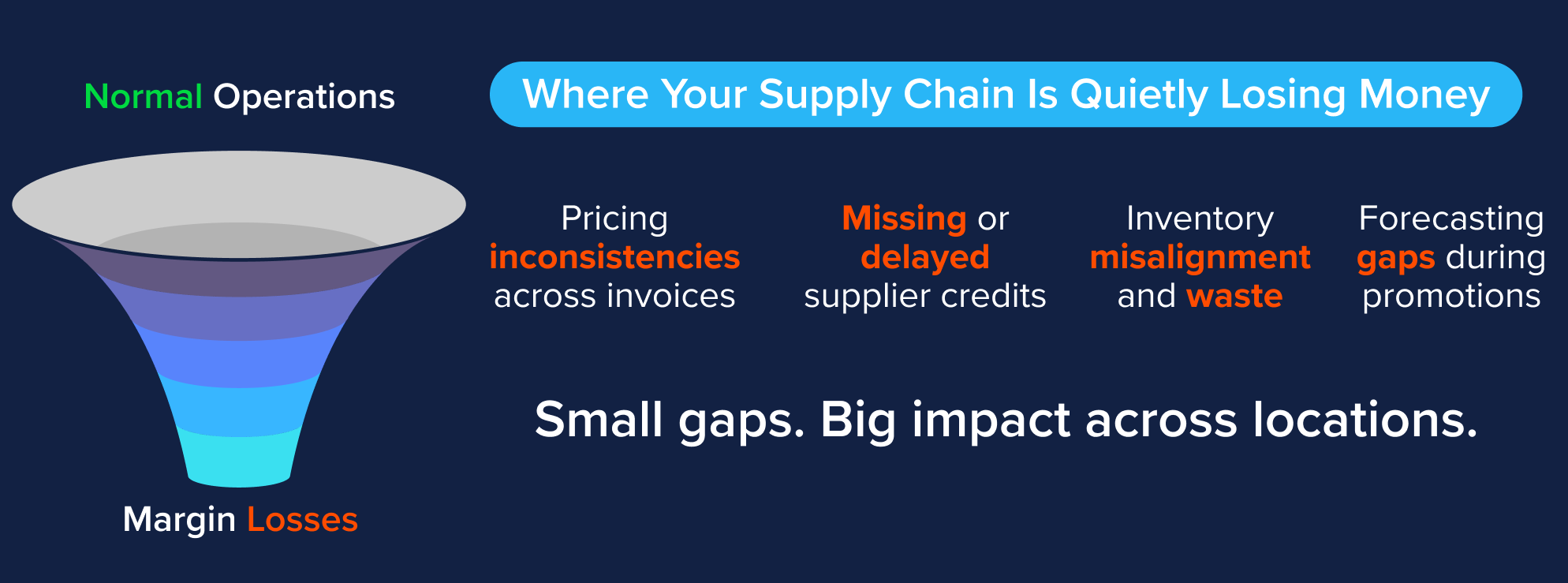
Here are a few common examples of where these ROI leaks often hide:
- Pricing inconsistencies: When contracted supplier pricing doesn’t match what appears on invoices, even small discrepancies can add up to significantly higher costs across multiple locations.
- Delayed or missing credits: When shortages, substitutions, or damaged goods should trigger credits that never materialize, operators can end up absorbing costs they shouldn’t.
- Inventory misalignment: Small gaps between reported inventory and actual product usage can lead to over-ordering, unnecessary spoilage, or missed opportunities to optimize purchasing patterns.
- Forecast drift during promotions: Inaccurate promotional forecasts can create unexpected shortages that force costly emergency orders.
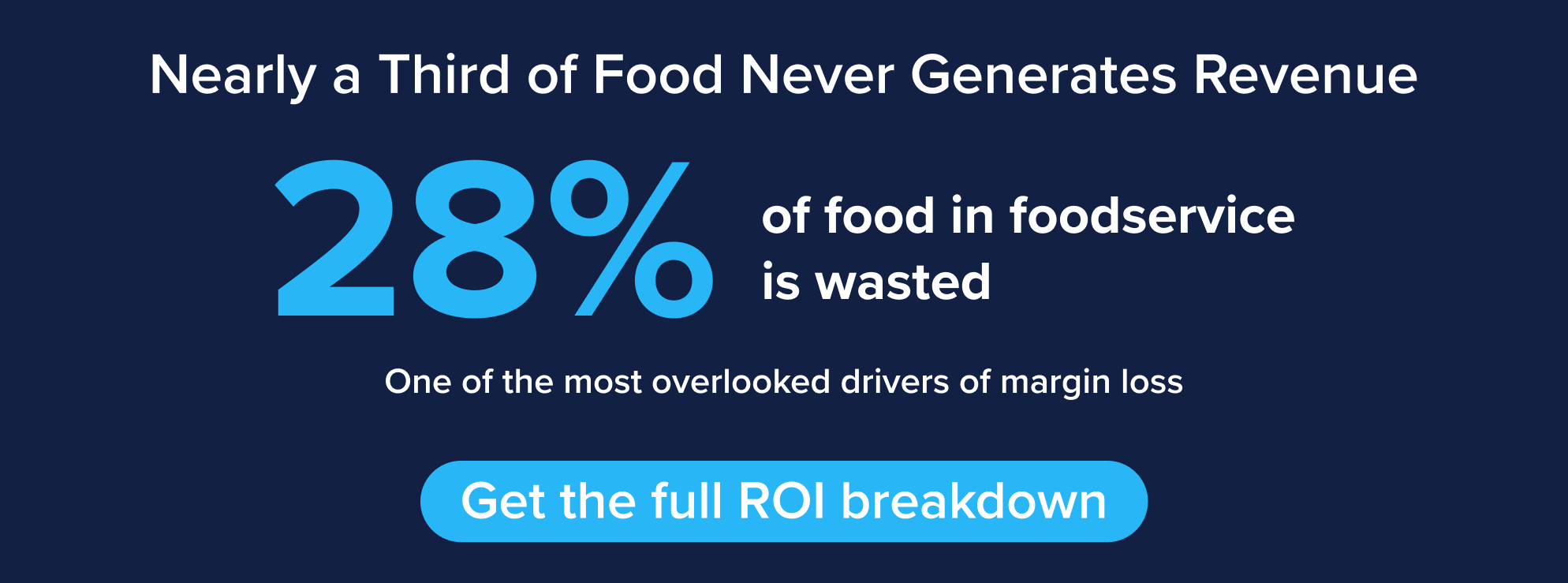
Individually, these leaks might barely register at a single location. But across multiple locations, the financial impact can grow quickly. The reality is that most large-scale operators simply don’t have the bandwidth to manually monitor supply chain performance at that scale. That’s why identifying and closing these gaps increasingly requires a strategic, data-driven approach that provides centralized visibility and automated oversight to support sustainable growth.
Why Teams Don’t See the Leakage
If ROI leaks are quietly draining margins, why don’t most teams spot them sooner? The answer comes down to fragmentation. Data that could reveal supply chain inefficiencies often lives in multiple disconnected systems, including POS systems, distributor portals, or internal spreadsheets. Each system may provide useful information on its own, but without a unified view, it becomes difficult to recognize patterns that span across locations or suppliers.
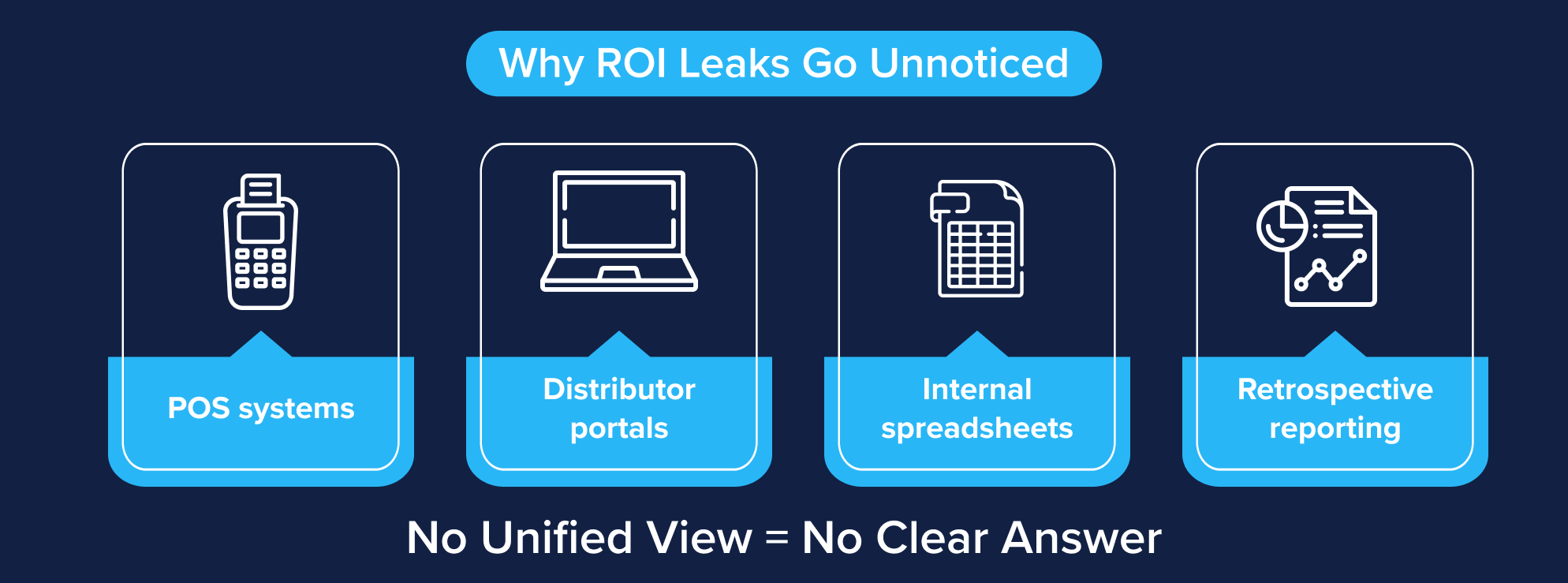
Another challenge is that much of the reporting available to operators is retrospective. By the time a report surfaces a discrepancy in pricing, credits, or inventory usage, the issue may have already impacted weeks, or even months, of purchasing activity. Compounding this issue is the reality that many managers are already working incredibly hard to keep their operations running smoothly.
In many operations, effort fills the role that infrastructure should.
Managers build workarounds, maintain spreadsheets, and run manual checks, not because it’s efficient, but because it has to be done. These routines keep operations moving, but they rarely improve visibility or margins.
Shifting this mindset starts with asking a simple question: Are our systems helping us see what’s happening throughout the entire operation? Organizations that begin with clearer visibility and smarter reporting can move beyond chasing issues to discover hidden opportunities for tightening performance.
The Cost of Delayed Insight
In many restaurant organizations, the issue isn’t a lack of data; it’s the timing and usability of that data. When root issues aren’t discovered for weeks or months after the fact, that delay could cost a multi-location operation hundreds of thousands of dollars in lost profits.
For example, consider the impact of missing even a single-digit percentage error across annual invoices. According to benchmarking research from the Institute of Finance and Management (IOFM), invoices contain an average error rate of about 2%. At a single location, this small of an error might go unnoticed.
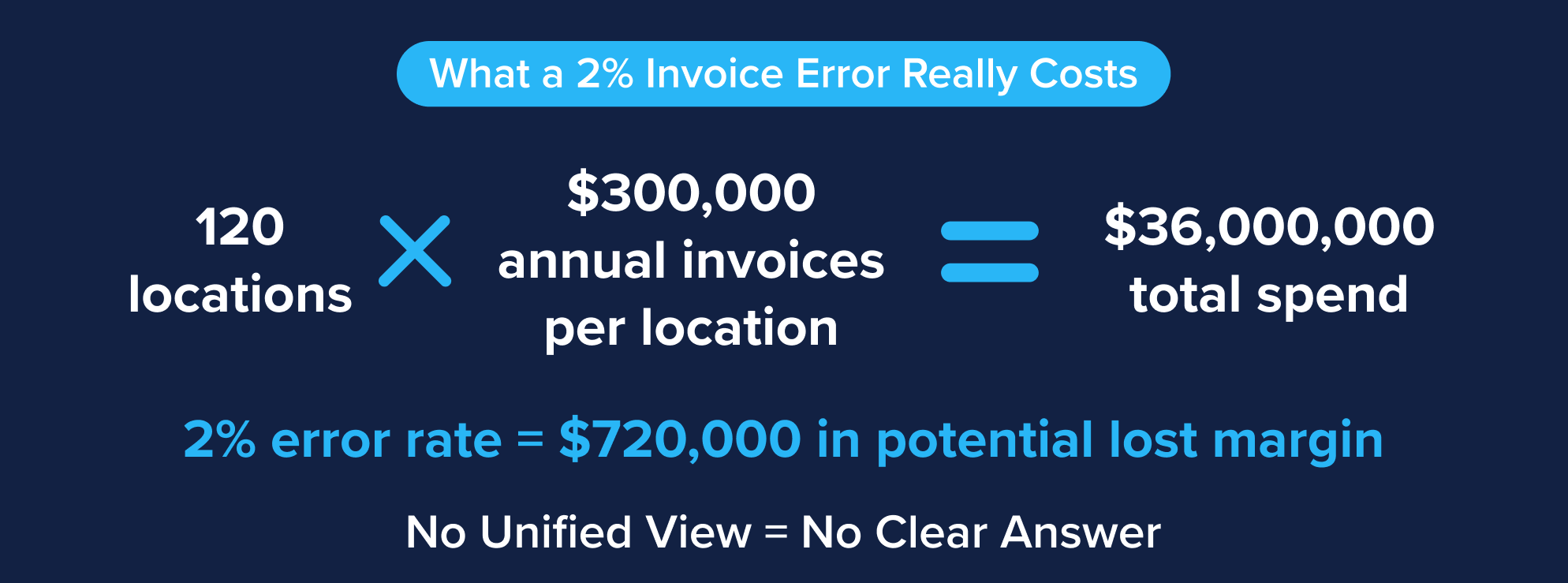
Now imagine a brand with 120 locations, each processing about $300,000 in invoices annually. That equates to $36 million in total invoice spend across the organization. If even 2% of those invoices contain errors or discrepancies, that represents roughly $720,000 in potential margin leaks to the company bottom line.
These hidden costs live in the time delays associated with manual reconciliation processes or retrospective reporting. For every cycle that passes where small discrepancies are missed, ROI leaks are growing larger. Fortunately, operators can help stop the leaks and recapture dollars before they grow into meaningful financial losses by improving the speed and visibility of their most important operational insights.
The Questions Leaders Should Be Asking
Closing ROI leaks often begins with asking the right questions about how your operation actually functions today. By taking a step back and reviewing how data, reporting, and operational decisions flow across the organization, leaders can begin uncovering opportunities that may otherwise remain hidden.
These questions can serve as a starting point for identifying where visibility gaps may be quietly affecting your margins:
- When was the last full-chain visibility review across purchasing, distribution, and inventory data?
- Are we consistently verifying invoice prices against contracted supplier pricing across all locations?
- How quickly are invoice discrepancies or supplier credits identified and reconciled?
- Do we have real-time visibility into purchasing trends across all locations?
- How often are promotion forecasts compared against actual demand to refine future planning?
- Are inventory discrepancies being tracked system-wide or only at individual locations?
Moving from Visibility to Action
For many restaurant operators, visibility has historically meant reviewing reports at the end of the period. But in today’s complex supply chain environment, visibility must evolve from a basic reporting function into a core operating condition.
The difference isn’t just having more information – it’s having the right insights at the right time to make actionable decisions that protect profit margins. When leaders can quickly connect purchasing data, supplier performance, and operational trends across locations, they gain the clarity needed to identify issues before they quietly erode margins.
If you’re ready to take a closer look at where hidden ROI leaks may exist in your organization, download the full guide, Driving ROI Through Data-Driven Supply Chain Strategy, to explore where these issues typically hide and how leading restaurant operators are addressing them.