

Most food manufacturers don’t think about market research until something feels off. Sales dip during what should be a strong cycle, or a competitor shows up in accounts you thought were locked in. Suddenly, you’re left wondering: what changed?
In foodservice, that answer isn’t always obvious. The market signals that indicate buyer behavior and menu trends are often buried in disconnected systems. On their own, these data points may seem minor or be overlooked. But together, they can tell a bigger story about shifts in the market that are essential for staying competitive.
That’s where market research comes in. It helps connect those fragmented signals, understand what’s driving demand, and uncover opportunities for continued growth.
What Is Market Research in the Food and Beverage Industry?
Market research for food companies involves collecting and analyzing data to understand the current trends in the market. For manufacturers and suppliers, this means evaluating real-world signals from restaurant purchasing behavior or distributor sales activity to improve competitive positioning. When used strategically, market research can identify which products are gaining traction, where demand is shifting, and how competitors are positioned. By turning fragmented data into actionable insights, operators can uncover new opportunities, refine go-to-market strategies, and make more informed decisions that improve market responsiveness.
Understanding the Foodservice Market Structure and Demand Flow
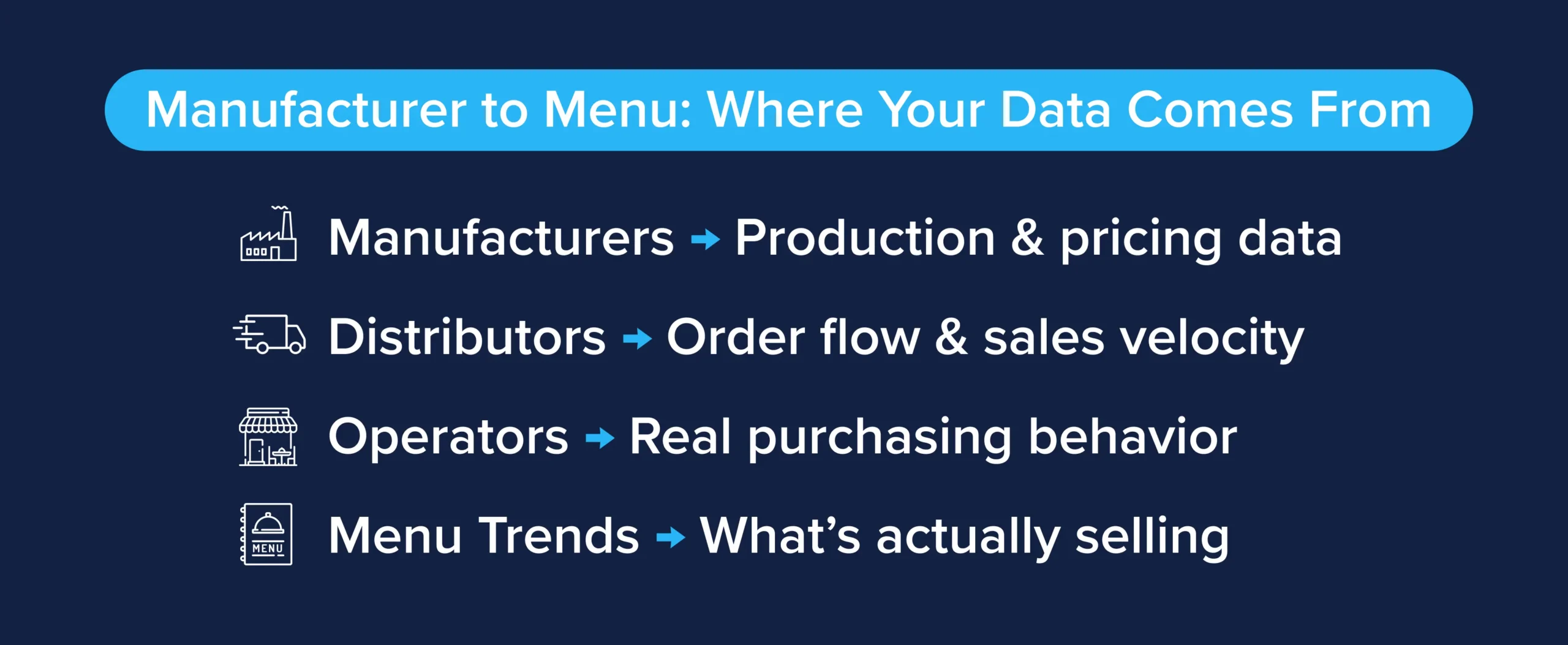
The foodservice market is built on a multi-step distribution model where products move from manufacturers to suppliers, and ultimately to restaurant operators. Each stage plays a distinct role: manufacturers produce and package goods, suppliers source and deliver products, and operators make final purchasing decisions based on menu needs and customer demand.
However, the flow of goods through the system is not always linear. Factors like regional distribution networks, contract agreements, and supply chain issues can influence how and where products move. Understanding this structure helps clarify who controls purchasing at each stage, how products gain distribution, and where friction points can occur as goods move through the system.
Understanding the structure of this system can make market research more accurate and actionable. Market research data, such as procurement activity or distributor sales, comes from different points within this flow. Knowing where that data originates helps manufacturers and suppliers interpret it correctly, connect the dots between signals, and avoid drawing incomplete or misleading conclusions.
Why Market Research Matters for Food and Beverage Companies
Market research for food companies can turn complex, fragmented industry data into clear, actionable strategies. For manufacturers and suppliers, it helps teams respond appropriately to market changes by:
- Identifying emerging demand trends: Companies can spot shifts in consumer preferences early and adjust product development or production accordingly.
- Optimizing go-to-market strategies: Research reveals where products are gaining traction geographically or by segment, allowing teams to prioritize high-opportunity markets.
- Strengthening competitive positioning: Understanding competitor product placement, pricing, and distribution helps companies differentiate their offerings and identify gaps in the market.
- Reducing risk in decision-making: Data-backed insights minimize reliance on assumptions, helping businesses avoid costly missteps in product launches, inventory planning, and expansion efforts.
Key Data Sources for Food and Beverage Market Research
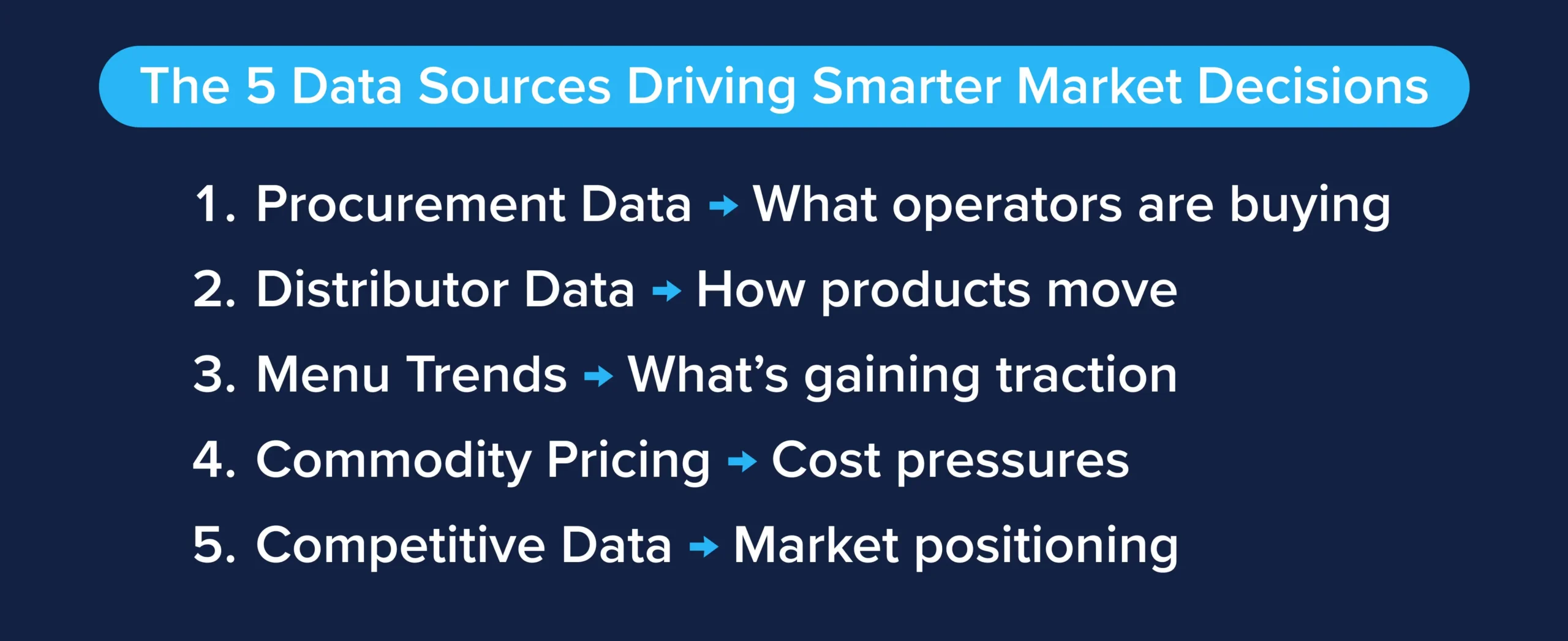
Effective market research relies on combining data from multiple sources to build a complete picture of demand, pricing, and competitive dynamics across the foodservice ecosystem. The most effective market research strategies pull from the following core data sources:
Restaurant Procurement and Sourcing Activity
Purchase orders, invoice data, and sourcing patterns captured through back-office systems reveal what operators are actually buying, helping manufacturers understand true demand, identify volume opportunities, and align production with real-world purchasing behavior.
Distributor Sales and Order Flow Data
Distributor sales reports, order frequency, and fulfillment trends across regions and segments show how products move through the supply chain, helping suppliers identify growth areas, monitor velocity, and optimize distribution strategies.
Menu and Product Demand Trends Across Chains
Menu intelligence data, POS integrations, and syndicated datasets tracking item placement and frequency reveal which products are gaining popularity, helping manufacturers anticipate consumer preferences and align product development with emerging trends.
Commodity Pricing and Cost Trends
Commodity market reports, supplier pricing updates, and industry benchmarks tracking ingredient costs and overall food spend highlight pricing fluctuations, helping manufacturers adjust strategies, protect margins, and make informed sourcing decisions.
Competitive Product Placement and Category Performance
Menu placement data, category performance metrics, and field insights reveal how competitor products are positioned and performing, helping manufacturers identify market gaps and refine product and marketing strategies for stronger differentiation.
Research Methods Used to Analyze the Foodservice Market
To conduct effective market research for food companies, manufacturers and suppliers must apply a mix of research methods that combine direct insights with broader industry data and competitive analysis.
Primary Research: Direct Customer and Buyer Insights
Primary research includes surveys, interviews, and direct feedback from restaurant operators, chefs, and procurement teams, often gathered through outreach, trade shows, or customer success interactions. This approach provides firsthand insights into purchasing decisions, product preferences, and unmet needs, allowing manufacturers to refine offerings and strengthen relationships with key buyers.
Secondary Research: Industry Data and Market Reports
Secondary research uses existing market intelligence compiled from dedicated research organizations, such as “state of the industry” reports. These resources provide a broader view of market trends, demand patterns, and category performance, helping suppliers validate assumptions, identify growth opportunities, and benchmark performance against the overall market.
Competitive Benchmarking and Market Position Analysis
In addition to using primary and secondary research focused on internal performance, manufacturers and suppliers can analyze competitor products and field activity to evaluate how similar offerings perform in the market. Reviewing competitor menu placement, pricing, and distribution patterns highlights where competitors may be expanding or losing ground, revealing important gaps and uncovering opportunities to compete more effectively in the market.
How to Do Market Research for Food and Beverage Companies (Step-by-Step)
Conducting effective market research for food companies requires a structured, repeatable approach that connects data to action. The steps below outline how manufacturers and suppliers can turn fragmented information into clear, revenue-driving opportunities.
Define Target Segments and Buyer Profiles
Start by identifying key segments such as QSR, fast casual, or fine dining, and build detailed buyer profiles including role, purchasing behavior, and menu focus. Use CRM data, sales insights, and operator interviews to refine these profiles. Avoid overly broad targeting, as trying to appeal to everyone can often lead to diluted messaging.
Analyze Demand Across Restaurant Chains and Food Categories
Leverage menu intelligence tools, distributor data, and procurement insights to evaluate which products and categories are growing across specific chains or regions. Focus on velocity, frequency, and consistency of those demand signals, rather than relying on isolated data points.
Evaluate Competitor Positioning and Product Penetration
Review where competitor products appear on menus, how they are priced, and how widely they are distributed across segments. Calculate product penetration rates by comparing the number of locations or menus featuring a competitor’s product against the total available opportunities within a region. Remember to track all competitors within your market, not just big-name brands; the smaller emerging brands can often signal where the market is heading next.
Identify Sourcing Trends and Active Opportunities
Analyze procurement data, distributor order flow, and operator purchasing shifts to identify where sourcing behaviors are changing. Look for substitutions, new supplier relationships, or regional demand spikes. Additionally, don’t ignore short-term fluctuations as these could be indicators of longer-term opportunity.
Assess Pricing, Margins, and Market Fit
Compare your pricing against commodity trends, competitor benchmarks, and operator cost expectations to determine if your product fits the market. Incorporate margin analysis and cost-to-serve data to ensure profitability. Steer clear of using underpricing just to win business, as this can erode margins and typically only leads to short-term gains.
Validate Market Opportunities Using Real Data
Before adjusting your strategies, confirm opportunities by cross-referencing multiple data sources. Using platforms such as SalesStream can help validate demand signals and market opportunities at scale. This helps prevent reactive decisions based on incomplete data and ensures your strategies are aligned with verified market opportunities.
Common Challenges in Food and Beverage Market Research
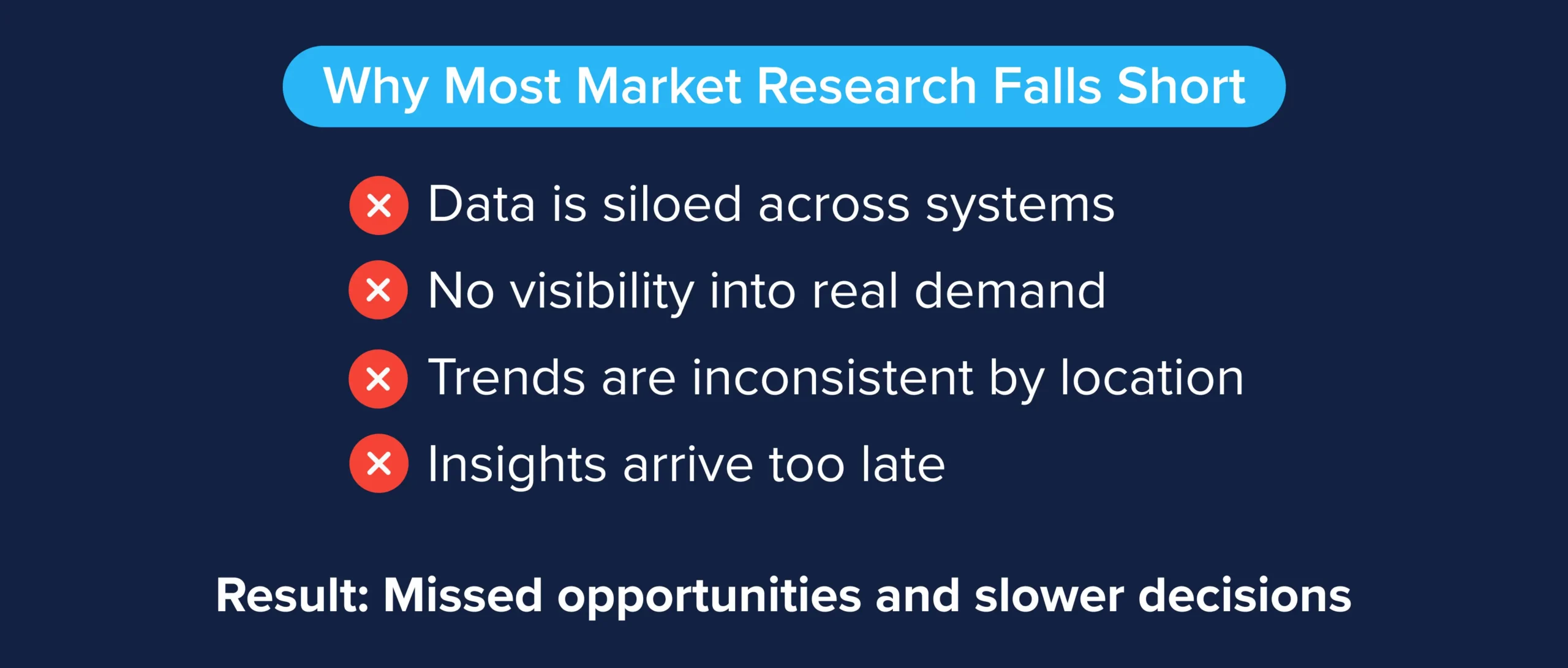
For most foodservice manufacturers and suppliers, the challenge isn’t finding the data – it’s making it work together in a way that’s actually useful. With information spread across disparate systems and locations, teams often spend more time piecing data together than analyzing it. To get the most value from your market research efforts, learn how to avoid or address these common challenges:
Fragmented Data Across Suppliers and Distributors
Data is often siloed across multiple systems, making it difficult to build a complete view of demand, leading to inconsistent insights and missed opportunities. Integrating data sources through a centralized platform that consolidates data into a single, reliable view can reduce time spent reconciling information and provide a clearer, more complete picture of market activity.
Limited Visibility into Buyer Demand
Without direct insight into what restaurants are actively purchasing, companies rely on inaccurate assumptions that lead to missed sales opportunities. Leveraging automated tools that track real purchasing behavior can help teams identify shifts in buying patterns earlier and respond more quickly to emerging trends.
Difficulty Tracking Trends Across Locations
Demand can vary significantly by region, concept type, or even individual locations, making it hard to identify scalable trends. Analyze data across multiple locations and segments to identify patterns that are consistent and repeatable at scale.
Reliance on Outdated Data Sources
Static reports and delayed datasets can cause companies to react too late to changing market conditions. Prioritizing real-time or near real-time data sources helps reduce reliance on outdated reports and ensures all operational decisions are based on current, relevant information.
Making Smarter Decisions with Market Research
Market research for food companies is most valuable when it moves beyond insight and drives action. By combining procurement data, distributor activity, and menu trends, manufacturers and suppliers can make faster, more confident decisions that align with real market demand.
The key is using the right tools to unify fragmented data and surface meaningful opportunities. Solutions like SalesStream help transform complex datasets into clear, actionable intelligence, enabling teams to identify growth areas, refine strategies, and stay competitive. Explore how SalesStream can elevate your market research approach and unlock smarter, data-driven decision-making.
FAQs
What is food and beverage market research?
For most manufacturers, it’s a way to keep tabs on what’s changing in foodservice. That could mean watching restaurant buying habits, menu shifts, distributor movement, or even noticing when certain products suddenly start popping up everywhere.
What data is most important for food industry market research?
Purchasing data tells you a lot. If operators keep buying the same product week after week, that matters. Menu trends, distributor sales, and pricing swings are helpful too, but real purchasing behavior usually tells the clearer story.
How can food companies analyze restaurant demand?
A lot of companies look for patterns instead of one-off spikes. Maybe a product starts moving faster in a certain region, or chains begin adding similar items around the same time. Usually the trends show up quietly before they become obvious.
What tools are used for foodservice market research?
Depends on the company. Some teams use menu tracking platforms while others lean more on distributor reporting or procurement data. A lot of manufacturers end up piecing information together from multiple places because no single source shows the full picture.
How often should market research be updated in the food industry?
At minimum, most manufacturers should review market data quarterly since pricing, sourcing, and restaurant demand can shift pretty quickly in foodservice. But the teams staying ahead usually are not waiting for quarterly reports alone. With real-time visibility tools like SalesStream, companies can monitor purchasing behavior, menu movement, and demand shifts as they happen instead of reacting months later.