
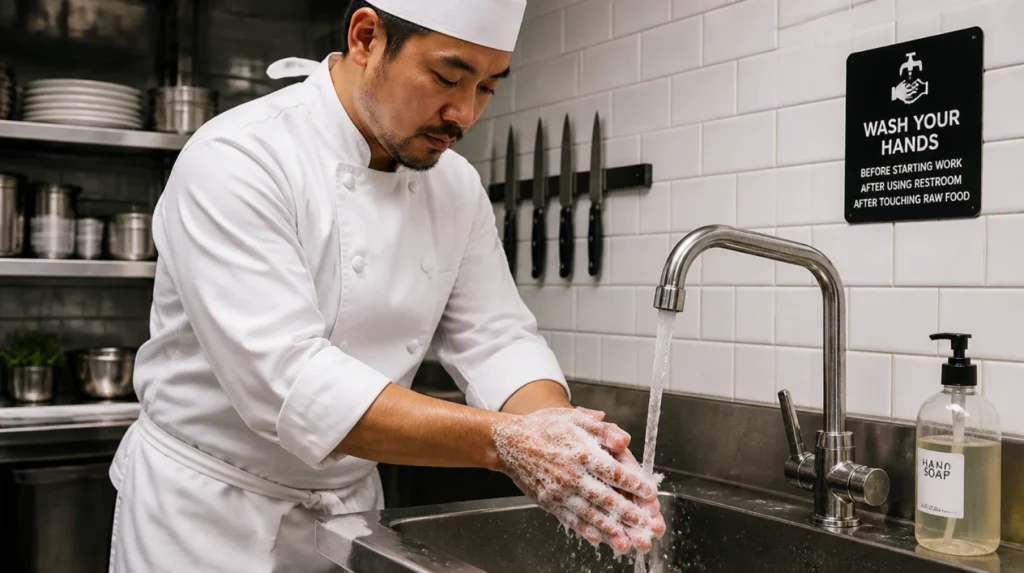
Walk into a restaurant kitchen right before a rush and things move fast. Deliveries are getting checked in, prep is still happening, managers are answering questions from every direction, and the line is already trying to catch up.
That’s usually when food safety gaps start showing up.
Not because teams don’t care, but because small habits slip over time. A cooler runs a little too warm. Temperature logs get rushed. Sanitizer buckets don’t get changed fast enough during service. Someone skips a step because the kitchen is slammed.
On their own, those issues may not seem serious. But over time, they create real operational risk.
That’s why a food safety audit matters. It helps restaurants spot problems early, improve consistency across the operation, and tighten procedures before small issues turn into larger ones.
For restaurant operators today, food safety goes far beyond passing an inspection. It impacts guest trust, operational performance, and brand reputation across every location.
What is the Food Safety Audit?
If you ask most operators what they think of when they hear “food safety audit,” they’ll probably picture somebody walking the kitchen with a clipboard while everyone suddenly starts changing gloves every thirty seconds.
But a real food safety audit usually goes a lot deeper than that.
It’s less about putting on a perfect performance for an hour and more about figuring out how the restaurant operates when things are normal, messy, busy, and moving fast. Because that’s when food safety gaps tend to show up.
Maybe the walk-in is overloaded after a truck delivery and product gets stacked too tightly. Maybe prep labels are missing because the morning shift got slammed. Also, maybe temperatures are technically being logged, but nobody’s actually checking whether the cooler has been creeping upward for the last two weeks.
That’s the kind of stuff a food safety audit is supposed to catch.
Most audits look at a mix of things happening throughout the operation. Storage practices. Employee habits. Cleaning routines. Temperature controls. Training records. Equipment conditions. Sometimes even how communication flows between shifts.
And honestly, some restaurants are surprised by what audits uncover. Not because teams don’t care, but because operational habits slowly drift over time when kitchens get busy.
Some food safety audits are done internally by restaurant leadership teams. Others come from franchise groups, suppliers, outside auditors, or certification programs. It really depends on the operation.
Either way, the point is usually the same: get a real picture of what’s happening in the restaurant before a health inspector, guest complaint, or contamination issue forces the problem into the spotlight.
Why Food Safety Audits Are Critical for Restaurants
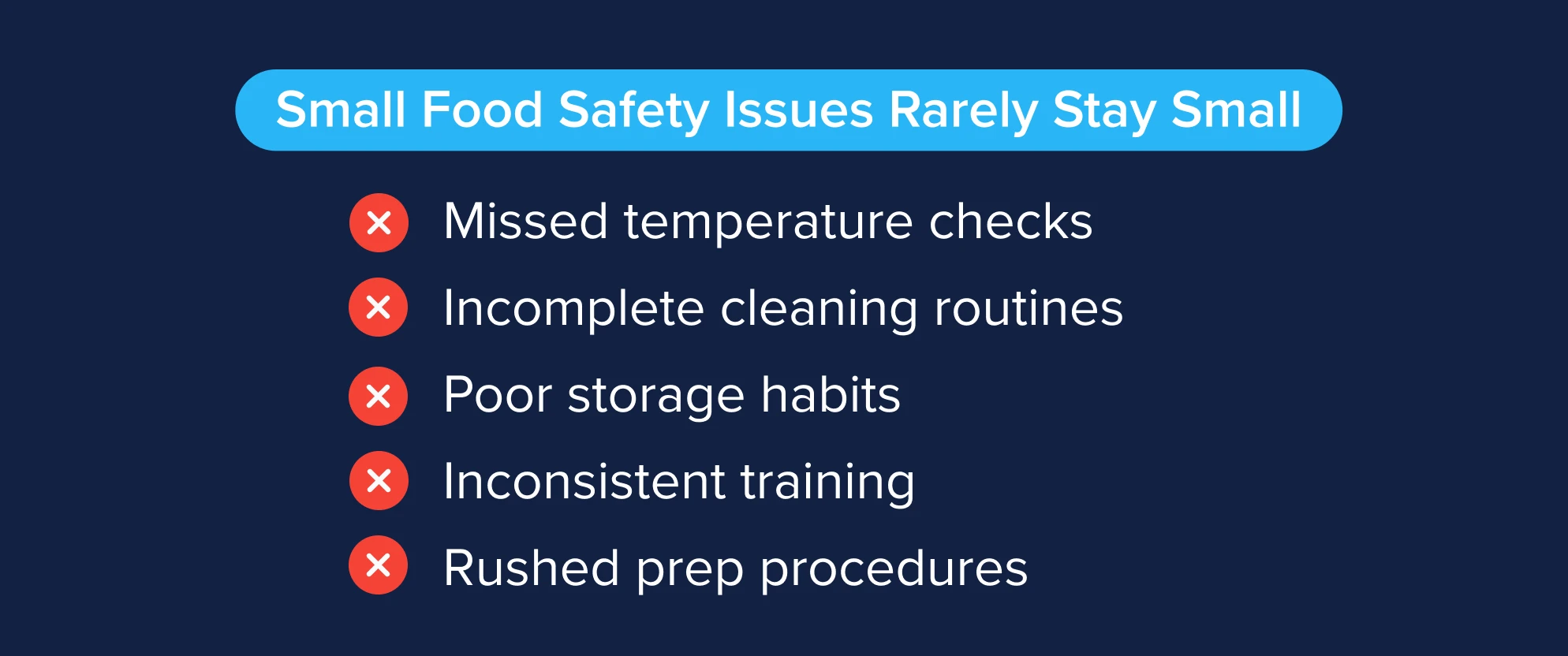
Most restaurants don’t suddenly develop major food safety problems overnight. Usually, it’s smaller operational issues that build up quietly in the background.
A location gets busy and cleaning routines start slipping. A manager stops double-checking temperature logs because staffing is tight. New employees pick up habits from whoever trained them, whether those habits are correct or not.
That’s why food safety audits matter so much operationally. They help restaurants step back and look at what’s actually happening inside the business before those smaller issues become bigger ones.
A good food safety audit can help operators:
- Catch food handling issues earlier
- Improve consistency between shifts and locations
- Identify training problems
- Reduce the chances of contamination or foodborne illness
- Keep documentation and procedures organized
- Prepare teams for inspections
- Reinforce accountability with managers and staff
- Reduce avoidable waste tied to mishandling or storage issues
For larger restaurant groups, audits also make it easier to spot patterns across stores. One location may consistently struggle with sanitation routines. Another might have recurring issues with storage organization or incomplete logs.
Without a consistent audit process, those patterns are easy to miss until they turn into a much larger operational problem.
Types of Food Safety Audits Restaurants Should Know About
Not every food safety audit works the same way.
Some are done internally by restaurant leadership teams. Others come from suppliers, franchise groups, or outside organizations. The type of food safety audit usually depends on what the restaurant is trying to evaluate and where the operational risk exists.
Internal (First-Party) Food Safety Audits
Internal food safety audits are conducted by the restaurant company itself, often through district managers, QA teams, or food safety leaders.
These audits are mainly focused on operational consistency across locations. One store may struggle with labeling while another has issues with temperature logging or storage procedures during busy shifts. Internal audits help operators catch those gaps early.
For multi-unit brands, they also help create more consistency and accountability between locations.
Supplier (Second-Party) Food Safety Audits
Supplier audits focus on vendors, manufacturers, distributors, and other supply chain partners.
Restaurants may review things like shipping temperatures, storage conditions, sanitation practices, and traceability systems to make sure suppliers are following proper food safety procedures.
This becomes especially important for restaurant groups managing products across multiple regions or supplier networks.
Third-Party and Certification Food Safety Audits
Third-party food safety audits are conducted by outside organizations rather than the restaurant itself.
These audits are often tied to certifications, franchise requirements, or regulatory standards and tend to involve more formal documentation and scoring processes.
For restaurant brands, they help validate that food safety procedures are being followed consistently across the operation.
What Does a Food Safety Audit Evaluate?
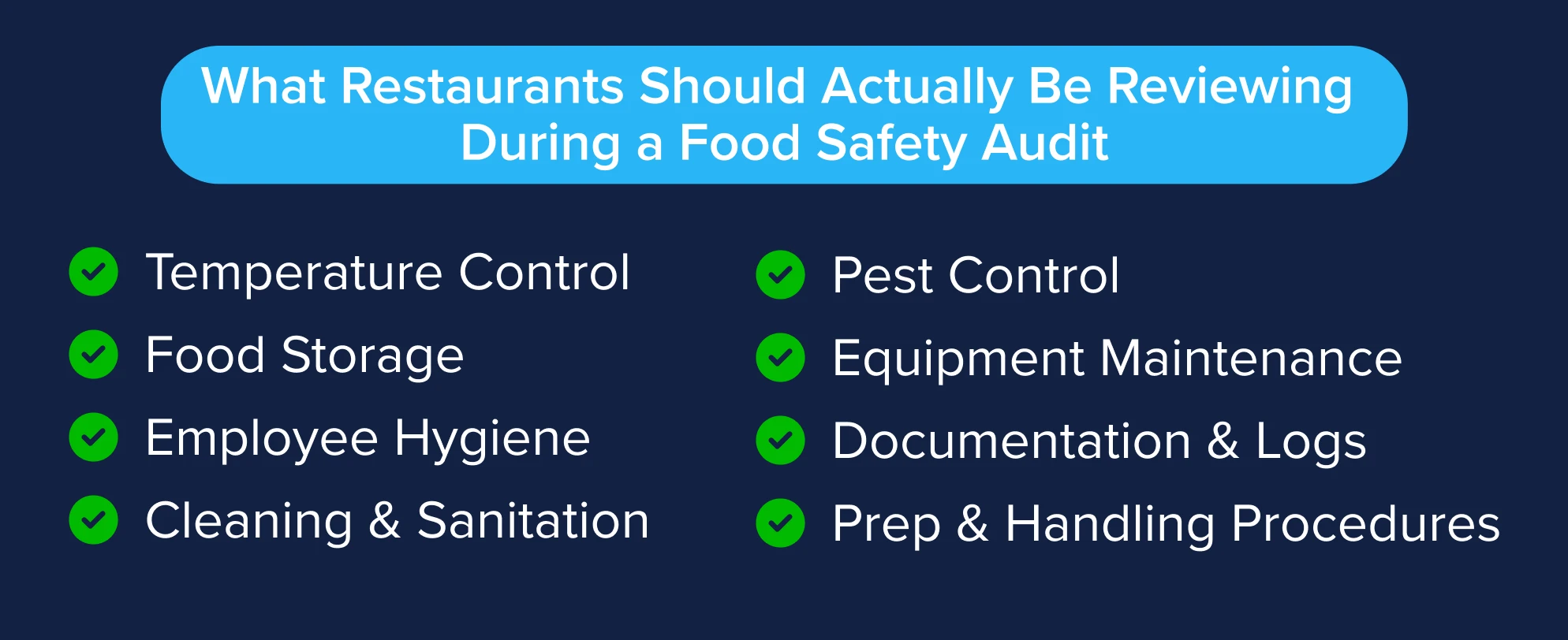
A food safety audit looks at much more than whether the kitchen appears clean.
Auditors evaluate how the restaurant actually operates throughout the day.
Food Safety Management Systems (HACCP and SOPs)
Most food safety audits begin with systems and procedures.
Auditors review HACCP plans, standard operating procedures, food safety policies, and operational guidelines to determine whether the restaurant has clear processes in place.
But documentation alone isn’t enough.
The real question is whether employees actually understand and follow those procedures consistently during service.
Food Receiving, Storage, and Temperature Control
Temperature control remains one of the biggest focus areas during a food safety audit.
Auditors often inspect:
- Delivery receiving procedures
- Refrigerator temperatures
- Freezer temperatures
- Food labeling practices
- Product rotation methods
- Storage organization
- Separation of raw and ready-to-eat foods
A cooler being just a few degrees off can create major problems over time.
And in many kitchens, temperature inconsistencies happen more often than operators realize.
Food Preparation and Handling Practices
This part of a food safety audit usually tells operators a lot about what’s really happening in the kitchen during service.
Most restaurants already know the correct procedures. The bigger question is whether those procedures are still being followed when the line is full, tickets are stacking up, and everyone’s moving fast trying to keep up with orders.
During this section of the audit, teams are often paying attention to things like:
- Whether employees are washing hands consistently between tasks
- How often gloves are being changed during prep and service
- If raw product is being kept separate from ready-to-eat ingredients
- Whether proteins are actually being cooked to required temperatures
- How allergen requests are handled during busy periods
- If prep stations are being wiped and sanitized throughout the shift
- Where utensils are being stored between uses
This is usually where small shortcuts start becoming noticeable. Not always because employees are ignoring procedures on purpose, but because busy kitchens naturally drift into habits over time if managers aren’t reinforcing standards consistently.
Cleaning, Sanitation, and Pest Control
Sanitation tends to be one of the fastest ways a small operational issue turns into a much bigger one.
And honestly, guests notice cleanliness problems fast. Sometimes before management does.
A food safety audit will usually spend time reviewing areas like:
- Whether daily cleaning schedules are actually being completed
- If sanitizer buckets are mixed correctly during service
- How dishwashing stations are being maintained
- Where chemicals are stored in relation to food and prep areas
- Whether drains, floors, and hard-to-reach areas are being cleaned regularly
- How trash is being managed throughout the day
- If pest control records and service reports are current
- Whether deep-cleaning routines are happening consistently or getting skipped during busy periods
This section can get especially challenging during labor shortages or periods of high turnover because cleaning routines are often one of the first things that become inconsistent when teams are stretched thin.
Facility Design, Equipment, and Maintenance
Equipment problems often create hidden food safety risks.
A food safety audit may include reviewing:
- Refrigeration performance
- Equipment calibration
- Ventilation systems
- Flooring conditions
- Drainage issues
- Handwashing stations
- Preventive maintenance records
Sometimes the issue isn’t employee behavior at all. Sometimes the equipment itself is creating the problem.
Employee Hygiene, Training, and Behavior
People drive food safety performance.
A restaurant can have strong SOPs on paper and still struggle operationally if training isn’t consistent.
Auditors commonly review:
- Handwashing compliance
- Uniform standards
- Illness reporting procedures
- Food safety certifications
- Ongoing training records
- Employee awareness of procedures
Restaurants with high turnover often see this area become one of the biggest operational challenges.
Documentation, Logs, and Recordkeeping
Documentation matters during every food safety audit.
Restaurants are typically expected to maintain accurate records related to:
- Temperature monitoring
- Cleaning schedules
- Corrective actions
- Equipment maintenance
- Employee training
- Pest control services
- Product receiving logs
Missing records can create compliance issues even if the restaurant is operationally sound.
How to Conduct a Food Safety Audit in Your Restaurant
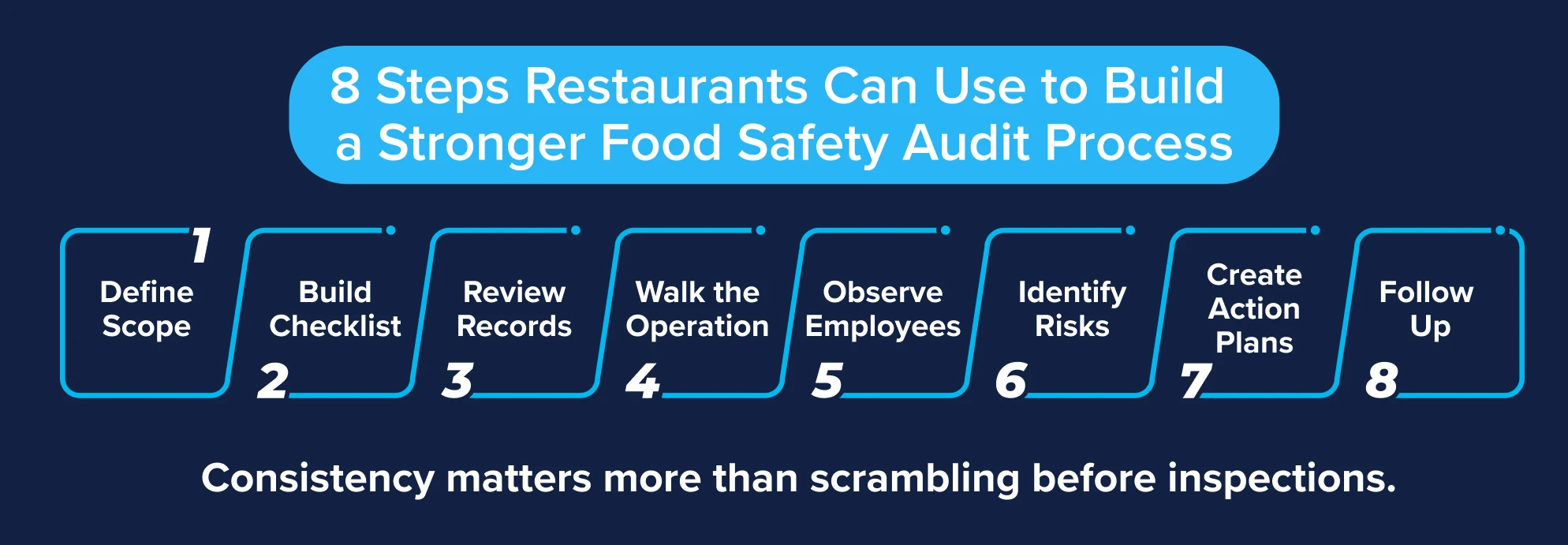
A food safety audit shouldn’t feel like a once-a-year panic project. The restaurants that handle audits best usually treat them like part of regular operations.
Step 1: Define Audit Scope, Standards, and Regulations
Start by figuring out what you’re reviewing. Some operators audit the whole restaurant. Others focus on specific areas that tend to cause issues.
Most audits are based around:
- Local health codes
- FDA guidelines
- Company procedures
- HACCP plans
- Brand standards
Step 2: Prepare a Food Safety Audit Checklist
Having a checklist keeps things from turning into random observations.
Most restaurants review areas like:
- Receiving
- Storage
- Prep areas
- Employee hygiene
- Cleaning routines
- Equipment condition
- Documentation
- Pest control
Some teams still use paper. Others track everything digitally now.
Step 3: Review Documentation and Food Safety Records
Before walking the kitchen, look through the records first.
That usually means checking:
- Temperature logs
- Cleaning schedules
- Training records
- Maintenance reports
- Corrective actions
And honestly, paperwork gaps usually stand out pretty fast.
Step 4: Inspect Receiving, Storage, Kitchen, and Service Areas
Now it’s time to walk the operation.
Auditors usually check walk-ins, prep stations, cooking lines, dish areas, storage rooms, and receiving spaces to see how things are actually being handled during the day.
Step 5: Observe Employee Practices in Real Time
This part matters more than people think.
It’s one thing for procedures to exist on paper. It’s another thing to see whether they’re still happening during a busy lunch rush.
Auditors often watch for:
- Handwashing
- Glove changes
- Cross-contamination risks
- Cooking temperatures
- Allergen handling
- Surface sanitation
Most food safety shortcuts don’t happen all at once. They usually build slowly over time when teams get busy.
Step 6: Identify Non-Compliance and Risk Areas
Once issues are found, they need to be documented clearly.
Some of the bigger red flags usually involve:
- Improper temperatures
- Cross-contamination
- Storage problems
- Hygiene issues
- Pest activity
Patterns matter too. If the same issue keeps showing up every audit, that’s usually a sign of a bigger operational problem.
Step 7: Create Corrective Action Plans
Finding problems is only half the process. Somebody still has to fix them.
Corrective action plans usually outline:
- What needs to change
- Who’s handling it
- Deadlines
- Follow-up steps
Otherwise, audits just become paperwork sitting in a binder somewhere.
Step 8: Verify Fixes and Track Ongoing Compliance
This is where a lot of restaurants fall off.
An issue gets identified. Everyone agrees it needs to be fixed. Then a few weeks later, the same problem shows up again.
The operators that stay consistent long term are usually the ones that keep following up after the audit instead of treating it like a one-time event.
Practical Food Safety Audit Checklists for Restaurants
Standardized checklists make food safety audits easier to manage and more consistent across teams.
Food Storage and Temperature Control Checklist
A food safety audit checklist for storage and temperature control may include:
- Refrigerators operating at safe temperatures
- Freezers maintaining required temperatures
- Products properly labeled and dated
- FIFO procedures being followed
- Raw products separated correctly
- Temperature logs completed accurately
- Deliveries inspected immediately
Sanitation, Cleaning, and Pest Control Checklist
Common sanitation checklist items include:
- Sanitizer buckets maintained correctly
- Cleaning schedules completed daily
- Floors and drains cleaned properly
- Trash removed consistently
- Chemicals stored safely
- Dishwashing equipment functioning correctly
- Pest control documentation updated
Employee Hygiene and Training Checklist
Employee-focused audit items may include:
- Proper handwashing observed
- Uniform standards followed
- Food safety certifications current
- Employees trained on SOPs
- Gloves used correctly
- Illness reporting procedures followed
Documentation and Recordkeeping Checklist
Documentation reviews may include:
- Temperature records completed
- Cleaning logs updated
- Corrective actions documented
- Maintenance records organized
- Training records current
- Supplier records available
Common Food Safety Audit Mistakes Restaurants Should Avoid
Even experienced operators make mistakes during the food safety audit process.
One of the most common issues is treating audits like special events instead of daily operational habits.
Other common mistakes include:
- Conducting audits only before inspections
- Rushing walkthroughs during slow periods
- Ignoring recurring issues
- Failing to verify corrective actions
- Using inconsistent checklists
- Overlooking employee behavior
- Incomplete documentation practices
- Weak follow-up processes
The strongest restaurant operations build food safety into everyday execution.
Not just inspection day.
How Often Should Restaurants Conduct Food Safety Audits?
The answer depends on the size and complexity of the operation.
Most restaurants benefit from layered audit schedules.
For example:
- Daily line checks
- Weekly manager walkthroughs
- Monthly internal food safety audits
- Quarterly operational reviews
- Annual third-party audits
Higher-volume operations or multi-unit restaurant groups often conduct audits more frequently.
Consistency matters more than intensity.
A restaurant that performs smaller, regular food safety audits usually operates more effectively than one scrambling through a massive audit twice a year.
Using Technology to Simplify Food Safety Audits
Paper logs and manual checklists still exist in plenty of restaurants.
But they create challenges.
Forms get lost. Data becomes inconsistent. Reporting takes too long. Patterns become harder to identify.
Technology helps restaurants simplify the food safety audit process while improving visibility across locations.
Digital systems can help operators:
- Standardize audit checklists
- Track corrective actions
- Store records centrally
- Automate temperature monitoring
- Compare location performance
- Identify recurring risks
- Improve accountability
For large restaurant organizations, visibility matters.
When operational data lives across disconnected spreadsheets, clipboards, and filing cabinets, it becomes difficult to identify risks quickly.
Technology helps leadership teams move from reactive problem-solving to proactive operational management.
Final Thoughts
A food safety audit should never feel like a box-checking exercise.
The best restaurant operators use audits to create consistency, reinforce accountability, and strengthen day-to-day execution across the business.
Because at the end of the day, food safety isn’t just about inspections.
Food safety affects guest trust. It affects operations. It affects brand reputation. Also, it affects profitability.
And in restaurant operations, consistency is usually what separates strong-performing locations from the ones constantly reacting to problems.
The restaurants that handle food safety best are rarely the ones scrambling the night before an inspection.
They’re the ones building operational discipline into everyday routines long before anyone walks through the door with a clipboard.
Food Safety Audit FAQs
What happens if a restaurant fails a food safety audit?
That really depends on what the audit uncovered.
Sometimes the issues are fairly minor. Maybe temperature logs weren’t being completed consistently, cleaning documentation was missing, or a location needed additional employee training. In those situations, restaurants are usually asked to correct the issue and show proof that the fix was completed.
More serious findings are a different story. If the audit identifies major sanitation concerns, improper food handling, pest activity, or unsafe temperature practices, the response can escalate pretty quickly. That could mean follow-up inspections, operational restrictions, fines, or losing certain certifications tied to the business.
For a lot of operators, though, the bigger concern is usually reputation. One food safety issue can create a ripple effect across guest trust, especially for brands operating multiple locations.
Who can conduct a food safety audit for a restaurant?
There isn’t one single person or organization responsible for every food safety audit.
Some restaurants handle audits internally through operations leaders, QA managers, or food safety teams. Other audits are conducted by outside groups depending on the situation. Franchise organizations, suppliers, certification programs, consultants, and third-party auditors may all be involved at different points.
It usually comes down to what the restaurant needs reviewed and whether the audit is being done for internal accountability or outside compliance requirements.
What’s the difference between a health inspection and a food safety audit?
Most operators think of health inspections first because those are tied directly to local regulators. A health inspector typically comes in to evaluate whether the restaurant is meeting local food code requirements.
A food safety audit tends to go further than that.
Instead of only focusing on violations at a single moment in time, the audit looks at the operation more broadly. Things like training consistency, employee habits, storage practices, documentation, sanitation routines, and operational procedures usually become part of the conversation.
In a lot of restaurants, health inspections tell you whether a location passed that day. A food safety audit gives a better picture of how the operation is functioning over time.