
Let’s be honest, if you’ve been running a restaurant over the last few years, you’ve probably had at least one “what is going on with my orders?” moment.
One week your distributor is out of something you use every day. The next week it’s back… but the price is way up. Then a delivery shows up late, or not at all, and now you’re figuring out substitutions on the fly while service is already rolling.
That’s the reality of food supply chain issues right now. It’s not one big disruption. It’s a bunch of smaller ones that keep stacking up and hitting your operation from different angles.
And the frustrating part? Most of it is happening outside your four walls—but you’re still the one dealing with it.
Understanding Food Supply Chain
When people talk about the “food supply chain,” it can sound like this big, abstract thing. But for operators, it’s pretty simple.
It’s everything that happens before food hits your back door.
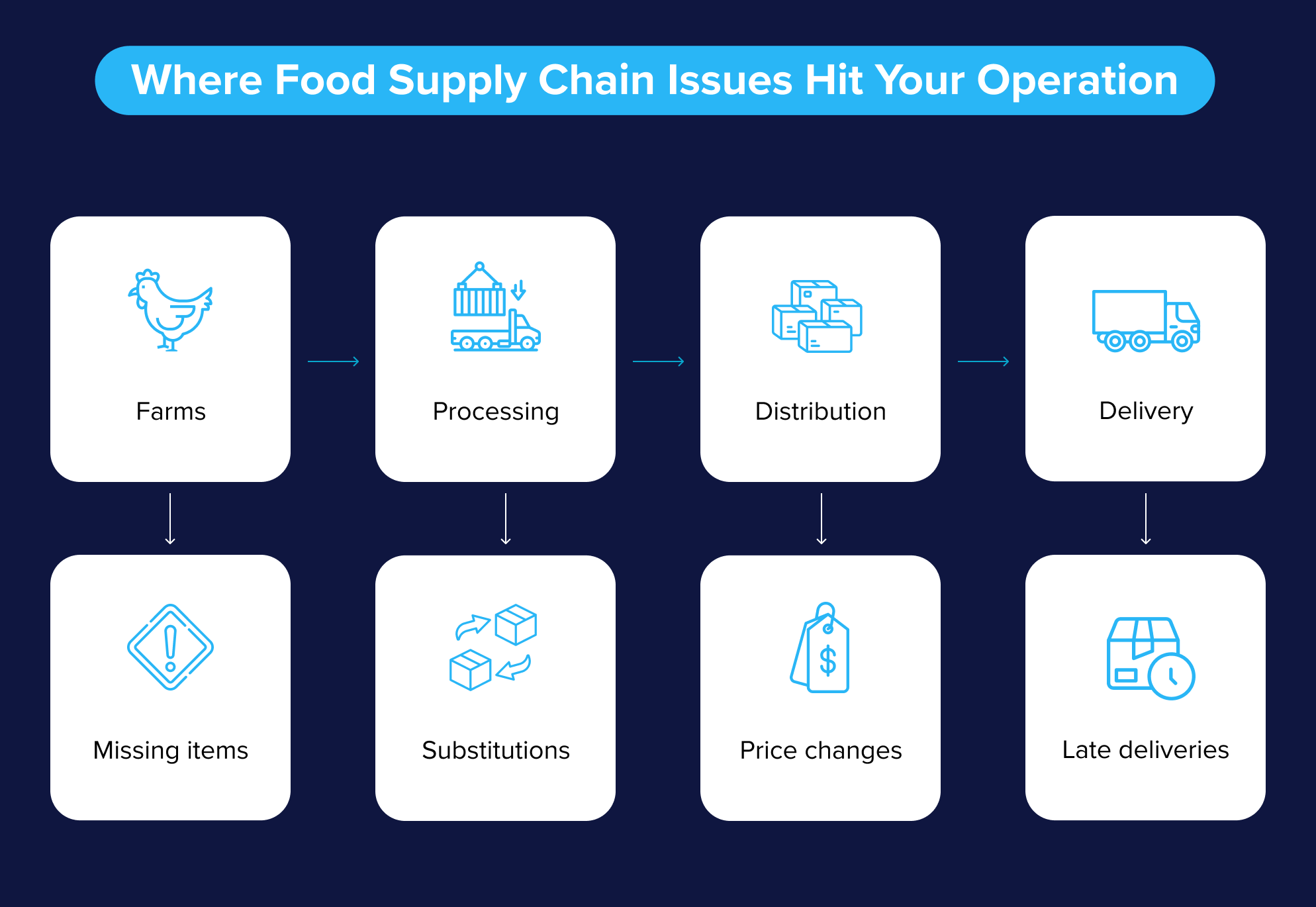
Farms, processing plants, distributors, trucking routes—it’s all connected. And when one piece slows down or breaks, you feel it almost immediately.
That’s why food supply chain issues don’t stay “upstream” for long. They show up as:
- items missing from your order
- substitutions you didn’t ask for
- price changes that weren’t on last week’s invoice
Most operators don’t need a textbook definition. You’re living it every time an order doesn’t come in the way you expected.
Major Causes of Food Supply Chain Issues
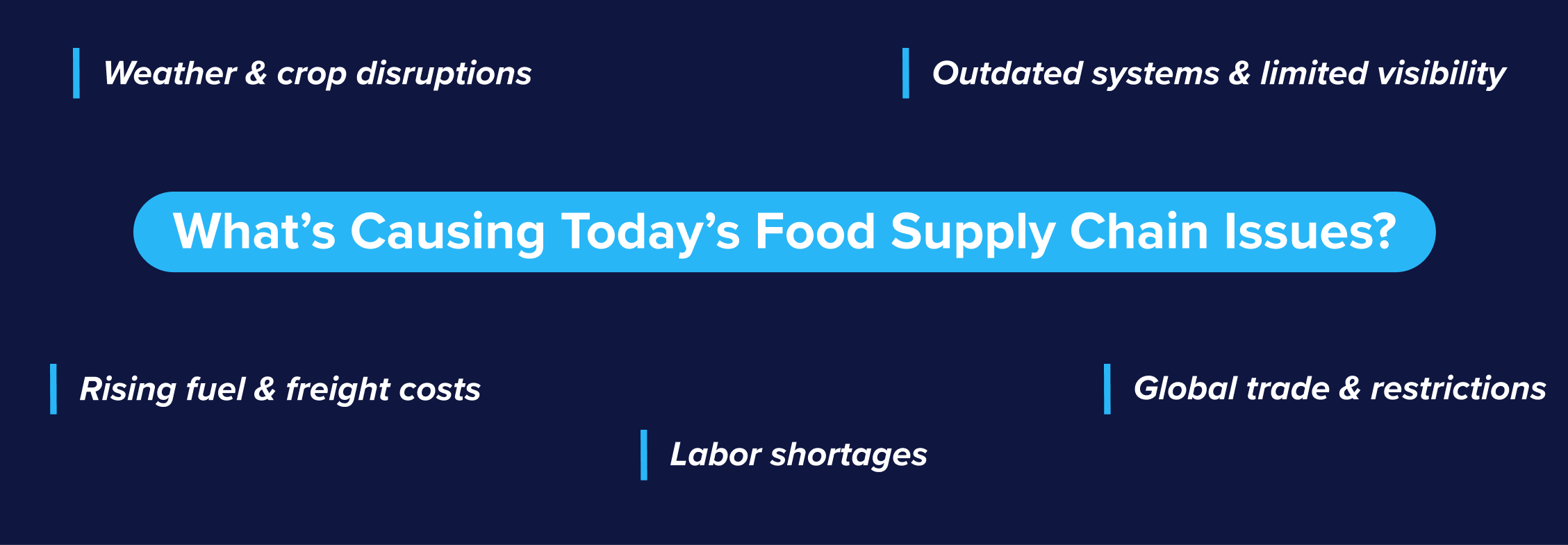
Climate Change and Environmental Disruptions
Weather used to be something you planned around. Now it feels like it changes the rules overnight.
A drought hits one region, and suddenly produce tightens up. Heavy rains somewhere else, and now crops are delayed or lower quality. You might not see it right away, but within a few weeks, it shows up in your orders.
A lot of today’s food supply chain issues start here. And there’s not much you can do to control it—just adjust when it hits.
Geopolitical Conflicts and Trade Restrictions
This is one of those things that sounds far removed… until it isn’t.
A trade issue across the world can impact availability or pricing faster than most operators expect. Imports slow down, costs increase, and suddenly your distributor has fewer options or higher prices.
You don’t always see the cause, but you definitely feel the impact. That’s how these kinds of food supply chain disruptions sneak into day-to-day operations.
Labor Shortages and Workforce Challenges
It’s not just restaurants dealing with labor—it’s the entire supply chain.
If farms are short-staffed, production slows. If warehouses are understaffed, orders get delayed. And, if there aren’t enough drivers, deliveries don’t show up on time.
Every step matters. And when one part falls behind, it creates a ripple effect of food supply chain issues that eventually land in your kitchen.
Rising Transportation and Fuel Costs
You might not think about freight costs when placing an order, but they’re baked into everything you buy.
When fuel costs go up, it costs more to move food. When it costs more to move food, your pricing goes up—sometimes gradually, sometimes all at once.
It’s one of those quieter food supply chain issues that chips away at your margins over time.
Inefficient Operations and Outdated Systems
Not every disruption is external.
Sometimes the issue is visibility. Or lack of it.
If your systems don’t talk to each other—or you’re relying on manual processes—it’s harder to catch pricing issues, track trends, or adjust quickly.
A lot of food supply chain issues feel bigger than they are simply because operators don’t have the data to respond in real time.
Key Challenges Facing Restaurants
Inconsistent Ingredient Availability
You build your menu around consistency. Your guests expect it.
So when an item suddenly isn’t available—or keeps going in and out—it throws everything off.
These kinds of food supply chain issues force quick decisions:
Do you swap it? Reprice it? Pull it entirely?
None of those options are ideal mid-service.
Rising Food and Operational Costs
It’s not just that costs are going up—it’s that they’re unpredictable.
One week something holds steady. The next week, it jumps. Then maybe it drops again. It’s hard to plan when pricing keeps shifting.
That’s what makes food supply chain disruptions so tough. It’s the volatility, not just the increase.
Quality Control and Food Safety Risks
When you start sourcing from different places to fill gaps, quality can vary.
One case looks great. The next doesn’t match. Or specs change slightly and now your prep or plating is off.
And if traceability isn’t clear, it opens the door to bigger concerns. Some food supply chain issues aren’t just operational—they’re risk-related.
Inventory Management and Forecasting Issues
Forecasting is hard enough when things are stable.
When supply is inconsistent, it turns into more of a guessing game. You might over-order to protect against shortages, or under-order to avoid waste—and both can hurt you.
This is where a lot of operators feel the daily pressure of food supply chain issues the most.
Supply Chain Visibility and Transparency Gaps
One of the most frustrating parts? Not knowing what’s coming.
If you don’t have visibility into pricing trends, availability, or supplier changes, you’re always reacting.
And reacting is expensive.
A lot of food supply chain issues become manageable once you can actually see what’s happening before it hits your invoice.
Impact of Food Supply Chain Issues on Restaurants
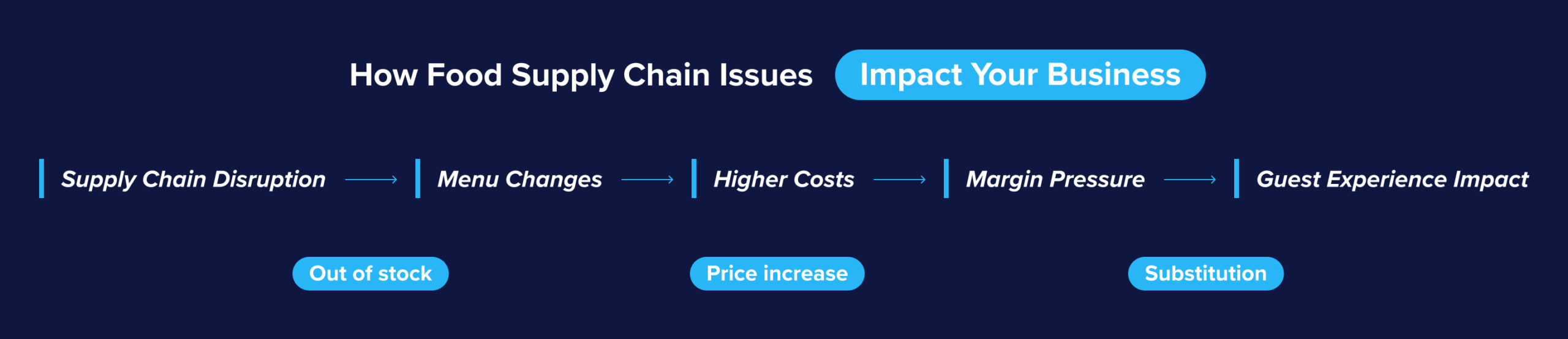
Menu Instability and Pricing Volatility
Menus aren’t meant to change constantly—but lately, they kind of have to.
If your costs or availability shift, pricing adjustments follow. Or you’re swapping ingredients more often than you’d like.
Over time, these food supply chain issues make it harder to keep your menu consistent and predictable.
Margin Erosion and Cost Uncertainty
Margins don’t usually disappear overnight. They get chipped away.
A little increase here. A missed pricing error there. A substitution that costs more than expected.
Layer enough of those together, and ongoing food supply chain disruptions start to really impact profitability.
Customer Satisfaction and Brand Risk
Guests don’t see supply chain issues. They just see the result.
If something is out of stock, different than usual, or priced higher than expected, it affects their experience.
And consistency is a big part of brand trust. When food supply chain issues start affecting that, it becomes more than just an operations problem.
Technology’s Role in the Food Supply Chain
AI and Predictive Analytics for Demand Planning
Most operators aren’t sitting there thinking, “I need AI.” You’re just trying to not get burned on your next order.
But here’s where it actually helps.
Instead of going off gut feel or what you did last week, these tools look at your actual usage over time. What you sell, when you sell it, how it shifts week to week. It’s not perfect, but it’s a lot better than guessing.
And when you’re dealing with constant food supply chain issues, even getting a little closer to accurate makes a difference. Fewer over-orders, fewer “we’re out of that already?” moments.
Blockchain for Traceability and Transparency
This one sounds more complicated than it needs to be.
All it really means is you can track where something came from and how it got to you. Not just “it came from a supplier,” but actual steps along the way.
Why does that matter? Because when something goes wrong, and with food supply chain issues, it eventually does, you’re not stuck with chasing answers.
You can actually see where the breakdown happened instead of guessing or waiting on five different emails to figure it out.
IoT and Real-Time Shipment Tracking
You know that feeling when an order is late and nobody has a clear answer?
That’s what this helps fix.
Instead of calling around or refreshing tracking links that don’t update, you can see where your shipment actually is. In real time. If it’s delayed, you know. If something’s off, you know sooner.
With how unpredictable food supply chain disruptions have been, that heads-up matters. It gives you time to adjust before it turns into a full-on service issue.
Automation and Digital Supply Chain Platforms
A lot of operators are still piecing things together across emails, invoices, spreadsheets… maybe a few different systems that don’t really connect.
It works—until it doesn’t.
When everything lives in one place, it’s just easier to manage. You can see pricing changes, track what you’re actually buying, and spot issues before they stack up.
And honestly, with how often food supply chain issues are popping up, having everything in one view isn’t a “nice to have” anymore. It’s what keeps things from slipping through the cracks.
Strategies to Reduce Food Supply Chain Risks
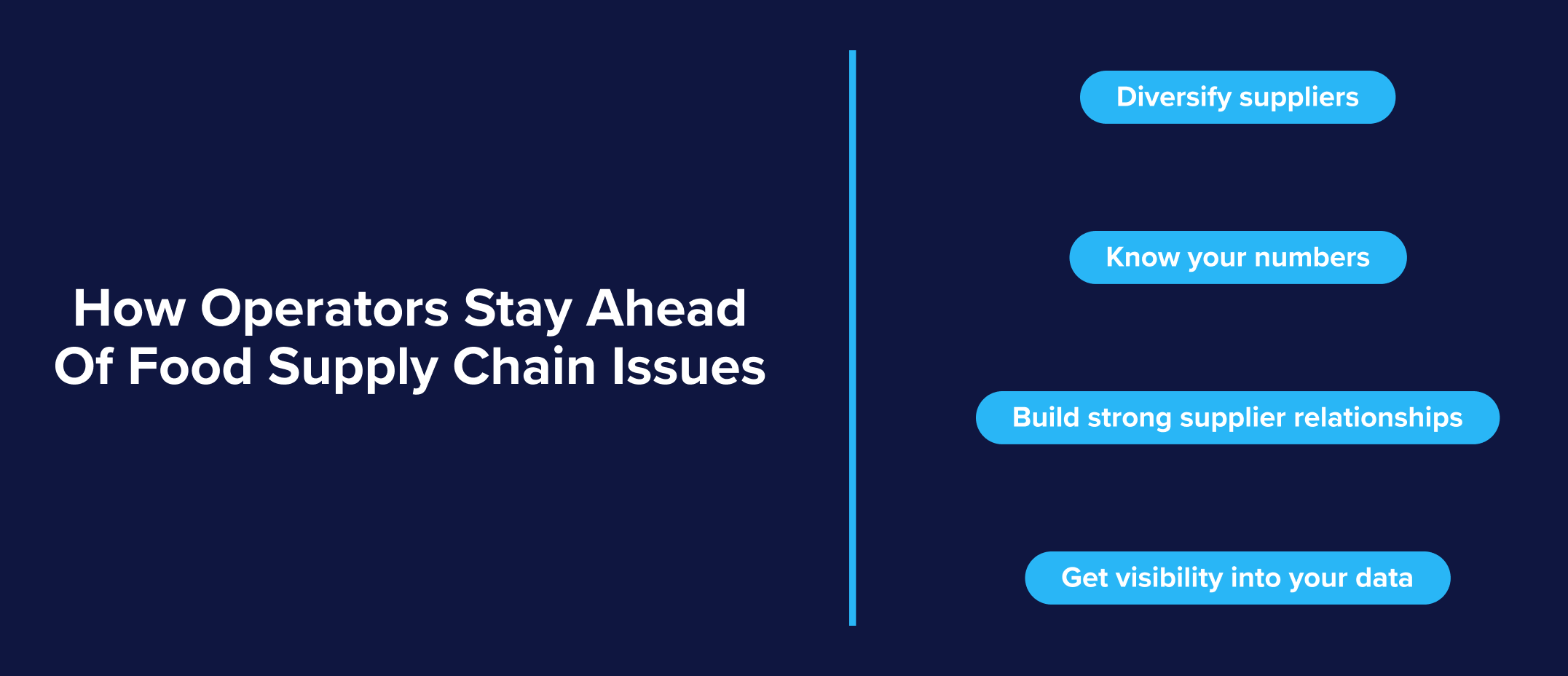
Diversifying Suppliers and Sourcing Locally
A lot of operators stick with one main supplier because it’s easier. Fewer calls, fewer accounts to manage.
Until that one supplier is out of something you need… and now you’re scrambling.
That’s where this starts to matter. Having a backup—or even just knowing who you could call—gives you options when food supply chain issues hit. Local vendors can help too, especially when broader distribution gets tight.
It’s not about replacing your main distributor. It’s about not being stuck when something falls through.
Improving Demand Forecasting and Inventory Control
Most kitchens already have a rhythm. You kind of know what you’re going to go through in a week.
The problem is when that rhythm gets thrown off—busy weekend, slower weekday, one product suddenly harder to get. Now your usual ordering pattern doesn’t work.
Getting tighter on your numbers helps. Not in a complicated way, just knowing your real usage a little better so you’re not overreacting every time something shifts.
With how unpredictable food supply chain issues have been, even small adjustments here can save you from over-ordering… or running out at the worst time.
Strengthening Supplier Relationships
This one doesn’t get talked about enough, but it makes a difference.
If you’ve got a solid relationship with your rep, you usually hear about issues sooner. You might get a heads-up on a shortage or an alternative before it becomes a problem.
If you’re just another account, you find out when the truck shows up without the item.
When food supply chain disruptions happen—and they will—communication is everything. And that usually comes down to the relationship.
Investing in Data Visibility and Technology
A lot of operators don’t realize how much they’re missing until they actually see their data in one place.
Pricing changes, order history, what you’re really spending—it’s all there, but usually scattered.
When you can actually see it clearly, patterns start to show up. You catch things earlier. You stop guessing as much.
And with how constant food supply chain issues are right now, that visibility is what helps you stay a step ahead instead of constantly playing catch-up.
Final Thoughts
At this point, food supply chain issues aren’t temporary—they’re part of the landscape.
The operators who handle them best aren’t the ones avoiding disruption. They’re the ones who can adapt quickly, make informed decisions, and stay a step ahead when things change.
Because things will change.
FAQs
What are the most common food supply chain issues for restaurants?
Most operators deal with availability gaps, price fluctuations, delivery delays, and limited visibility into supplier changes—all common food supply chain issues.
How do food supply chain disruptions impact restaurant profitability?
They drive up costs, create inefficiencies, and make it harder to control margins, especially when pricing and availability are unpredictable.
How can restaurants reduce supply chain risk?
Diversify suppliers, improve forecasting, build strong supplier relationships, and invest in tools that provide better visibility into your data.
What role does technology play in solving food supply chain issues?
Technology helps operators track trends, forecast demand, and respond faster—reducing the impact of food supply chain issues.
Why is supply chain visibility important for restaurants?
Because you can’t manage what you can’t see. Visibility helps operators anticipate disruptions and make proactive decisions instead of reactive ones.