
Margins are very important in the food service industry. A lot of people pay attention to work. A lot of people are worried about supply chain risk.
But none of it matters if your business isn’t following food safety rules.
You can’t just check off a list of food safety rules before a health inspection. Receiving, storing, preparing, cleaning, keeping records, checking suppliers, and training staff are all part of this daily routine. It works. It is cultural. And in today’s world of rules and regulations, it can’t be changed.
This guide explains what it really means for restaurants to follow food safety rules and gives operators a useful checklist they can use to improve their programs and lower their risk.
What is Food Safety Compliance?
Food safety compliance refers to a restaurant’s ability to always follow the rules set by the local, state, and federal governments to keep food safe and protect public health.
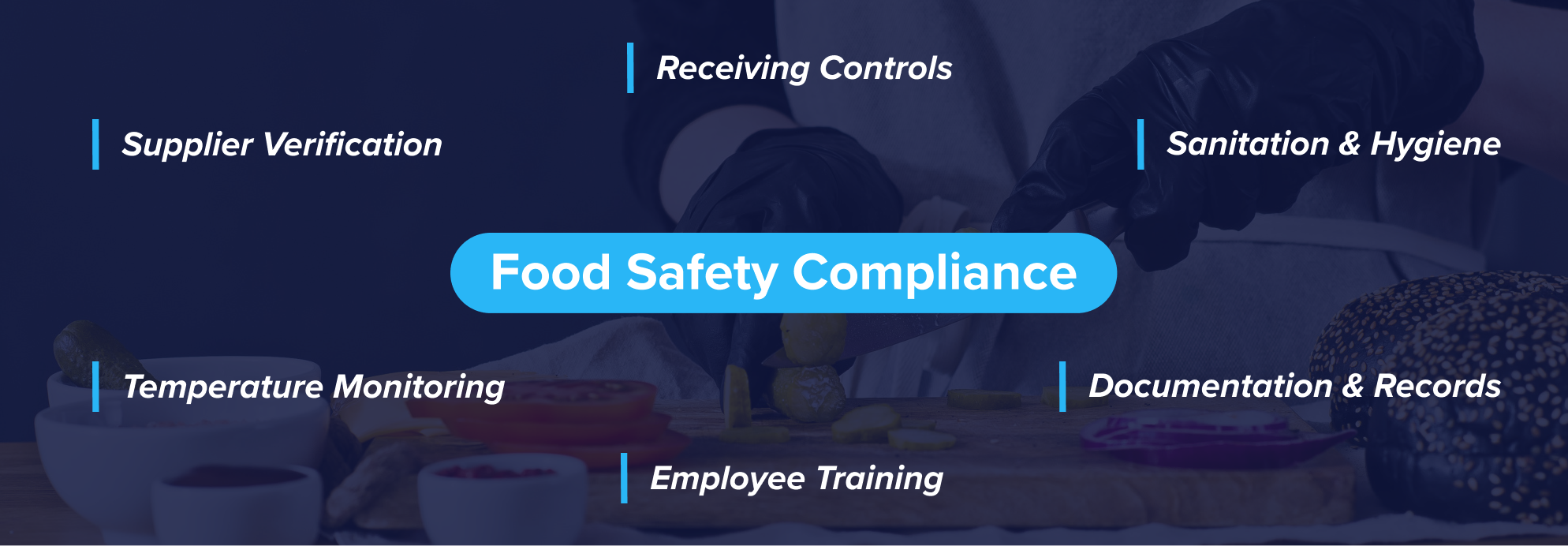
Food safety compliance is basically:
- Following the rules for food safety
- Following the right steps for handling food
- Writing down processes and controls
- Checking the safety of suppliers and ingredients
- Getting ready for inspections by the government
It is both following the rules and being disciplined at work.
Following food safety rules is more than just passing an inspection. It’s about making systems that stop problems before they happen.
Why Food Safety Compliance is Critical for Restaurants
Preventing Foodborne Illness and Contamination
It only takes a small mistake in temperature control or cross-contamination during prep to get sick from food. These risks are much lower when food safety compliance systems are strong.
Regularly checking the temperatures of food as it comes in, keeping logs of cold storage, handwashing, and cleaning schedules protects guests and lowers the risk of contamination.
Meeting Health Department and Regulatory Requirements
Local health departments make sure that food safety rules are followed by doing inspections, giving scores, and requiring people to fix problems.
Strong food safety compliance programs make sure that restaurants are always ready for an inspection, not just when a health inspector comes in.
Avoiding Fines, Closures, and Legal Risk
Not following food safety rules can lead to:
- Fines in money
- Short-term closings
- Civil lawsuits
- Higher costs for insurance
Following the rules is a lot cheaper than dealing with violations after they happen.
Protecting Brand Reputation and Customer Trust
In the digital age, news about food safety problems and inspection scores spreads quickly. One widely shared mistake can ruin years of work to build a brand.
Following food safety rules protects not only customers but also the business’s reputation and long-term success.
Key Food Safety Regulations Restaurants Must Follow
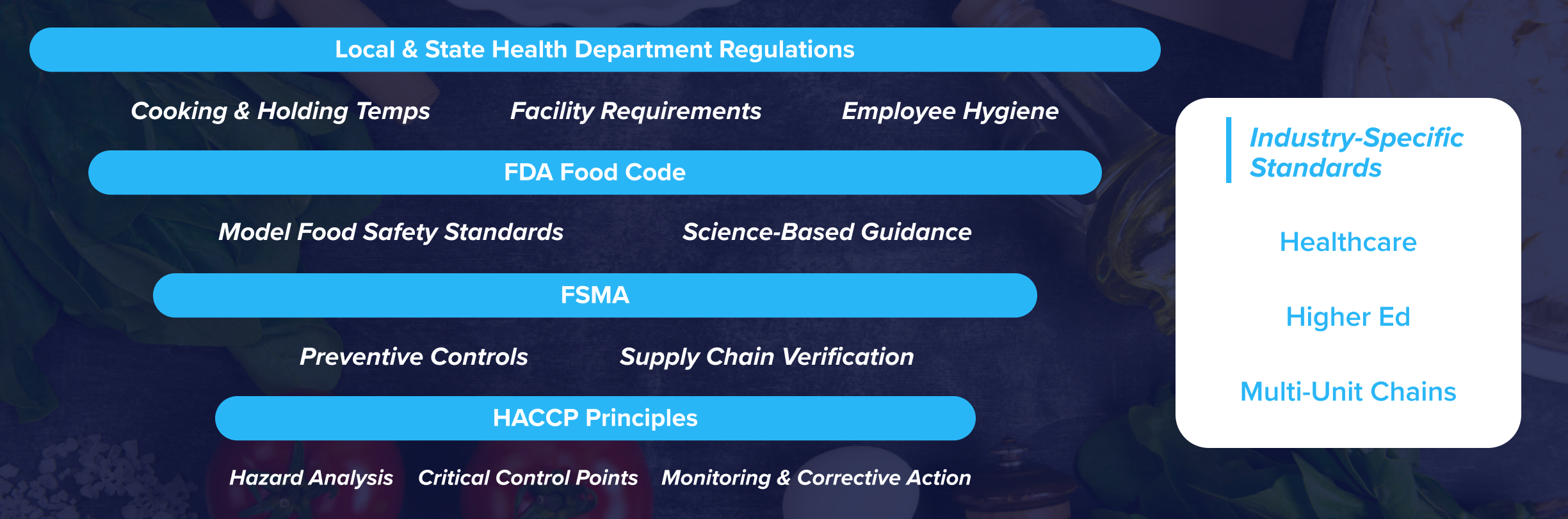
Local and State Health Department Regulations
Local and state health departments set certain rules for food safety for:
- Cooking and holding temperatures
- Designing and keeping up with facilities
- Requirements for employee hygiene
- Control of pests
- How to store food
These rules are different in each area, so operators need to know about both federal and local rules.
FDA Food Code and FSMA Requirements
Many states use the FDA Food Code as a model for their own rules, either as is or with some changes.
The Food Safety Modernization Act (FSMA) puts a lot of emphasis on supply chain verification and preventive controls. FSMA directly affects manufacturers and distributors, but as part of larger food safety compliance programs, restaurants are expected to check that their suppliers are following the rules and can be traced.
For a deeper look at what traceability means in practice and what operators need to prepare for, read our guide: Food Safety and Traceability: The Importance of FSMA Rule 204.
HACCP Principles and Guidelines
The Hazard Analysis and Critical Control Points (HACCP) system is a way to find and deal with possible food safety hazards before they happen.
The main ideas behind HACCP are:
- Finding biological, chemical, and physical dangers
- Setting up important control points
- Keeping an eye on and writing down controls
- Taking action to fix things when they go wrong
A lot of restaurants use HACCP-based procedures as part of their plans to keep food safe.
Industry-Specific Food Safety Standards
Some areas, like healthcare, higher education, and multi-unit chains, often have their own food safety rules that go beyond what the law requires.
These internal standards often include audits of suppliers, documents that show where products come from, and standard operating procedures that are the same at all locations. In today’s environment, compliance does not exist in isolation. Traceability, supplier accountability, and real-time visibility are all part of the larger supply chain picture. Many of the most common food safety risks stem from broader food and beverage supply chain challenges that impact sourcing, distribution, and data transparency.
Food Safety Compliance Checklist for Restaurants
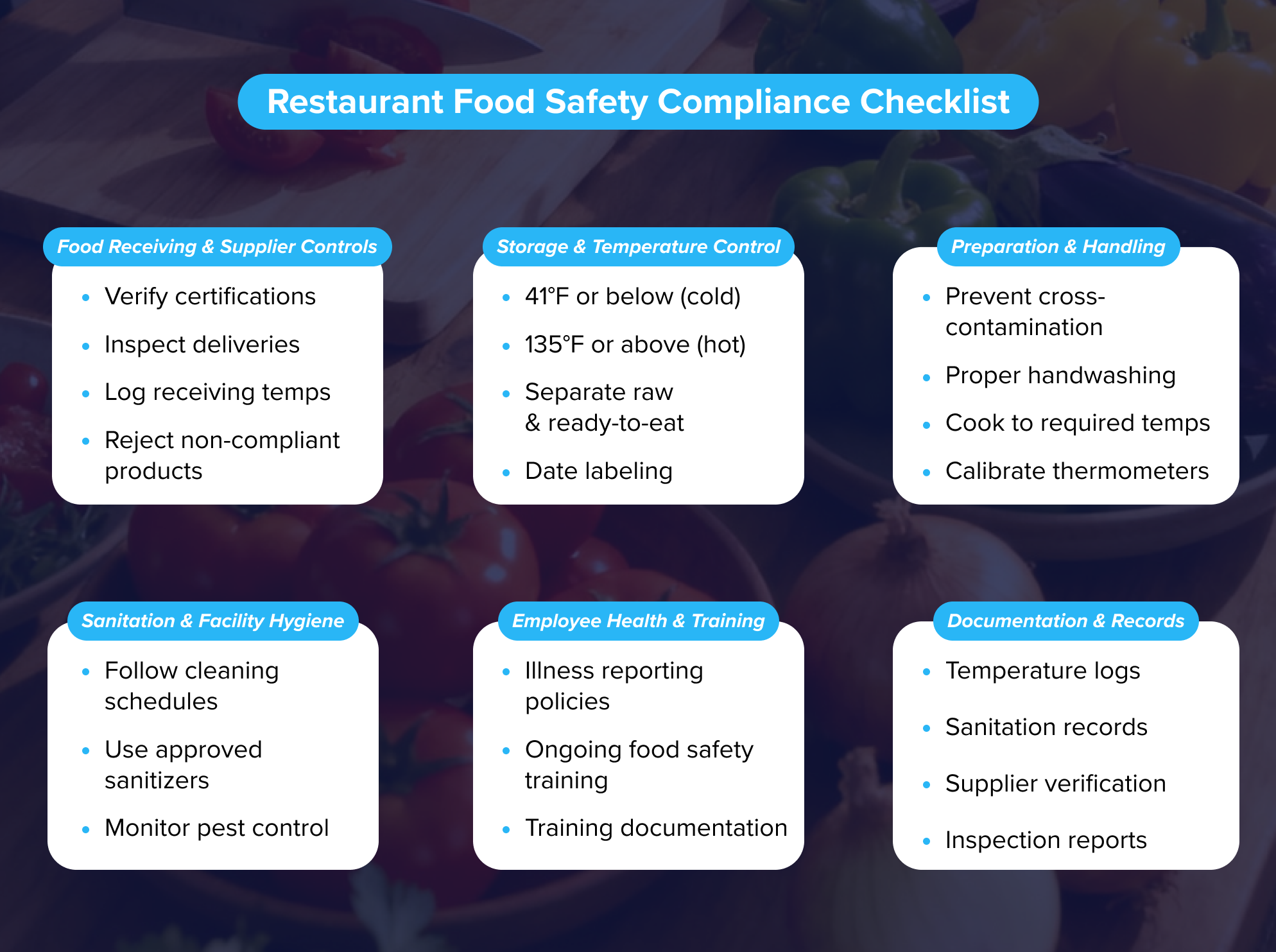
Food Receiving and Supplier Controls
- Check the food safety certifications of your suppliers.
- Check deliveries for damage, temperature control, and any signs of contamination.
- For safety, keep track of the temperatures of foods that need time and temperature control (TCS).
- Do not accept products that do not meet food safety standards.
- Keep records of supplier approval.
The first step in keeping food safe is to have strong controls over suppliers.
Food Storage and Temperature Control
- Keep food that needs to be refrigerated at 41°F or lower.
- At least 135°F, keep hot items warm.
- Keep raw and cooked foods apart.
- Put a label and date on everything you store.
- Keep daily records of the temperature
One of the most common ways that food safety rules are broken is by not being able to control the temperature.
The temperature range of 40° to 140° Fahrenheit (5° to 60° Celcius) is known as the “Temperature Danger Zone,” since these temperatures are most conducive to the survival and spread of harmful pathogens. The 2 Hour / 4 Hour Rule states that high-risk food items (such as meat and dairy products) must be either used or discarded after 2 hours in the temperature danger zone, and unequivocally discarded after 4. Even properly stored food must be utilized within a certain timeframe. The US Department of Health and Human Services provides guidelines on the viable duration of cold food storage. For instance, steaks can be safely refrigerated for 3 to 5 days and safely frozen for 4 to 12 months, whereas bacon can be safely refrigerated for 1 week and safely frozen for 1 month.
Food Preparation and Handling Practices
- Use different prep areas or tools for raw and cooked foods.
- Make sure people wash their hands correctly.
- Cook foods until they reach the right internal temperatures
- Don’t touch food that is ready to eat with your bare hands.
- Check the calibration of thermometers often
Following the right procedures greatly lowers the risk of contamination.
Cleaning, Sanitation, and Facility Hygiene
- Follow the cleaning schedules that have been written down.
- Use the right amounts of approved sanitizers
- Keep the prep areas clean and neat.
- Make sure that the equipment is cleaned and cared for properly.
- Keep an eye on pest control programs
Sanitation controls are the most important part of being ready for an audit and following food safety rules.
Employee Health, Hygiene, and Training
- Set clear rules for reporting illnesses
- Make sure hands are clean
- Give regular training on food safety
- Keep health records for employees when necessary
- Keep track of training sessions that have been finished.
One of the best ways to keep food safe is to have well-trained staff.
Food Safety Documentation and Recordkeeping
- Keep track of temperatures
- Keep track of when you clean and when you sanitize.
- Keep documents that prove the supplier’s identity
- Keep inspection reports
- Write down the steps you took to fix the problem.
Regulators often think something isn’t done if it isn’t written down. Keeping records is a key part of following food safety rules.
Common Food Safety Compliance Mistakes to Avoid
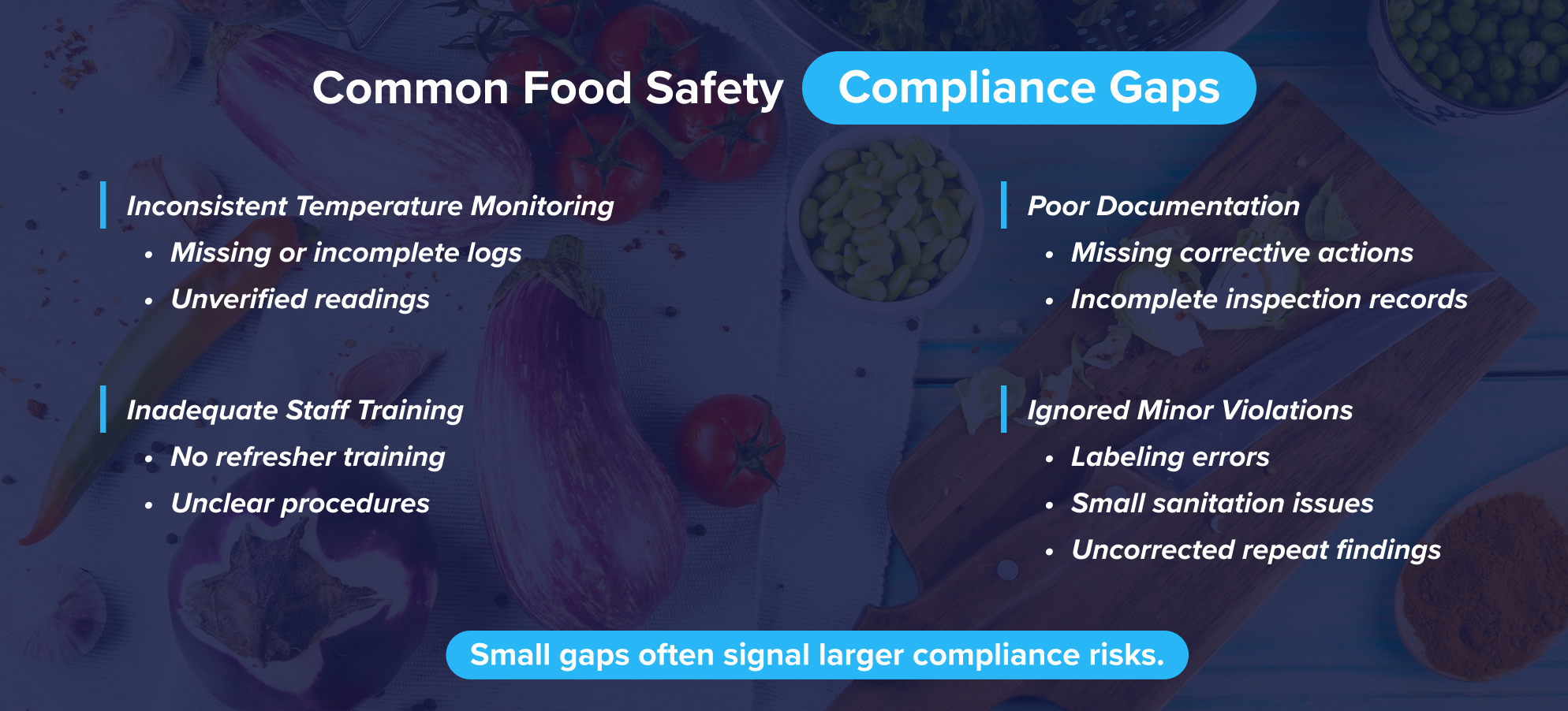
Inconsistent Temperature Monitoring
When temperature logs have gaps, they become less safe and less effective at following the rules. Monitoring must be steady and able to be checked.
Poor Documentation and Missing Records
When records are missing, small problems can become big problems during inspections. Paperwork keeps the business safe.
Inadequate Staff Training f
Food safety compliance systems don’t work when workers don’t know how to do their jobs. Training should happen all the time, not just once.
Ignoring Minor Violations Until They Escalate
Small problems like wrong labels or missing logs can be signs of bigger problems with the system. Fixing them early stops bigger problems with the rules.
Best Practices for Maintaining Ongoing Food Safety Compliance
Conduct Regular Internal Food Safety Audits
Before regulators do, internal audits can help find compliance gaps. These reviews should include records of temperature, sanitation practices, supplier information, and training.
Keep Staff Training Up to Date
Standards for food safety change over time. Regular refresher training keeps staff up to date on the rules they need to follow.
Review and Update Food Safety Procedures
Food safety compliance procedures should be looked over and updated to reflect changes in operations, such as when menus change or new suppliers are added.
Prepare for Health Inspections Year-Round
Inspections don’t usually surprise restaurants that make following food safety rules a daily habit. Every day, you should be ready for an inspection.
Final Thoughts
Following food safety rules isn’t something you do once a year or put in a binder. It is a living system that affects every part of running a restaurant.
Restaurants that spend money on structured compliance programs, clear documentation, and preventive controls lower their risk, protect their brand, and make their operations more stable over time.
In a world where rules are always changing, following good food safety rules is not just about avoiding fines. They are about making a business that people can trust.
FAQs
What happens if a restaurant fails a food safety inspection?
Depending on how bad the violations are, failure may mean having to take corrective action, pay fines, have inspections again, or close the business for a short time. If you keep failing, you may be watched more closely and your license may be suspended.
How often should food safety checks be performed?
Every day, checks should be made to make sure that food safety rules are being followed for receiving, sanitation, and temperature monitoring. Internal audits should be done on a regular basis, usually once a month or once every three months, depending on how complicated the business is.
What records should restaurants keep for food safety compliance?
Restaurants should keep records of the temperature, cleaning and sanitation, supplier verification, training, corrective action, and previous inspections.
How can restaurants stay compliant with changing food safety regulations?
Operators can stay in line with changing food safety rules by keeping an eye on updates from the local health department, reading FDA guidance, updating their own procedures, and training their staff on a regular basis to make sure they follow the rules.
What is the 2-hour / 4-hour rule?
It is the hard guardrail for high-risk foods (like meat and dairy) sitting in the “Temperature Danger Zone” (40°F–140°F), where pathogens multiply fastest. If food has been in that range for less than 2 hours, it can still be used or safely refrigerated. Between 2 and 4 hours, it must be used immediately. At the 4-hour mark, there is no second-guessing—the food must be discarded without exception.