
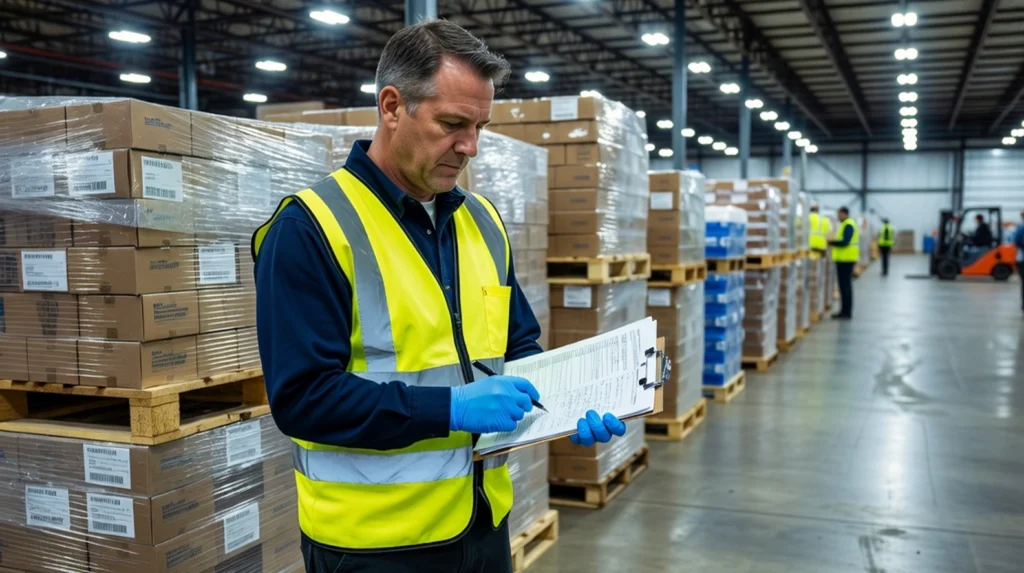
If there’s one thing foodservice operators have learned over the last few years, it’s this: supplier problems don’t stay supplier problems for long.
A missing temperature log at a production facility can turn into spoiled inventory at receiving. Delayed documentation can slow down traceability during a recall. Inconsistent handling procedures can create quality complaints across multiple restaurant locations before anyone realizes there’s a larger issue upstream.
That’s why the food supplier audit process matters.
A food supplier audit helps operators look beyond pricing and product availability to understand how suppliers are actually operating behind the scenes. Are food safety procedures being followed consistently? Is documentation organized? Are corrective actions being tracked? Is the supplier equipped to support long-term operational consistency?
For restaurant groups, distributors, and foodservice supply chain teams, audits help answer those questions before small issues become expensive ones.
What Is a Food Supplier Audit?
A food supplier audit is basically a closer look at how a supplier is actually operating behind the scenes, not just what shows up on an invoice or sales sheet.
For foodservice operators, it’s a way to verify that the companies supplying products into your operation are handling food safely, following the right procedures, maintaining proper records, and staying consistent day after day.
During an audit, teams are usually looking at areas like:
- How products are stored and transported
- Whether sanitation practices are being followed consistently
- Employee hygiene and handling procedures
- Temperature controls and monitoring
- Traceability and recall processes
- Food safety documentation
- HACCP programs
- Corrective action records
Some supplier audits are pretty straightforward, especially when reviewing a lower-risk vendor or onboarding a new supplier. Others can take much longer and involve full facility walkthroughs, documentation reviews, operational observations, and conversations with multiple departments onsite.
At the end of the day, the reason operators conduct food supplier audits is pretty simple: you want fewer surprises in your supply chain. The more visibility you have into supplier operations, the easier it is to catch potential issues before they turn into bigger food safety, compliance, or service problems.
Why Supplier Audits Are Critical for Food Safety
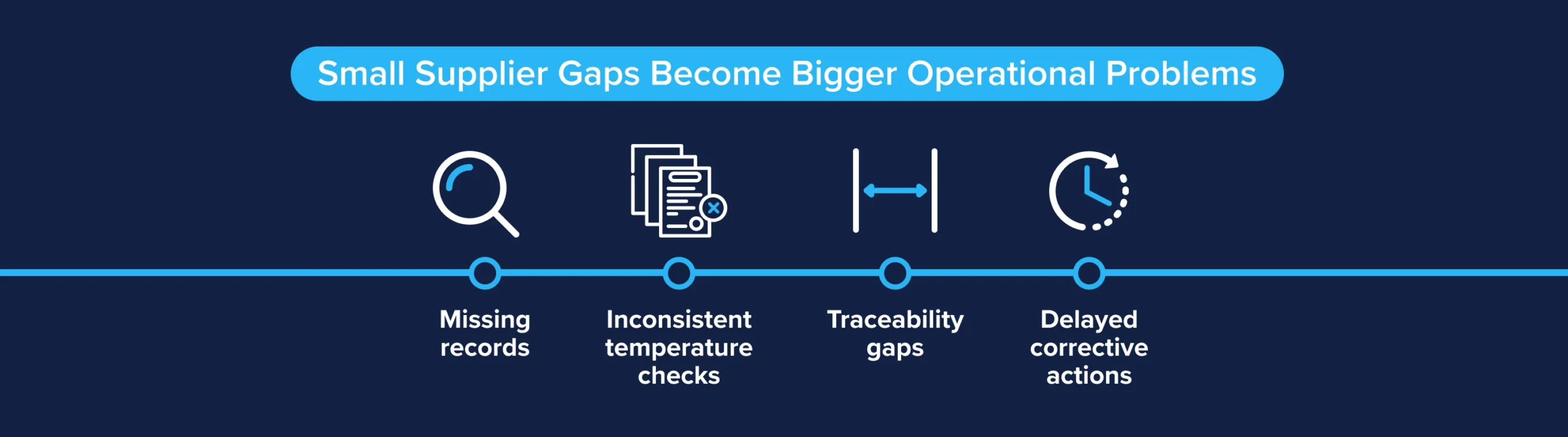
A lot of supplier issues don’t look serious at first.
Maybe a temperature log is missing a few entries. Maybe a cleaning checklist wasn’t filled out completely. And, maybe someone notices product dating is being handled differently depending on who’s working that day.
Individually, those things can seem pretty minor.
But operators know that’s usually not how these situations stay.
Once audits start digging deeper, patterns tend to show up. Records are inconsistent. Traceability paperwork takes too long to pull. Corrective actions were discussed but never really fixed. Equipment maintenance has been pushed off longer than it should have been.
That’s usually the value of a supplier audit. It gives operators a chance to catch operational cracks before they turn into something bigger.
And for larger foodservice organizations, small supplier issues rarely stay isolated to one location. If a supplier is supporting multiple markets, concepts, or distribution points, one weak process upstream can create problems across a huge portion of the operation very quickly.
Regular audits also change supplier behavior over time. Teams tend to stay sharper when they know documentation, food safety procedures, and facility practices are being reviewed consistently instead of only after there’s a problem.
Types of Food Supplier Audits
Not all supplier audits are handled the same way. A quick review of a dry goods vendor is going to look very different from a full audit at a facility producing ready-to-eat products for hundreds of restaurant locations.
The type of audit usually depends on a few things:
- The level of food safety risk
- The type of products being supplied
- Customer requirements
- Compliance expectations
- Previous supplier performance issues
Some audits are more informal and operational. Others are extremely detailed and heavily focused on documentation and compliance.
Internal Audits
Internal audits are done by your own team.
Usually this involves someone from procurement, quality assurance, food safety, or supply chain operations visiting the supplier facility to review how things are running.
A lot of operators use internal audits when:
- Bringing on a new supplier
- Reviewing a supplier after an issue or complaint
- Checking consistency across multiple facilities
- Looking into traceability or documentation concerns
- Preparing for a larger customer or regulatory audit
These audits tend to focus heavily on day-to-day operations. Teams want to see how products are actually being handled, stored, documented, and managed once production starts moving.
External Audits
External audits are conducted by someone outside the supplier organization.
That could be a customer, distributor, restaurant brand, or regulatory group requesting a formal review before approving or continuing a supplier relationship.
For example, if a restaurant brand is sourcing prepared proteins or sauces for hundreds of locations, their own food safety or supply chain team may visit the supplier facility themselves before approving the partnership.
Those reviews tend to go pretty deep. Teams are usually looking through sanitation records, traceability paperwork, storage procedures, food safety logs, and other documentation tied to how the facility actually operates day to day.
Third-Party Audits
Third-party audits are done by outside food safety organizations instead of the supplier’s own team or customer.
A lot of larger restaurant groups, distributors, and manufacturers want suppliers to have these certifications before moving forward with a partnership because it shows another company has already reviewed the facility and food safety programs.
Some certifications operators commonly ask suppliers about include:
- SQF
- BRCGS
- ISO food safety certifications
- GFSI-recognized programs
For operators, these audits can help add a little more confidence during supplier reviews, especially when products are being sourced across multiple facilities or regions.
Key Supplier Audit Regulations and Compliance Requirements
Food supplier audits are heavily tied to compliance and traceability expectations across the food industry.
Food Safety Modernization Act
The Food Safety Modernization Act (FSMA) changed the conversation around food safety from reaction to prevention.
Instead of only responding after contamination happens, companies are expected to identify and reduce risks before issues occur.
That shift made supplier verification significantly more important.
Today, many foodservice organizations are expected to maintain stronger oversight into supplier practices, documentation, and preventive controls as part of their broader food safety programs.
U.S. Food and Drug Administration
When supplier audits happen, FDA-related food safety requirements are usually part of the conversation whether operators realize it or not.
A lot of the audit process comes down to reviewing how suppliers are handling everyday operational areas like:
- Cleaning and sanitation routines
- Product storage temperatures
- Shipping and receiving practices
- Lot tracking and traceability
- Employee food handling procedures
- Food safety records and logs
- Corrective action documentation
For most operators, the biggest issue usually isn’t whether a supplier has processes in place. It’s whether those processes are actually being followed consistently and documented properly once the operation gets busy.
HACCP Compliance Checks
Most foodservice operators have heard of HACCP, especially if they’ve spent time dealing with food safety audits, supplier approvals, or compliance reviews.
During a supplier audit, HACCP checks are usually focused on whether food safety procedures are actually happening consistently during day-to-day operations, not just sitting in a binder somewhere collecting dust.
Auditors may look at things like:
- Temperature tracking logs
- Cooling and reheating procedures
- Product handling practices
- Cleaning and sanitation schedules
- Corrective action documentation
And honestly, this is usually where gaps start showing up. A supplier may have the right process written down, but audits often reveal that different shifts or teams are handling things differently once production gets busy.
Supplier Documentation and Traceability
Traceability expectations have increased dramatically across foodservice supply chains.
Operators need fast access to supplier records when issues arise, especially during recalls or compliance reviews.
That includes documents like:
- Lot tracking information
- Shipping records
- Receiving logs
- Supplier certifications
- Corrective action reports
- Recall documentation
When records are scattered across emails, spreadsheets, and disconnected systems, audits become much harder to manage.
Step-by-Step Food Supplier Audit Process
A good food supplier audit process shouldn’t feel rushed or reactive. The most effective audits follow a structured process while still leaving room for real operational conversations.
Pre-Audit Preparation
Preparation usually determines how smooth the audit will go.
Before arriving onsite, audit teams should review:
- Previous audit findings
- Supplier risk history
- Product categories
- Compliance requirements
- Existing certifications
- Documentation requests
This helps narrow the focus and avoid wasting time during the actual visit.
One mistake operators make is treating every supplier exactly the same. Higher-risk suppliers may require deeper reviews and more frequent audits than lower-risk vendors.
Opening Meeting with Supplier
The opening meeting sets the tone for the audit.
This is usually where teams review:
- The audit scope
- Facility areas being evaluated
- Required documentation
- Timing expectations
- Key operational contacts
The best audits tend to feel collaborative, not confrontational.
Suppliers are often far more transparent when conversations stay focused on operational improvement instead of simply trying to “catch” problems.
Facility Inspection and Hygiene Assessment
This is where things move from paperwork into actual operations.
Auditors typically walk through the facility looking at:
- Employee hygiene
- Cleaning procedures
- Equipment conditions
- Storage practices
- Pest control
- Temperature monitoring
- Product separation procedures
It’s also where operational inconsistencies become easier to spot.
Sometimes the issue isn’t that procedures don’t exist. It’s that procedures are being followed differently depending on the shift, department, or team member.
Food Safety Process Review
The next step focuses on how food safety systems are functioning day-to-day.
Auditors may review:
- HACCP programs
- Preventive control procedures
- Receiving processes
- Cleaning verification
- Product handling workflows
- Corrective action processes
This part of the audit helps determine whether food safety practices are operationally consistent or simply documented on paper.
Documentation and Record Verification
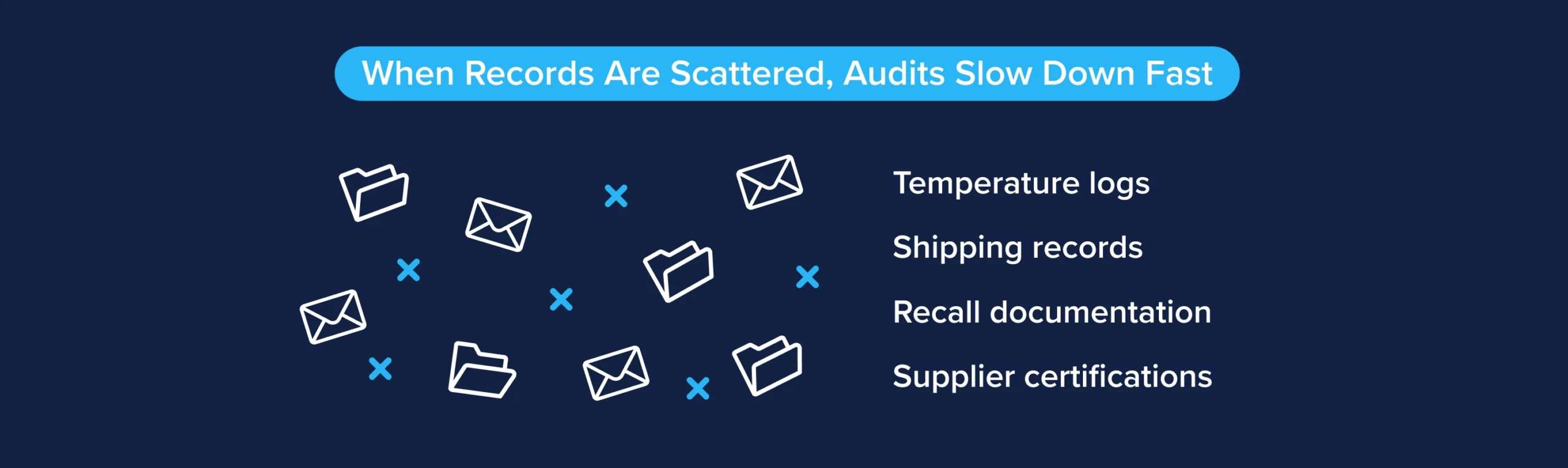
This part of the audit is where things can slow down fast.
A supplier might say they’re following the right procedures, but auditors are usually going to ask for the paperwork to back it up. And sometimes that’s where the scrambling starts.
Teams are commonly asked to pull records like:
- Employee training documents
- Temperature checks and logs
- Cleaning schedules
- Recall plans These audits are usually more formal and often involv
- Supplier certifications
- Shipping paperwork
- Traceability information
In a lot of facilities, those records are stored across different systems, spreadsheets, folders, or email chains. So even if the information exists, finding it quickly can become its own challenge during the audit.
Identify Non-Conformities
This is basically the part of the audit where issues get flagged.
Sometimes the findings are relatively small. Maybe a log sheet wasn’t filled out correctly or a certification recently expired and hasn’t been updated yet. Other times the issue points to a larger operational gap.
Auditors may identify things like:
- Missing temperature records
- Gaps in sanitation documentation
- Expired certifications
- Storage procedures not being followed correctly
- Missing traceability details
- Employees handling processes differently between shifts
Not every finding turns into a major food safety concern. But documenting those issues clearly matters because it gives suppliers a chance to correct problems before they become bigger operational headaches later.
Closing Meeting and Feedback
The closing meeting wraps up the audit findings and outlines next steps.
This usually includes:
- Summary observations
- Identified non-conformities
- Corrective action expectations
- Resolution timelines
- Follow-up requirements
Clear communication matters here. Nobody wants an audit report filled with vague language that leaves suppliers guessing about what actually needs to be fixed.
Common Challenges in Food Supplier Audits
Even experienced foodservice organizations run into supplier audit challenges.
Lack of Standardized Processes
One supplier tracks records digitally. Another still uses binders. A third handles documentation differently across locations.
Without standardized processes, audits become harder to compare and scale consistently.
Limited Supplier Transparency
Some suppliers simply don’t have strong visibility into their own operations.
That can make it difficult to access accurate inventory data, traceability records, or corrective action documentation quickly during an audit.
Manual Data and Documentation Gaps
A surprising number of supplier records still live in spreadsheets, email chains, or disconnected folders.
That creates issues like:
- Missing records
- Duplicate files
- Outdated documentation
- Slow reporting
- Version control problems
Manual systems slow everything down, especially when managing large supplier networks.
Inconsistent Audit Frequency
Some suppliers are reviewed constantly while others go years without a formal audit.
That inconsistency creates visibility gaps that become harder to manage over time.
How Technology Improves Food Supplier Audits
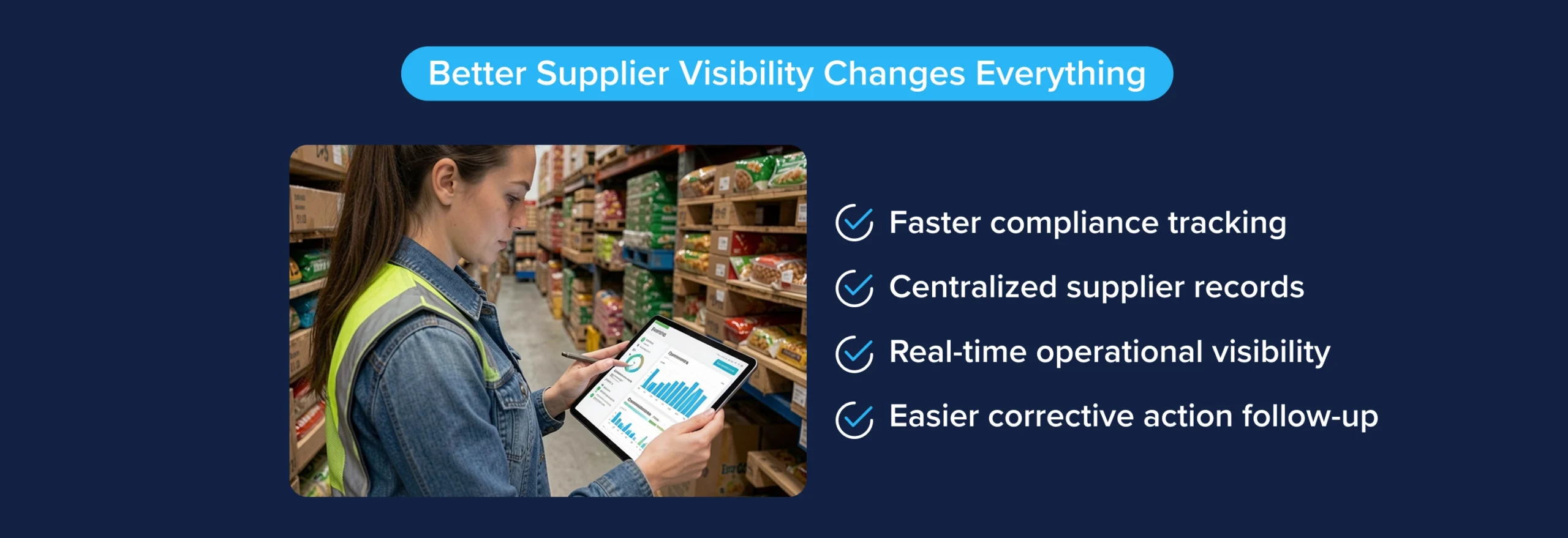
Technology is helping supply chain and procurement teams create more consistent supplier audit processes without adding even more manual work.
Real-Time Supplier Data Visibility
Better supplier visibility helps operators identify issues earlier instead of waiting for scheduled reviews.
Teams can monitor:
- Supplier performance trends
- Inventory disruptions
- Compliance patterns
- Product movement
- Operational inconsistencies
That visibility becomes especially important during supply chain disruptions or recall situations.
Automated Audit Workflows
Automation helps reduce the administrative side of supplier audits.
Instead of relying on spreadsheets and email reminders, teams can standardize:
- Audit scheduling
- Corrective action tracking
- Documentation requests
- Reporting workflows
- Follow-up timelines
That creates more consistency across suppliers and locations.
Centralized Documentation Management
One centralized system is significantly easier to manage than scattered files across multiple teams and inboxes.
Centralized documentation helps operators access supplier records faster while improving organization and audit readiness.
Compliance Tracking and Reporting
Tracking supplier compliance manually gets complicated fast, especially across large networks.
Technology platforms can help teams monitor:
- Audit history
- Supplier performance trends
- Corrective action completion
- Certification status
- Compliance reporting
That kind of visibility makes it easier to spot recurring risks before they become larger operational issues.
Conclusion
A strong food supplier audit process is about more than compliance paperwork.
It’s about creating better visibility into the suppliers supporting your operation every day.
The operators staying ahead aren’t just reviewing suppliers when something goes wrong. They’re building more proactive systems around food safety, documentation, traceability, and operational consistency before issues start affecting service, margins, or customer trust.
And as supply chains continue getting more complex, having stronger supplier visibility is becoming less of a “nice to have” and more of an operational necessity.
Looking for better supply chain visibility and supplier management support? Click here to connect with ArrowStream experts and learn how greater operational visibility can help strengthen supplier oversight, compliance tracking, and food safety processes.
FAQ’s
How to prepare for a food supplier audit?
Most operators don’t wait until the morning of the audit to start digging for paperwork. Usually, the prep starts a few days ahead by reviewing old audit notes, checking certifications, pulling temperature logs, and making sure sanitation records are current. It’s also smart to let the supplier know what areas will be reviewed so everyone’s on the same page before the walkthrough begins.
Who should conduct a supplier audit?
There are a few different ways companies handle this. Some audits are done internally by procurement or food safety teams. Others are handled by outside auditors or certification groups. Larger restaurant brands and distributors sometimes send their own teams onsite too, especially when bringing on a new supplier or reviewing a higher-risk category.
What documents are required for a supplier audit?
The paperwork can vary depending on the supplier, but auditors normally want to see records tied to food safety, shipping, and daily operations. That often includes temperature checks, sanitation logs, employee training records, recall procedures, supplier certifications, and product traceability information. In a lot of audits, the issue isn’t whether the records exist. It’s whether someone can actually find them when asked.
What are non-conformities in supplier audits?
This is the term auditors use when they find something that’s off during a review. Maybe a required record is missing. Maybe a cooler is running warmer than it should be. Sometimes it’s as small as incomplete paperwork, and sometimes it’s a bigger issue tied to food safety procedures. Either way, the finding gets noted so the supplier can fix it and show proof the issue was addressed.
How often should food supplier audits be conducted?
Some suppliers may go a year or longer between audits. Others might be reviewed several times throughout the year. It usually comes down to risk. Suppliers handling fresh or ready-to-eat products tend to get looked at more closely than lower-risk categories. Previous audit issues, compliance history, and customer requirements can all affect how often audits happen too.