

Most food and beverage manufacturers know they need better sales visibility. The challenge is that by the time traditional reports show what happened, the opportunity may already be gone. If the sales signals that point to an opportunity are buried across your systems, you may not see its full value until competitors have already moved in.
This is where predictive sales analytics for food and beverage can change the game. Instead of simply forecasting what might happen based on last year’s numbers, it uses live demand signals to identify where buyers are moving now, which accounts are showing growth potential, and where your sales strategy should go next.
For manufacturers and suppliers, this creates a smarter way to uncover revenue opportunities, strengthen buyer relationships, and align sales planning with real market activity.
Introduction to Predictive Sales Analytics in Food and Beverage
Predictive sales analytics helps manufacturers and suppliers move from reactive planning to more proactive decision-making. Rather than treating forecasting as a backward-looking reporting exercise, predictive analytics brings together sales, sourcing, purchasing, and market data to create a more current view of business opportunity. In an industry where demand can change quickly based on menu trends, buyer behavior, or local market conditions, having the right tools in place allows teams to spot revenue opportunities earlier and make more confident operational decisions.
Why Traditional Sales Forecasting Falls Short in Foodservice
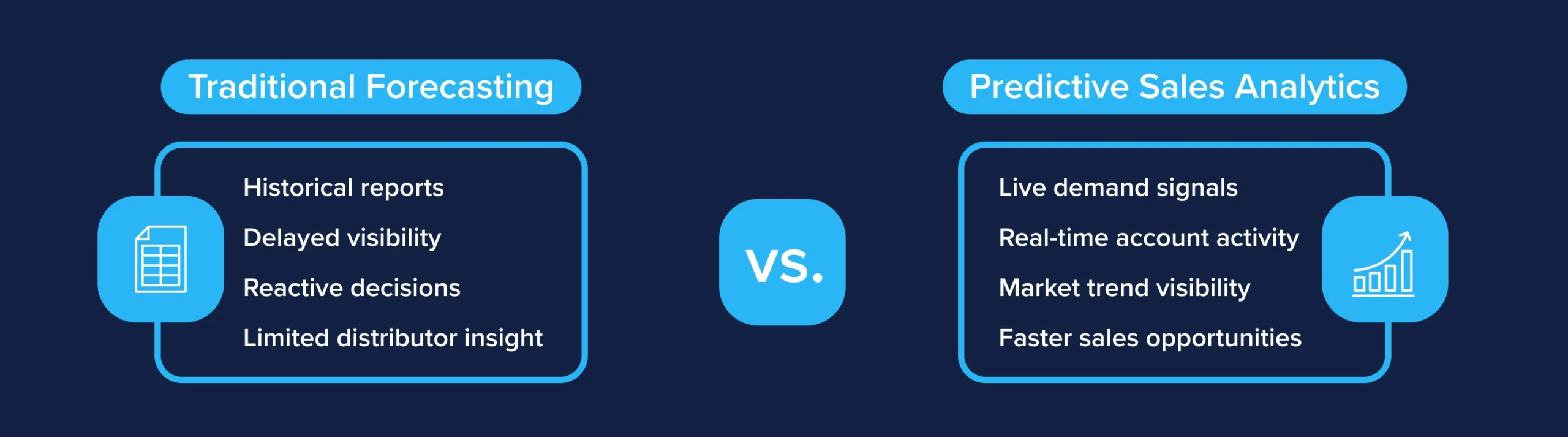
Traditional sales forecasting still has value, but for operators looking to stay ahead of their regional competition, forecasting alone is not enough. For businesses still relying on backward-looking forecasts, the biggest challenges typically show up in three key areas:
Reliance on Historical Sales Instead of Live Demand Signals
Historical sales reports show what already happened, but they often miss what is happening now. Demand can shift quickly based on menu trends, seasonal traffic changes, promotional activity, or regional buying patterns, leaving teams with outdated assumptions when they need timely direction.
Limited Visibility Across Distributors and Supply Networks
Traditional forecasting provides static sales figures, but it often hides contextual demand signals, such as which accounts are increasing purchasing activity, where products are being substituted, or where sales were limited by stockouts. Without connected data, supply chain challenges become harder to anticipate, making it more difficult to identify demand gaps, sales opportunities, or emerging risks.
Inability to Respond to Market and Pricing Volatility
Food and beverage businesses face constant pressure from ingredient costs, shipping changes, labor constraints, and shifting customer behavior. Static forecasts cannot adjust quickly enough when changes happen, which can leave teams overproducing, understocked, or slow to react when market conditions move unexpectedly.
How Predictive Sales Analytics Uses Real-Time Data to Improve Decision-Making
Instead of asking teams to make decisions based on outdated data and operational guesswork, predictive sales analytics connects the live demand signals hidden across your existing systems and translates them into clearer next steps. Teams can monitor demand signals as they happen, including purchasing trends, account activity, distributor movement, and regional performance shifts. These tools then help identify which products are gaining traction, where demand may be softening, and which customers may be ready for a sales conversation. For operators, this creates a faster, more informed planning process that supports smarter production, stronger account management, and more targeted revenue growth.
Key Data Sources Behind Accurate Sales Predictions
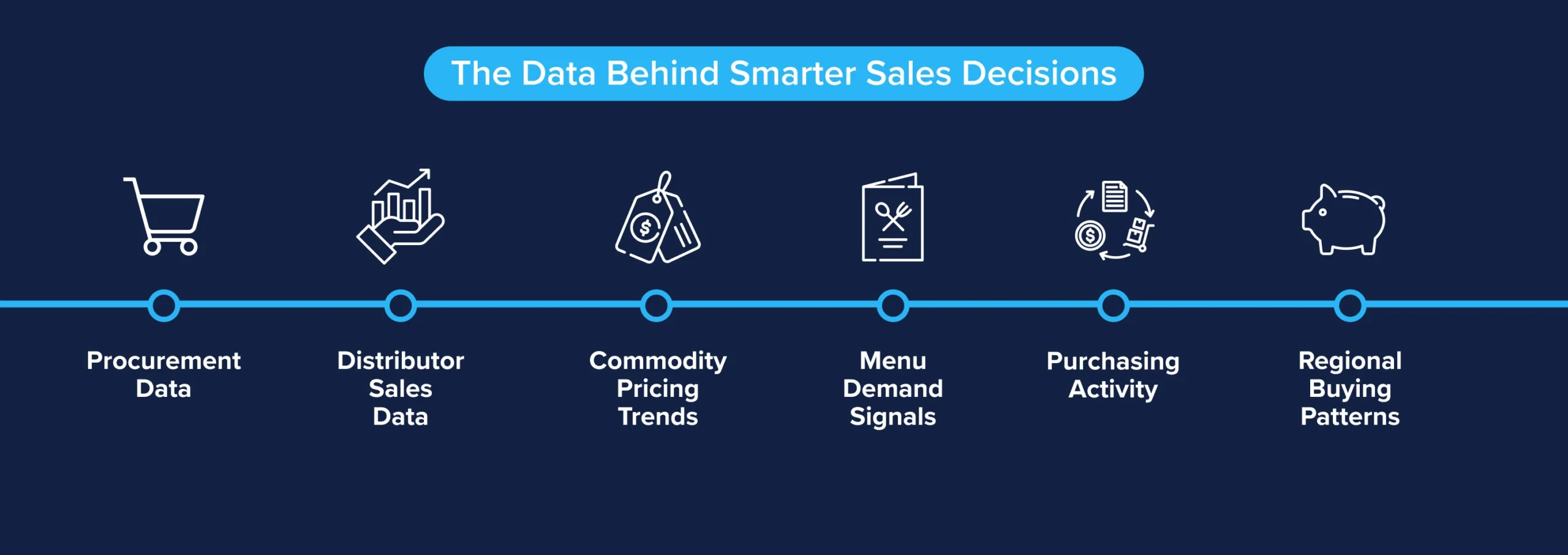
To turn live demand signals into smarter sales decisions, manufacturers and suppliers first need to connect the data sources that show what buyers are purchasing, sourcing, substituting, and requesting.
Procurement and Sourcing Data from Restaurant Networks
This data can be sourced through restaurant purchasing platforms, invoice management tools, or back-office systems that track purchasing patterns from individual operators.
Distributor-Level Sales and Fulfillment Data
Manufacturers can access this data through distributor reporting portals or connected sales platforms that consolidate order volume, shipment activity, and fulfillment patterns.
Commodity Pricing and Market Trends
This information is often gathered from market intelligence providers, commodity tracking tools, supplier updates, and industry reports that monitor pricing fluctuations and market conditions.
Menu and Product-Level Demand Signals
These insights can be collected from POS systems, restaurant analytics software, menu management tools, and purchasing data that reveal which items are driving demand.
How Predictive Sales Analytics Drives Revenue Growth
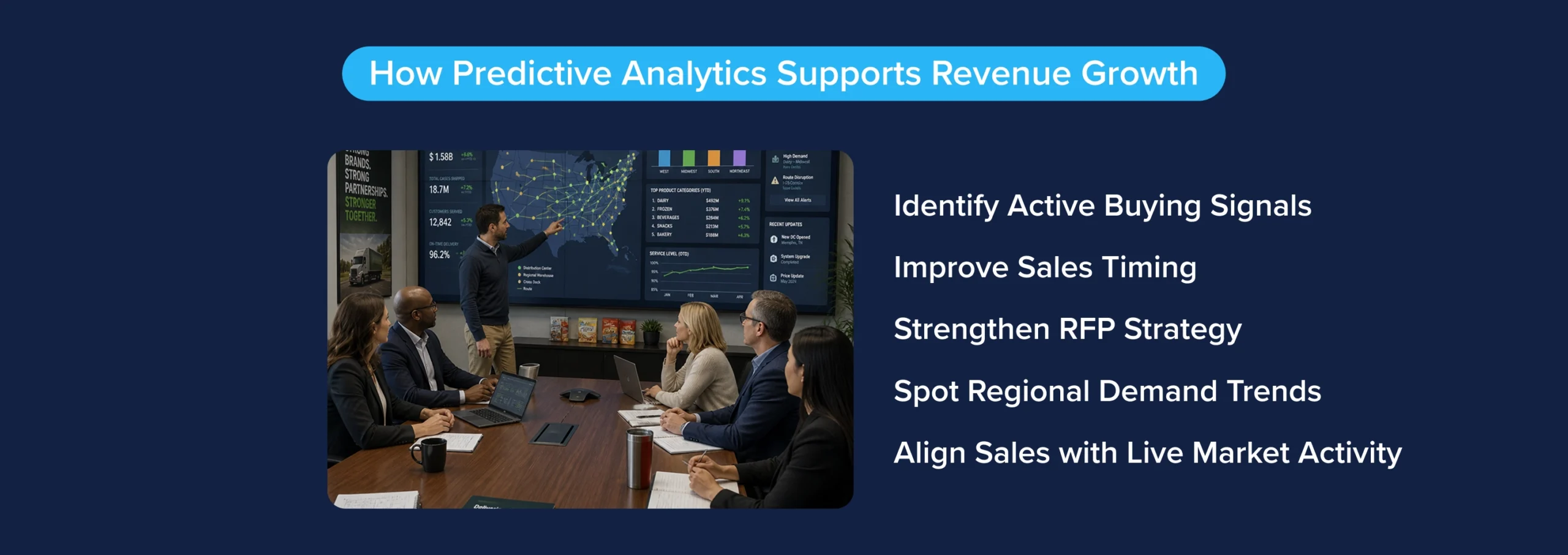
With the right data flowing into one system, manufacturers and suppliers have a roadmap for stronger sales timing, better account targeting, and increased revenue growth. From there, predictive sales analytics helps manufacturers and suppliers build revenue by:
Identifying Active Buying Signals from Restaurant Chains
Buying signals may include increased purchasing volume, new product testing, shifts in menu strategy, or repeated sourcing activity within a restaurant group. Sales teams can use these signals to prioritize accounts that are already showing demand, making outreach more timely and relevant.
Improving Sales Timing and Market Entry Strategy
Predictive analytics can reveal when certain markets, product categories, or customer segments are gaining momentum. Manufacturers and suppliers can use this insight to enter markets earlier, time product launches more effectively, and avoid chasing opportunities after demand has already peaked.
Increasing Win Rates in RFPs and Sourcing Events
RFPs and sourcing events often depend on timing, pricing confidence, and a clear understanding of buyer needs. Predictive sales analytics helps teams prepare stronger bids by identifying demand trends, pricing pressures, and account-level opportunities before the formal buying process begins.
Identifying Demand Patterns Across Regions and Accounts
Regional and account-level demand patterns show where product interest is growing or where supply chain issues may be negatively influencing purchasing behavior. Operators can use this information to focus sales coverage, adjust inventory planning, and pursue high-potential regions before competitors move in.
Aligning Sales Strategy with Real Demand Trends
Real demand trends reflect what customers are actively buying, testing, or sourcing rather than what teams assume based on past performance. By aligning sales strategy with these trends, manufacturers can better prioritize outreach, product positioning, promotions, and account development efforts that are more likely to result in revenue growth.
Turning Demand Data into Sales and Supply Chain Action
Identifying revenue opportunities is only the first step. The real value comes from building a process that turns those insights into coordinated action across sales, supply chain, production, and planning teams. When predictive analytics flags a shift in demand, teams should be able to quickly determine whether they have the inventory, capacity, pricing strategy, and supplier support needed to respond.
This helps manufacturers and suppliers move from insight to execution in less time. Instead of treating the available data as a sales-only resource, operators can use it to align production planning, strengthen fulfillment processes, reduce service gaps, and make sure high-potential opportunities are supported operationally.
Common Challenges in Predictive Sales Analytics Adoption
While predictive sales analytics can create major advantages for food and beverage businesses, operators commonly face these challenges when trying to put it into practice:
Fragmented Data Across Multiple Systems
Restaurant and foodservice data often lives across POS platforms, purchasing systems, distributor portals, spreadsheets, and accounting tools, making it difficult to see the full picture in one place. Centralizing key data sources into one connected platform gives sales, operations, and supply chain teams access to the same reliable information.
Lack of Standardization in Product and Pricing Data
Product names, pack sizes, SKUs, contract terms, and pricing structures are often recorded differently across vendors, distributors, and internal systems. Standardizing product and pricing data helps teams compare performance more accurately and reduce confusion during sales planning efforts.
Limited Access to Real-Time Market Signals
Many food and beverage teams still rely on delayed reports that only show performance after demand has already shifted. Integrating live purchasing, sourcing, distributor, and market data can help teams identify changes earlier and respond before opportunities are missed.
Difficulty in Identifying True Buyer Demand vs. Forecast Assumptions
Traditional forecasts can make it difficult to separate what buyers are actually doing from what teams expect them to do based on past sales patterns. Comparing forecast models against current demand signals helps teams make decisions based on real buyer behavior rather than projections alone.
Misalignment Between Sales, Supply Chain, and Planning Teams
Sales, supply chain, and planning teams often use different reports, timelines, and performance metrics, which can lead to disconnected decisions about potential growth opportunities. Creating shared dashboards and cross-functional review processes helps teams align around the same demand signals, inventory needs, and account priorities.
How to Implement Predictive Sales Analytics in Food and Beverage
Once the common adoption challenges are clear, the next step is building an implementation plan that turns predictive sales analytics from a reporting concept into a repeatable operational process.
Connect Procurement and Sales Data for Better Visibility
Start by integrating procurement, purchasing, invoice, sales, and account-level data into a centralized platform that gives teams a clearer view of demand across customers and product categories. Avoid relying on disconnected spreadsheets or delayed reports that make it difficult to identify demand shifts in time to act.
Leverage Platforms That Enable Buyer-Supplier Connectivity
Use technology that helps manufacturers, suppliers, distributors, and restaurant buyers share relevant sourcing and sales data in a more connected environment. Avoid tools that only report internal performance without showing how buyer activity, sourcing behavior, or market demand is changing.
Start with High-Impact Categories and Scale Strategically
Focus first on product categories with strong revenue potential, frequent pricing changes, or highly volatile demand patterns. Avoid trying to analyze every product line at once, which can overwhelm teams and slow adoption before achieving early wins.
Integrate Real-Time Demand Signals into Sales Planning
Build live demand indicators, such as purchasing activity, distributor movement, or regional account trends, into regular sales planning conversations. Avoid treating predictive analytics as a separate reporting exercise, as this can prevent teams from identifying how relevant insights fit into routine operational patterns.
Align Sales Strategy with Live Sourcing and RFP Activity
Monitor active sourcing events, RFP activity, and buyer engagement patterns to identify when customers may be evaluating new suppliers or expanding product needs. Avoid waiting until an RFP is formally announced, since many deals are shaped through early relationship-building long before the customer has even identified the need for a change.
How ArrowStream Helps Identify Demand and Sales Opportunities
The difference between tracking historical data and acting on real-time analytics comes down to visibility. When operators can see live purchasing patterns, distributor activity, and regional trends in one place, they can make faster decisions about where to focus sales efforts and how to pivot quickly to take advantage of opportunities as they arise.
ArrowStream helps manufacturers and suppliers turn predictive sales analytics into a practical growth tool using SalesStream, which gives teams the connected insights they need to better anticipate demand, strengthen buyer relationships, and pursue revenue opportunities with greater confidence.
FAQ’s
How is predictive sales analytics different from traditional forecasting?
Traditional forecasting focuses on what happened in the past. Predictive sales analytics helps manufacturers understand what is likely to happen next by combining historical performance with market activity, distributor movement, sourcing events, and operator purchasing behavior. This allows sales and marketing teams to identify emerging opportunities, anticipate changes in demand, and make more informed decisions before trends fully materialize.
What data improves forecast accuracy the most?
No single data source tells the full story. The strongest forecasts combine multiple signals that influence purchasing behavior.
- Distributor sales data helps manufacturers understand where products are gaining or losing share.
- Restaurant purchasing activity reveals actual operator demand across segments and regions.
- Sourcing events and RFPs highlight upcoming opportunities and potential supplier changes.
- Commodity and market trends provide context around pricing pressures that may impact purchasing decisions.
- Regional demand patterns help identify geographic growth opportunities and emerging market shifts.
When these data sources are connected, manufacturers gain a more complete view of demand drivers and can make forecasting decisions with greater confidence.
How can predictive analytics help increase sales opportunities?
Predictive analytics helps manufacturers focus sales efforts where they are most likely to generate results. By identifying operators that are increasing purchases within a category, regions experiencing growth, or accounts showing signs of supplier evaluation, sales teams can prioritize outreach more effectively. This improves account targeting, helps allocate resources strategically, and increases the likelihood of winning new business.
How can real-time demand data improve sales forecasting accuracy?
Forecasting challenges often stem from timing. By the time traditional reports are available, market conditions may have already changed. Real-time demand data provides earlier visibility into shifts in purchasing behavior, helping manufacturers adjust production plans, inventory levels, and sales expectations more quickly. This reduces forecasting lag and enables faster responses to changing market conditions.
What role do sourcing events and RFPs play in predictive sales analytics?
Sourcing events and RFP activity can serve as early indicators of buying behavior. Organizations typically launch sourcing initiatives when evaluating suppliers, addressing operational challenges, expanding locations, or reviewing category performance. Monitoring these activities helps manufacturers identify potential opportunities earlier, engage decision-makers sooner, and develop more competitive strategies before purchasing decisions are finalized.
How can manufacturers identify demand trends across restaurant chains?
Demand trends become clearer when manufacturers analyze activity across large groups of operators rather than individual accounts. Patterns in purchasing behavior, menu adoption, regional growth, and distributor movement can reveal which products and categories are gaining traction. These insights help manufacturers align product strategy, sales initiatives, and marketing investments with the needs of restaurant operators before trends become widespread.