

Food industry data analytics is a valuable decision-making tool for foodservice manufacturers. Data itself is nothing new. What has changed is the volume of available information and the expectation that manufacturers use it to guide business decisions.
Manufacturers sell products through a network of distributors, operators, national accounts, and regional partners. While each channel generates valuable information, oftentimes that information is spread across multiple systems and organizations. Without a holistic view of what is happening across the channel, manufacturers can miss emerging opportunities, overlook risks, and struggle to respond to changing market conditions.
With increased competition and the speed of changing customer expectations, forward-thinking manufacturers are investing heavily in food industry data analytics to support long-term growth.
Why Foodservice Manufacturers Are Investing More Heavily in Data
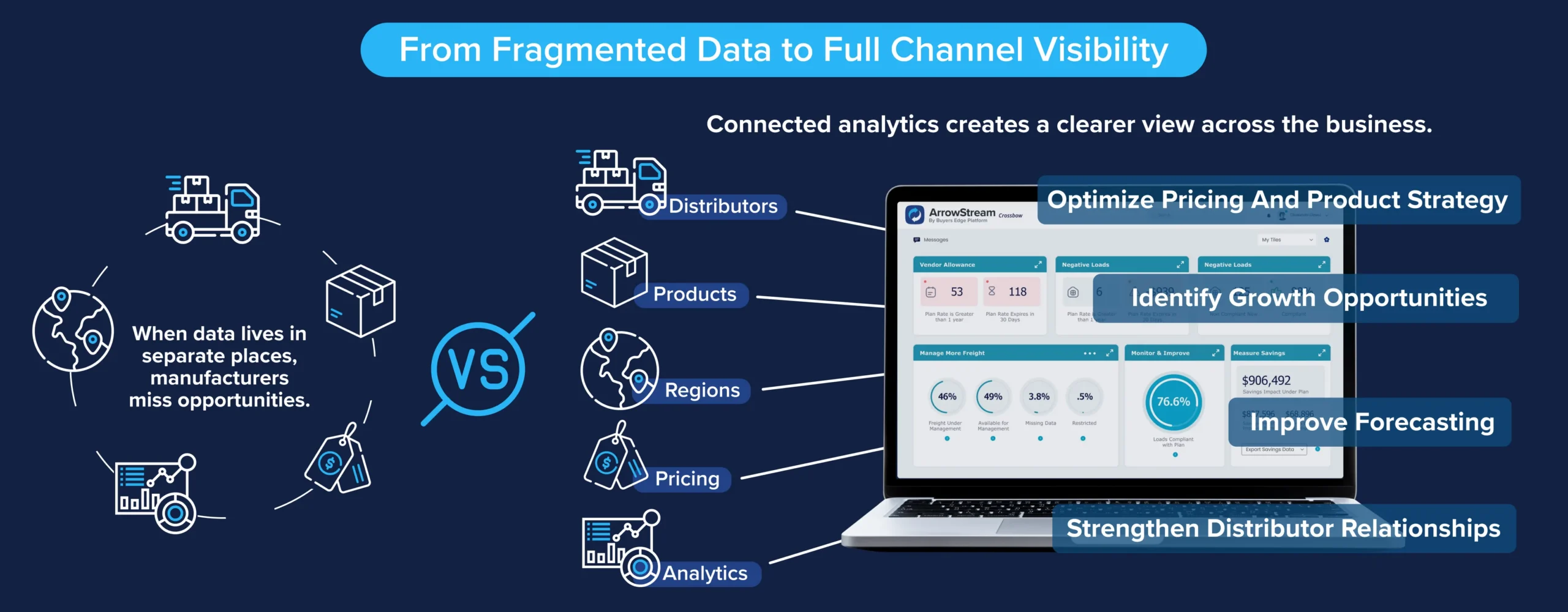
Manufacturers often work with multiple distributors across different regions and diverse industries including food, healthcare, education, hospitality, and other segments. Each channel has its own purchasing patterns, growth opportunities, and challenges.
At the same time, customers increasingly expect manufacturers to provide more than products. They want knowledge that comes from specificity. National accounts, distributor partners, and operators want suppliers that understand market trends, category performance, and shifting demand patterns.
Visibility can be difficult to maintain when information is fragmented across distributor reports, internal systems, and individual sales teams. A manufacturer may know how a product is performing with one distributor, but lack insight into performance in other regions or channels.
These blind spots can make it hard to identify growth opportunities, allocate resources effectively, and respond to changes in the market.
Foodservice channels have become more complex over the past decade. Food industry data analytics helps manufacturers connect information from multiple sources to build a clearer picture of what is happening across the business.
The Data Manufacturers Use to Drive Growth
Manufacturers rely on several types of data to understand performance across the foodservice channel.
Distributor sales data is typically one of the most valuable sources of insight. It helps manufacturers track product movement, monitor regional performance, and identify where products are gaining or losing traction. This information can help sales teams prioritize opportunities and focus efforts where they are most likely to generate results.
Product performance data provides another important layer of visibility. Understanding which products are growing, declining, or outperforming expectations can inform sales strategies, promotional efforts, and product portfolio decisions. It can also help manufacturers identify opportunities to expand business within existing accounts.
Many manufacturers also monitor operator and channel trends to better understand customer preferences. Demand patterns can vary significantly between restaurants, healthcare facilities, schools, and other foodservice segments. Access to trend data helps manufacturers anticipate shifts in demand and align product strategies with specific market needs.
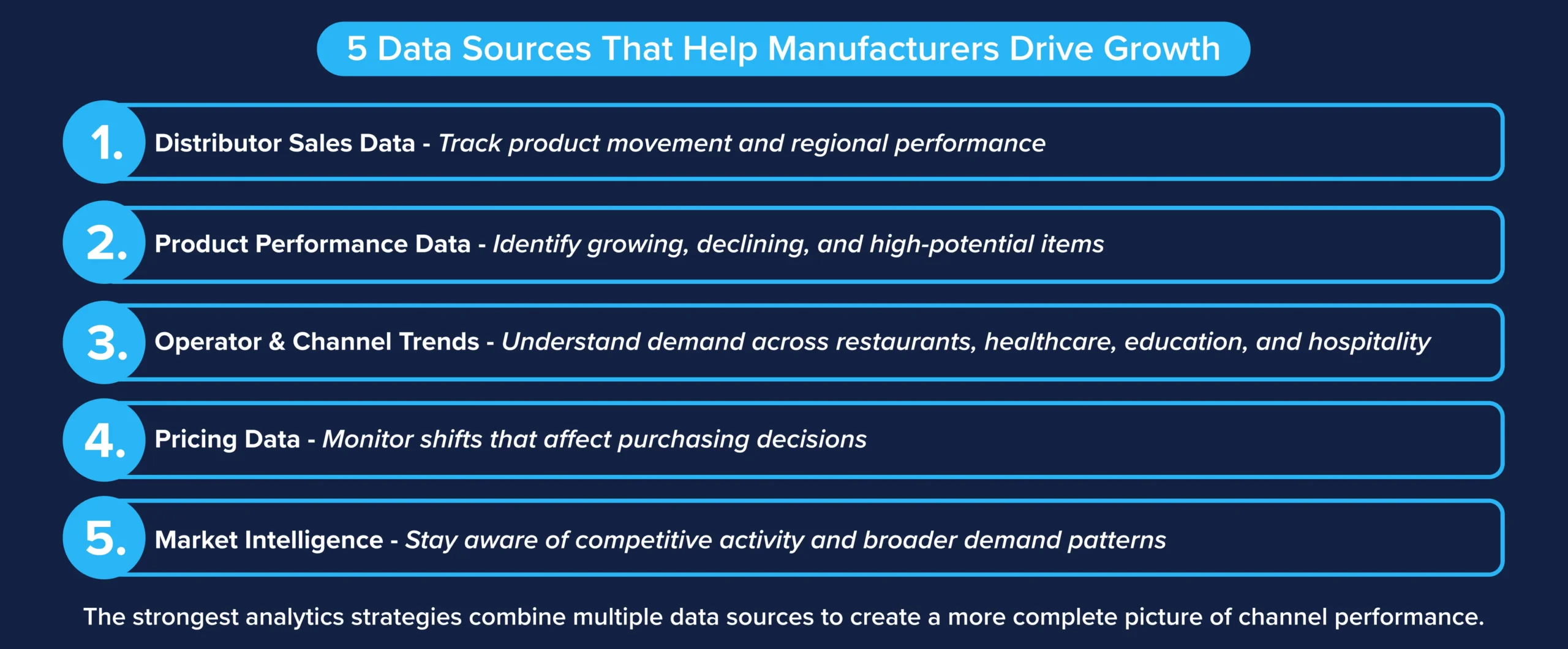
Pricing data and market intelligence help manufacturers understand competitive positioning and changing market conditions. Manufacturers need visibility into pricing trends, competitive activity, and changing demand patterns that may affect purchasing decisions. These insights can help businesses make more informed decisions about pricing, promotions, and growth strategies.
Together, these data sources help manufacturers make decisions based on actual market activity instead of long-held assumptions or limited field experience.
Visibility as a Competitive Edge
Access to data alone is not enough. The real advantage of food industry data analytics comes from turning that data into visibility.
Manufacturers that can connect information across distributors, regions, channels, and accounts gain a much better understanding of where opportunities exist—and where attention may be needed. Instead of relying solely on historical performance or anecdotal feedback, teams can make decisions based on current market conditions.
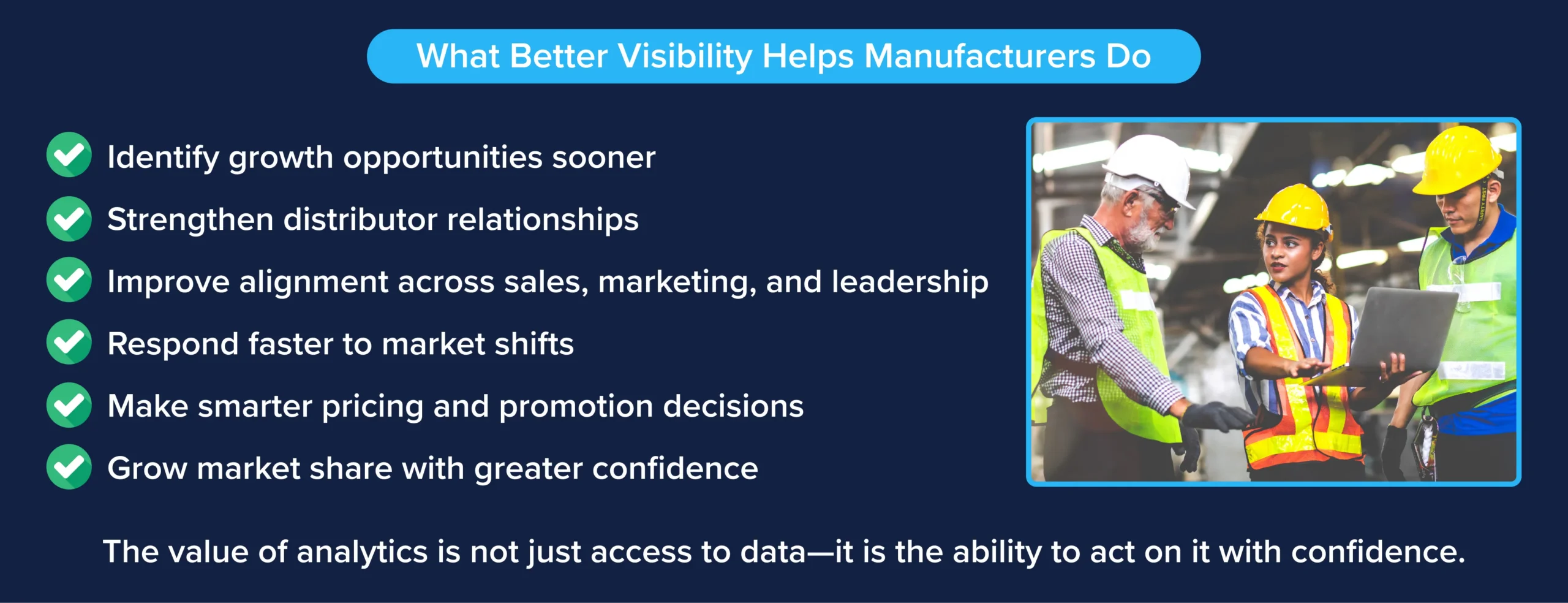
Greater visibility can help manufacturers identify growth opportunities sooner, strengthen distributor relationships, and improve alignment between sales, marketing, and leadership teams. It also allows organizations to respond quicker when demand shifts, competitive pressures emerge, or customer needs change.
As foodservice channels change and grow, visibility is a competitive advantage. Manufacturers that can transform data into actionable intelligence are often better positioned to grow market share, strengthen customer relationships, and make smarter business decisions.
Solutions like SalesStream help manufacturers bring together distributor sales data, market intelligence, and performance insights into a single view. With a full view of what is happening across the channel, manufacturers can make better decisions to support long-term growth.
FAQs
What does data analytics mean to manufacturers in the food industry?
Data analytics for food manufacturers means turning production, distribution, and operator purchasing data into actionable insights. It helps teams understand demand signals, product performance, and pricing trends. This visibility enables smarter decisions across sales, marketing, and supply chain operations to better align with real-time foodservice demand and drive profitable growth.
How do manufacturers use analytics in daily operations?
Manufacturers use analytics daily to monitor product movement, forecast demand, and track sales performance across distributors and operator segments. Insights guide production planning, inventory management, and pricing decisions. Sales teams also use data to identify opportunities, adjust strategies, and focus on high-performing products that align with current foodservice trends and demand.
What is the difference between food analytics and foodservice analytics?
Food analytics focuses on internal manufacturing metrics such as production efficiency, ingredient sourcing, and quality control. Foodservice analytics examines how products perform in the market, including operator purchasing behavior and sales trends. Together, they give manufacturers a complete view of both supply and demand to better inform strategy and execution.
How can analytics help reduce food costs for manufacturers?
Analytics helps manufacturers reduce food costs by improving demand forecasting, minimizing production waste, and optimizing inventory levels. By analyzing purchasing patterns and distributor data, teams can better match supply with demand, avoid overproduction, and refine pricing strategies. This leads to more efficient operations and stronger margins across the supply chain.
What kind of data should food manufacturers track?
Food manufacturers should track sales velocity, product mix, pricing performance, and operator purchasing trends. Distributor movement, inventory levels, and regional demand shifts are also critical. Monitoring this data helps teams identify growth opportunities, improve forecasting accuracy, and align production and sales strategies with actual foodservice demand across different customer segments.