


Foodservice manufacturers have long relied on market research to guide sales and marketing decisions. But purchasing patterns change quickly, distributor networks are complex, and delayed reports can leave sales teams in reactive instead of proactive mode.
Modern restaurant business market research goes beyond surveys and historical reports. It combines real-time purchasing information with store-level sales data to show what operators are buying, which items are trending where, and how purchasing behavior differs across markets.
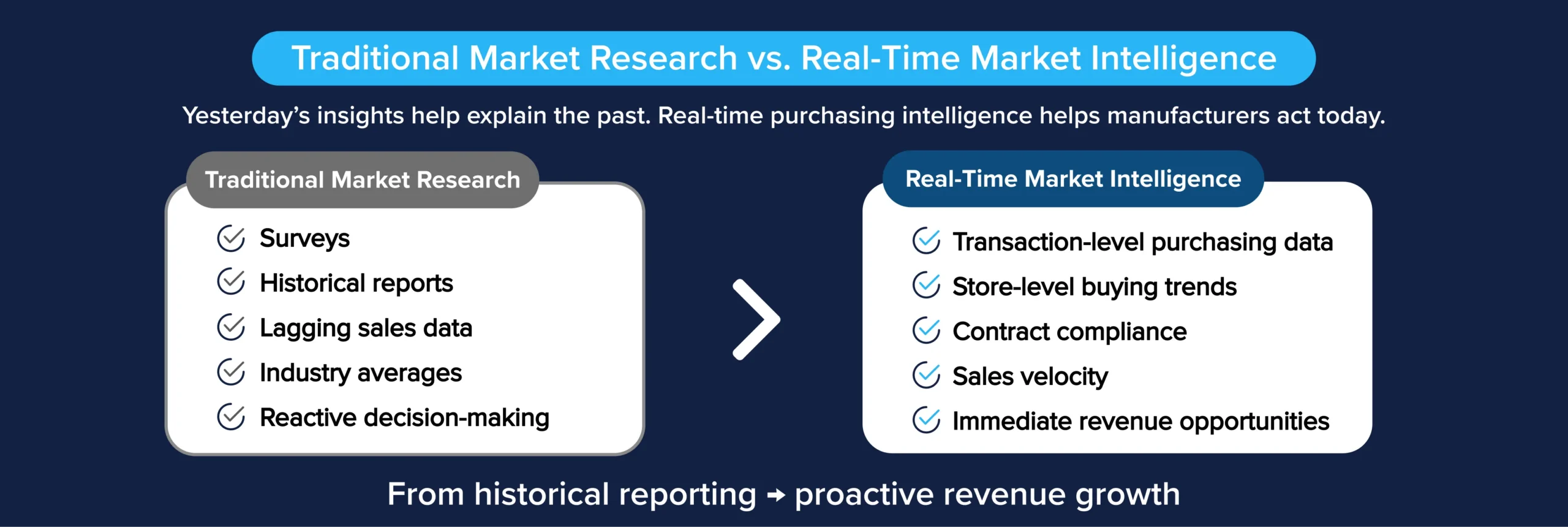
In other words, traditional market research tells manufacturers what happened, while modern market research shows what’s happening right now. Instead of waiting weeks or months for traditional research to catch up, manufacturers can now respond to market changes as they happen.
Why Granular Market Intelligence Is Critical for Foodservice
Foodservice manufacturers don’t typically have a complete view of the market. Visibility gaps such as outdated sales data and products moving through multiple distributors can make it difficult to measure true market performance.
Granular market intelligence gives manufacturers more visibility into what’s selling at the operator level. This makes it easier to spot growth opportunities and identify contracts that need nurturing. Instead of chasing every opportunity, sales teams can focus on accounts with the most potential.
Foodservice Market Trends Shaping Manufacturer Strategy
Manufacturers need to know how purchasing patterns are changing across the foodservice industry. Real-time restaurant market research helps sales teams spot those changes early. This way, they can take action before revenue is affected.
Operator buying habits can shift quickly due to factors like food costs, changes in consumer preferences, or economic conditions. Tracking store-level purchasing data helps manufacturers see which categories are waxing and waning, and where new opportunities are emerging.
Labor shortages are a huge factor in purchasing decisions. Many operators are looking for products that save time in the kitchen or reduce prep work. Manufacturers that understand those operator needs can better position their products.
Manufacturers also need to know whether operators are buying the products covered by their contracts. A signed contract doesn’t guarantee ongoing sales. Monitoring contract compliance helps manufacturers see when purchases begin to drift from the agreement. Spotting those changes early gives sales teams a chance to shore up those sales before they lose business.
Primary vs. Secondary Foodservice Research: A Revenue-Driven Framework
Traditional restaurant industry market research relies on two sources of information: primary research and secondary research. Both are valuable, but they tell different parts of the story.
Primary research comes directly from operators, distributors, and sales teams. Customer interviews, surveys, and in-person conversations help manufacturers understand why operators make certain purchasing decisions and what challenges they’re trying to solve.
Secondary research looks at the bigger picture. Industry reports, commodity prices, economic forecasts, and category trends help manufacturers understand what’s happening in the broader foodservice industry and where the market may be headed.
Neither approach, however, shows what’s happening inside an individual account right now. That’s where transaction-level purchasing data comes in. It shows what individual operators are buying and how those purchasing patterns change over time.
Traditional market research explains the “why” in a big-picture sense. Real-time purchasing data shows manufacturers what’s happening, and where to focus sales efforts, today.
How Manufacturers Conduct Foodservice Market Research
Effective market research for restaurants starts with knowing which operators a manufacturer wants to reach. That means identifying the restaurant chains, regional groups, and foodservice operators that best fit the company’s products and growth strategy.
The next step is understanding how those operators buy. Many purchase through multiple distributors, which can make it difficult to see the full picture through a single sales report. Mapping distributor networks helps manufacturers understand where products are sold and where visibility may be limited.
Manufacturers should also compare their performance against competitors. Operator-level purchasing data can reveal when a competing brand starts gaining traction or when existing accounts begin slowing their purchases.
Purchasing data can also uncover new sales opportunities. An operator may already buy products in a category, but not from your brand. Existing customers may expand to new locations without increasing purchases. Identifying those opportunities helps sales teams focus on the accounts that will generate new business.
Key Metrics Foodservice Manufacturers Must Track
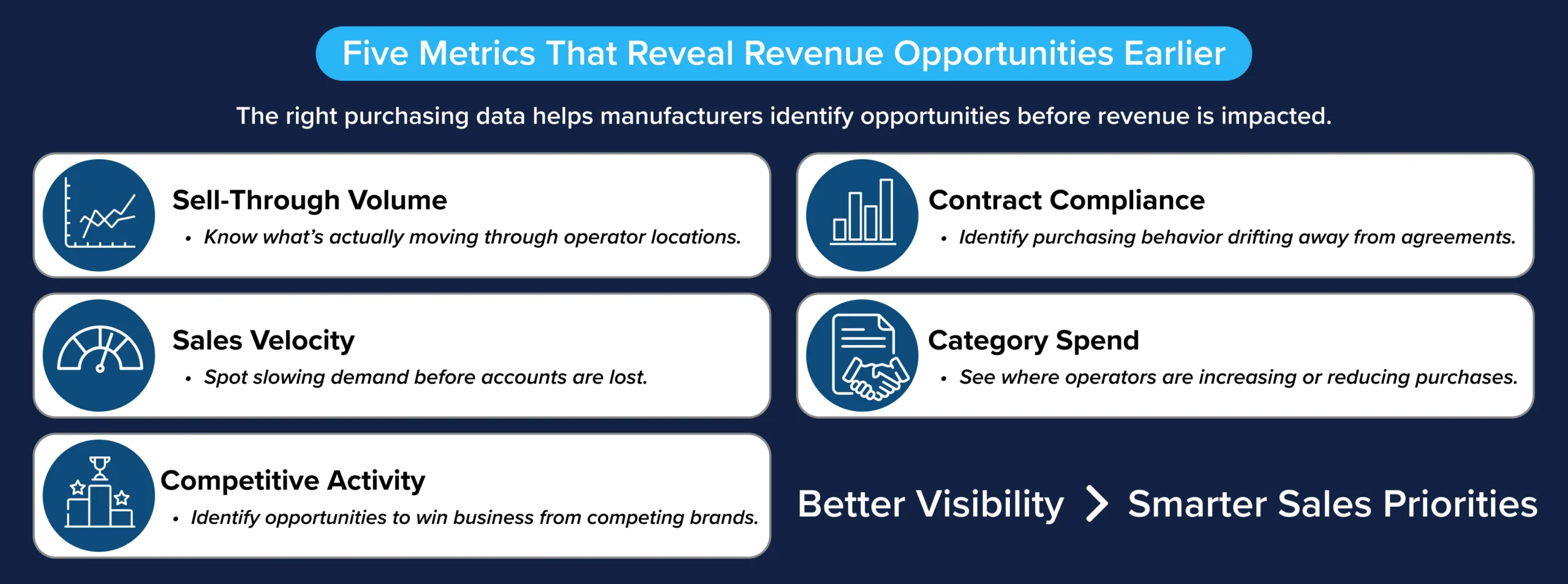
One of the most valuable metrics is sell-through volume. Tracking case-level movement shows what operators buy after products reach distribution. This gives manufacturers a better picture of operator demand than shipment data alone.
Contract compliance is equally important. Operators with purchasing agreements don’t always buy according to those contracts. Monitoring compliance helps manufacturers flag changes early so sales teams can step in before they lose business.
Manufacturers should also monitor category spend and sales velocity. A drop in category spend or sales velocity may signal that operators are buying less or switching brands. Spotting those trends early helps sales teams adjust their strategy before small changes become bigger issues.
Overcoming the Crisis of Fragmented Foodservice Data
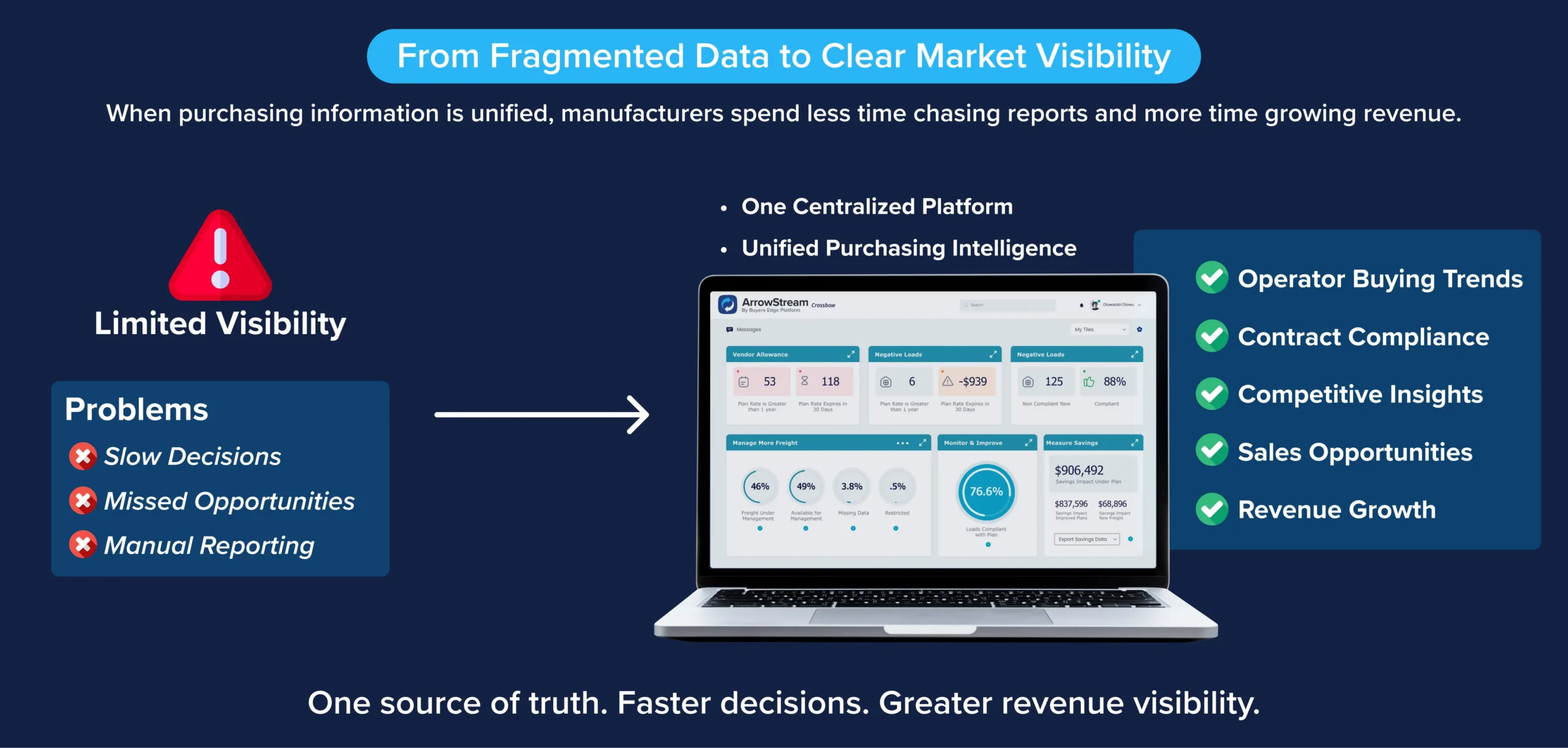
Many manufacturers still rely on reports from multiple distributors, spreadsheets, and manual analysis to understand what’s happening in the market. In fact, sales teams often spend as much time gathering and reconciling data as they do acting on it. By the time the information is complete, the opportunity may already be gone. The result? Slower decision-making and missed sales opportunities.
A unified data network brings purchasing information together in one place, giving manufacturers a clearer view of operator activity across distributor networks. Instead of piecing together spreadsheets and reports, sales teams can quickly identify where to focus and spend more time growing the business.
Smarter Revenue Decisions with SalesStream Intelligence
Modern restaurant market research goes beyond surveys and historical reports. Manufacturers need transaction-level intelligence that tells the true story of what operators are buying and where sales opportunities currently exist.
ArrowStream’s SalesStream platform brings together purchasing data across distributor networks to give manufacturers a clearer view of the market. With better visibility into sales velocity, contract compliance, and competitive activity, revenue teams know where to focus next.
FAQ’s
What is foodservice market intelligence?
Foodservice market intelligence uses purchasing and sales data to help manufacturers understand operator buying behavior, market trends, and growth opportunities.
How can market intelligence help foodservice manufacturers grow sales?
Market Intelligence helps manufacturers identify high-potential accounts, uncover whitespace opportunities, track product performance, and focus sales efforts where they can have the greatest impact.
Why is store-level purchasing data important for manufacturers?
Store-level data provides a more detailed view of what operators are actually buying, helping manufacturers understand product performance beyond distributor-level sales.
What is the difference between traditional market research and real-time market intelligence?
Traditional research often looks at historical trends, while real-time market intelligence gives manufacturers current visibility into purchasing activity so they can respond faster.
How can manufacturers use market intelligence to protect existing business?
Manufacturers can monitor purchasing activity to spot volume shifts, potential competitive losses, and changes within key accounts before they significantly impact revenue.