
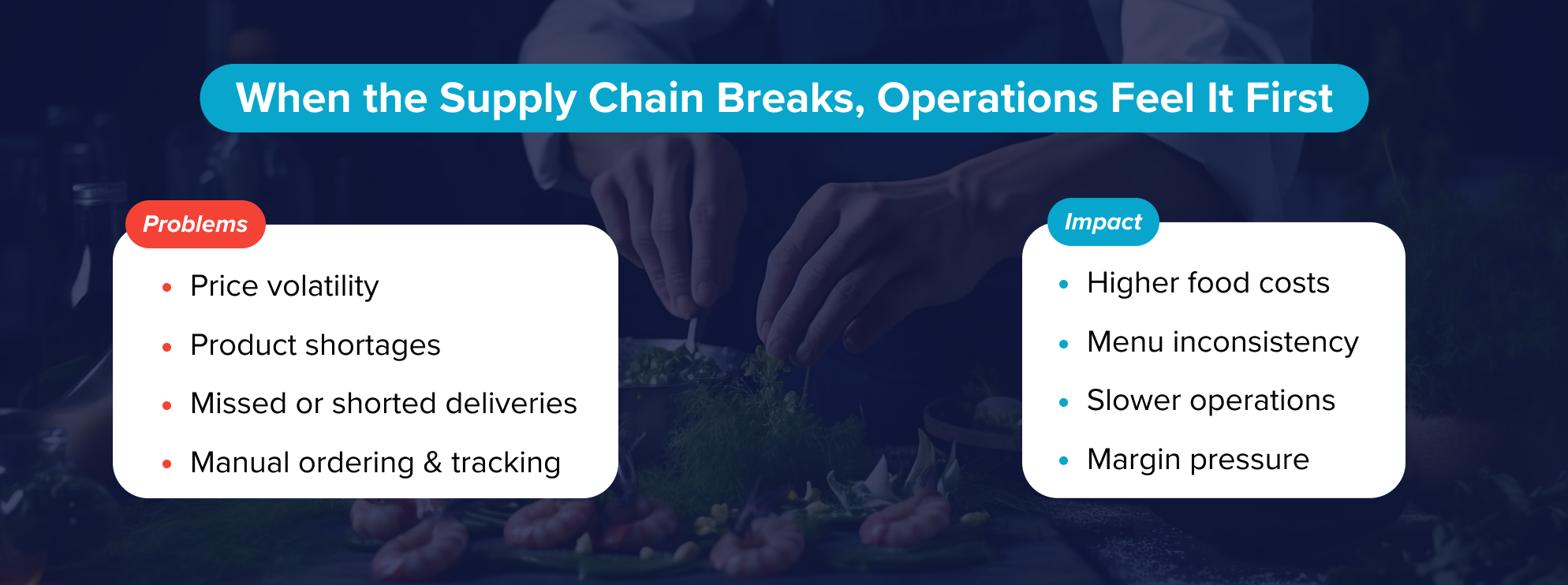
Restaurant supply chain management doesn’t usually get the spotlight — until something goes wrong. A product is out of stock. A price spikes overnight. A delivery shows up short. Suddenly, supply chain decisions are front and center because they directly impact food costs, guest experience, and operational sanity.
For today’s restaurant operators, supply chain management isn’t just about getting product from point A to point B. It’s about visibility, consistency, and control in an environment where costs fluctuate and expectations stay high. This guide breaks down what restaurant supply chain management really means, why it matters, and how operators can approach it in a more practical, sustainable way.
What is the Restaurant Supply Chain?
The restaurant supply chain is the full network of people, processes, and systems involved in getting food and supplies from producers to your kitchen. That includes manufacturers, suppliers, distributors, logistics partners, and the internal teams responsible for ordering, receiving, and inventory management.
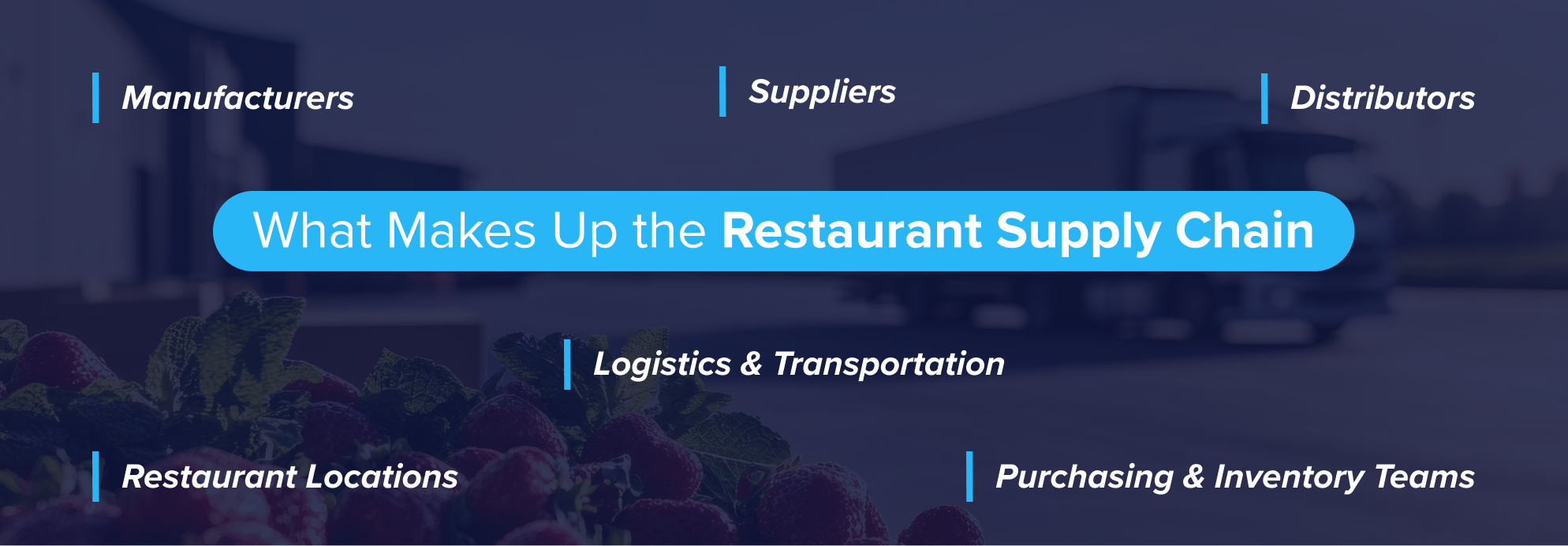
Restaurant supply chain management is the process of coordinating all those moving parts so products arrive on time, at the right price, and at the quality level your menu requires. When it’s working well, it’s almost invisible. When it’s not, the ripple effects are immediate.
Why is Restaurant Supply Chain Management Needed?
Restaurants operate on tight margins and even tighter timelines. Without a strong approach to supply chain management, small issues quickly turn into expensive problems.
Cost Control and Margin Protection
Food costs don’t creep up politely. They jump. One week freight is fine, the next week it’s suddenly part of the conversation again. That’s why restaurant supply chain management plays such a direct role in protecting margins.
When operators have visibility into pricing across suppliers and distributors, they’re not guessing where increases are coming from. They can see patterns, catch pricing inconsistencies, and avoid paying more simply because no one had time to check. Over time, that visibility creates real accountability — around contracts, invoice accuracy, and how purchasing decisions are made day to day.
Product Availability and Menu Consistency
Guests don’t care about supply chain challenges. They care that their favorite menu item is there when they order it.
Strong supply chain management helps restaurants keep key products in stock and consistent, even when availability tightens. It gives teams a clearer picture of what’s reliable, what’s at risk, and where substitutions might cause issues before they hit the menu. When products suddenly disappear or change without warning, it puts pressure on both the kitchen and the guest experience — and that’s where consistency starts to break down.
Operational Efficiency Across Locations
Managing one location is hard enough. Managing several without shared systems can turn small issues into daily headaches.
Restaurant supply chain management helps multi-unit operators cut through the noise by standardizing how products are sourced, ordered, and tracked. Instead of each location solving the same problems on its own, teams work from the same playbook. That means fewer ordering mistakes, less back-and-forth with distributors, and more time spent running the business instead of chasing missing information.
Reducing Risk and Supply Disruptions
Disruptions are no longer rare events. They’re part of operating in foodservice.
Whether it’s weather, labor shortages, or transportation delays, supply chain issues tend to show up without much warning. Restaurants with a strong supply chain approach aren’t immune to disruptions — but they’re better prepared. Backup suppliers, clearer inventory visibility, and faster access to data make it easier to adjust when plans change. Instead of scrambling, teams can respond with intention and keep operations moving.
Core Components of Restaurant Supply Chain Management
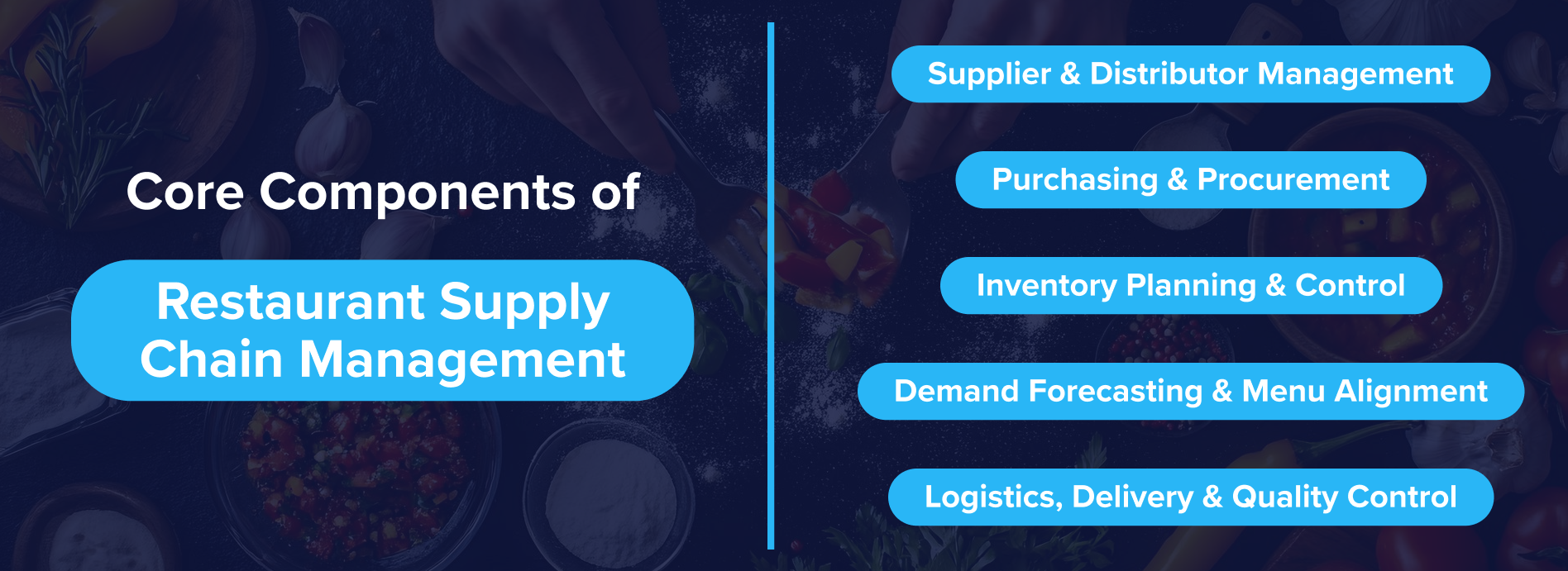
Restaurant supply chain management works best when all the moving pieces actually work together. When they don’t, gaps show up fast — usually in the form of higher costs, missing product, or last-minute scrambling.
Supplier and Distributor Management
Good supplier relationships matter, but relationships alone aren’t enough. Operators still need a clear way to manage approved suppliers, keep an eye on performance, and understand where pricing or service starts to slip. Without that structure, small issues tend to linger longer than they should.
Purchasing and Procurement Processes
Purchasing gets messy when everyone orders a little differently. Clear procurement processes help teams stay aligned on what to buy, when to buy it, and where it should come from. Standardizing purchasing cuts down on off-contract buying and helps keep pricing from drifting over time.
Inventory Planning and Control
Inventory is a balancing act. Order too little and the kitchen feels it immediately. Order too much and cash gets tied up on the shelf. Strong supply chain management adds discipline to how inventory is tracked, reviewed, and replenished so product turns the way it’s supposed to.
Demand Forecasting and Menu Alignment
Forecasting works best when it’s grounded in reality. Looking at sales patterns, seasonality, and menu changes helps teams connect what guests are ordering to what needs to be purchased. When those pieces line up, ordering becomes more predictable and fewer surprises show up during service.
Inventory replenishment forecasting is one of the most challenging parts of this process, especially across multiple locations and distributors.
Logistics, Delivery, and Quality Control
Most problems don’t start in the kitchen — they start at the dock. Delivery timing, receiving accuracy, and quality checks all play a role in keeping standards intact. When these steps are rushed or skipped, issues tend to surface later when they’re harder to fix.
Common Challenges in Restaurant Supply Chain Management
No matter how experienced the team is, supply chain problems have a way of showing up anyway.
Rising Ingredient and Transportation Costs
Prices move fast and rarely move down. Without an easy way to look back at what things cost last month or last quarter, increases can feel random — even when they’re not.
Limited Visibility Into Supply Chain Data
A lot of information lives in different places. When invoices, inventory, and supplier details don’t line up, it’s hard to tell what’s actually driving decisions or costs.
Inventory Shortages and Overstocking
Most inventory issues come from guessing. Order too late and you’re short. Order too much and product sits. Manual tracking makes it harder to stay ahead of either problem.
Supplier Reliability and Disruptions
Some suppliers are steady. Others aren’t. When reliability slips, it usually shows up in small ways first, long before it becomes a real disruption.
Maintaining Quality and Consistency
Product changes happen. When they’re not tracked or shared, quality can drift and consistency becomes harder to protect.
Best Practices for Restaurant Supply Chain Management
There isn’t a single playbook for this. Most operators figure it out by trial, error, and fixing what breaks first.
Build Strong Supplier and Distributor Relationships
Things work better when expectations are clear. Regular check-ins help catch problems early instead of after they’ve already caused issues.
Standardize Purchasing Across Locations
When every location buys differently, costs creep. Standardizing purchasing keeps everyone aligned and makes spending easier to track.
Improve Inventory Accuracy and Turnover
Inventory only works if it’s accurate. Simple counts and regular reviews help teams order what they actually need.
Use Data to Forecast Demand More Accurately
Looking back helps. Sales history, seasonal shifts, and menu changes all give clues about what to order next.
Reduce Food Waste and Excess Inventory
Overordering usually shows up as waste. Tighter purchasing helps keep product from piling up.
Develop Contingency and Risk Management Plans
Stuff happens. Backup options make it easier to adjust when it does.
Align Supply Chain Decisions With Menu Strategy
Menus and purchasing are connected. When they’re aligned, everything runs a little cleaner.
Role of Data and Analytics in Supply Chain Management
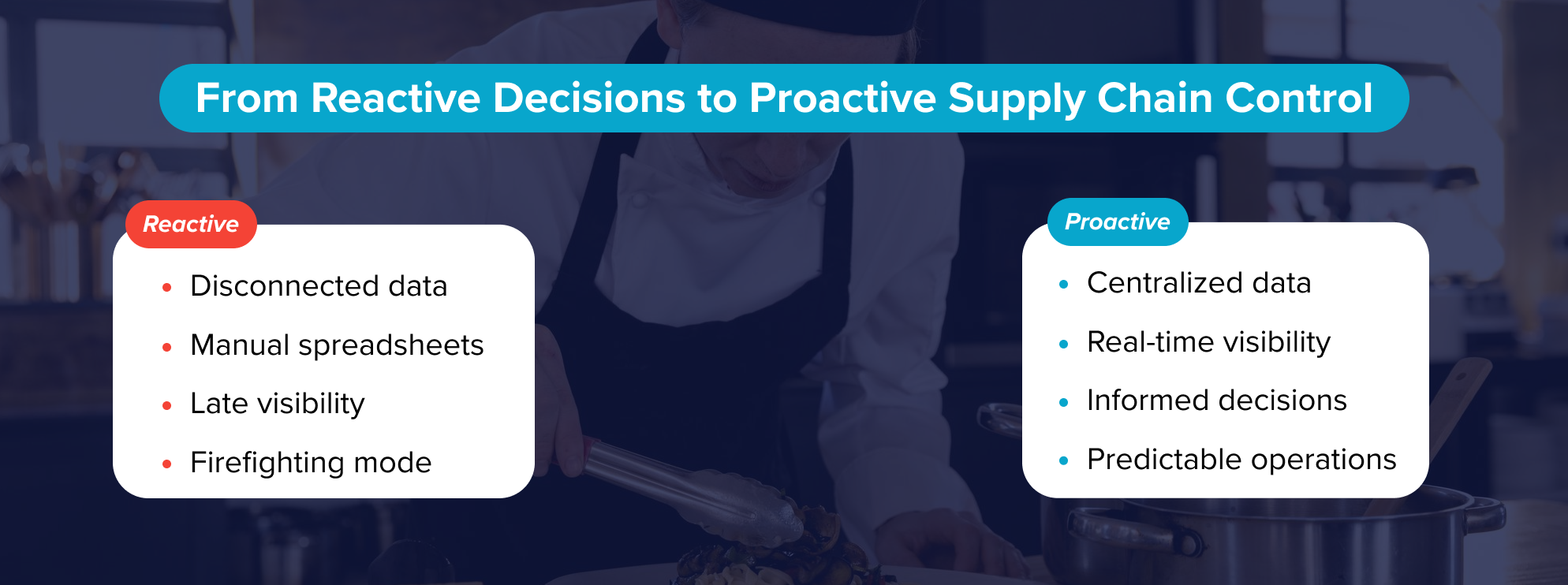
Data is very important for managing the supply chain of modern restaurants. Analytics show you how prices are changing, how well suppliers are doing, how demand is changing, and how inventory is moving. With the right information, operators can move from making decisions based on what happens to making decisions based on what they see coming. They can spot problems early and make changes before their profits drop.
Simplify Restaurant Supply Chain with ArrowStream
By bringing together data from suppliers, distributors, and locations, ArrowStream helps restaurants make supply chain management more organized and clear. Instead of dealing with spreadsheets and systems that don’t talk to each other, operators can see how well their purchasing, inventory, and supply chain are doing in real time. The end result is better decision-making, better cost control, and a supply chain that helps growth instead of slowing it down.
Final Thoughts
It’s not about trying to be perfect when it comes to managing the restaurant supply chain. It’s about making systems that make things more consistent, visible, and flexible in an unpredictable world. Operators can protect margins, lower risk, and keep menus running smoothly, even when things change, as long as they have the right processes and data in place.
FAQs
What are the biggest challenges in restaurant supply chain management?
Costs going up, not always knowing why. Limited visibility into what’s being bought. Suppliers missing fills. Inventory being either too tight or way too heavy. Most operators deal with some mix of all of it.
How can restaurants improve supply chain visibility?
Start by getting information into fewer places. When purchasing, inventory, and supplier data live together, it’s easier to see what’s happening and react before small issues turn into bigger ones.
What role does forecasting play in supply chain management?
Forecasting helps restaurants stop guessing. It connects past sales and seasonal patterns to ordering, so teams aren’t constantly reacting at the last minute.
How does supply chain management impact food costs and margins?
It shows up everywhere. Pricing accuracy, how consistently teams buy, and how long inventory sits all affect food costs — whether it’s obvious or not.
Can technology help restaurants manage supply chain disruptions?
It can’t prevent disruptions, but it helps teams respond faster. Having real numbers and context makes it easier to adjust when plans change.
Click here to discover how ArrowStream can help simplify restaurant supply chain management and bring clarity to your operation.