
Let’s be honest. Most teams don’t think about food traceability until something goes wrong.
A recall hits. A supplier issue pops up. Or someone asks a simple question like, “Where did this come from?” and suddenly it’s not so simple.
That’s where food traceability becomes a whole lot more than a buzzword. It’s how you connect the dots across your supply chain so you’re not guessing when it matters most.
And right now, with tighter regulations and more pressure on transparency, food traceability is quickly moving from “nice to have” to “you really can’t operate without it.”
Food Traceability Explained
At a basic level, food traceability just means being able to track a product from start to finish.
Where it came from.
Where it went.
And everything in between.
Think of it like a paper trail, except digital and way faster to access.
For example, if you’re dealing with produce, food traceability helps you answer things like:
- Which farm did this come from?
- When was it processed?
- Which locations received it?
It’s not complicated in theory. The challenge is actually having all that information connected and easy to find.
How Food Traceability Works
Food traceability works by capturing data at key points along the way.
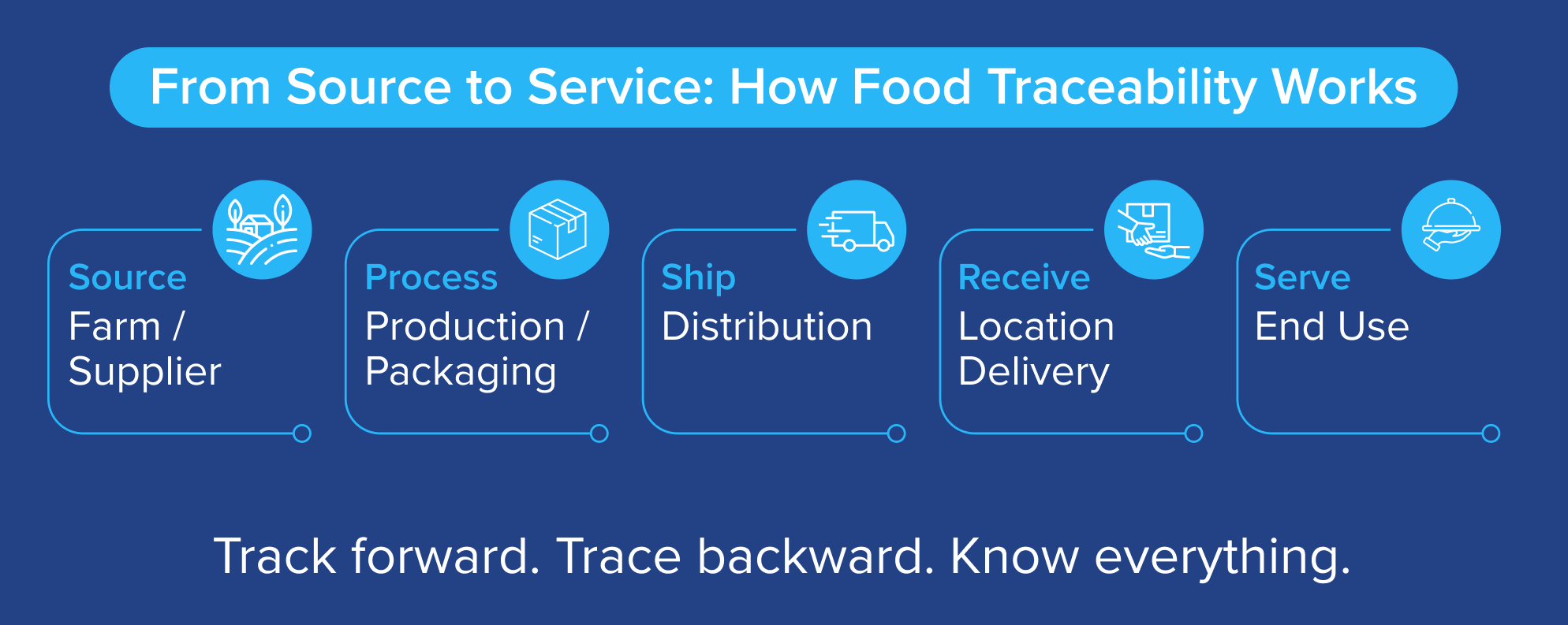
You’ll hear two terms come up a lot:
- Critical Tracking Events (CTEs) → when something happens (shipping, receiving, processing)
- Key Data Elements (KDEs) → the details tied to that moment (lot number, date, location)
Put simply:
- Something happens
- You record it
- You connect it to everything else
Over time, that builds a full picture of where a product has been.
The real value comes when you can:
- Trace backward → where did this come from?
- Trace forward → where did this go?
And do both without digging through emails, spreadsheets, or five different systems.
Why Food Traceability is Important
Food Safety and Recall Readiness
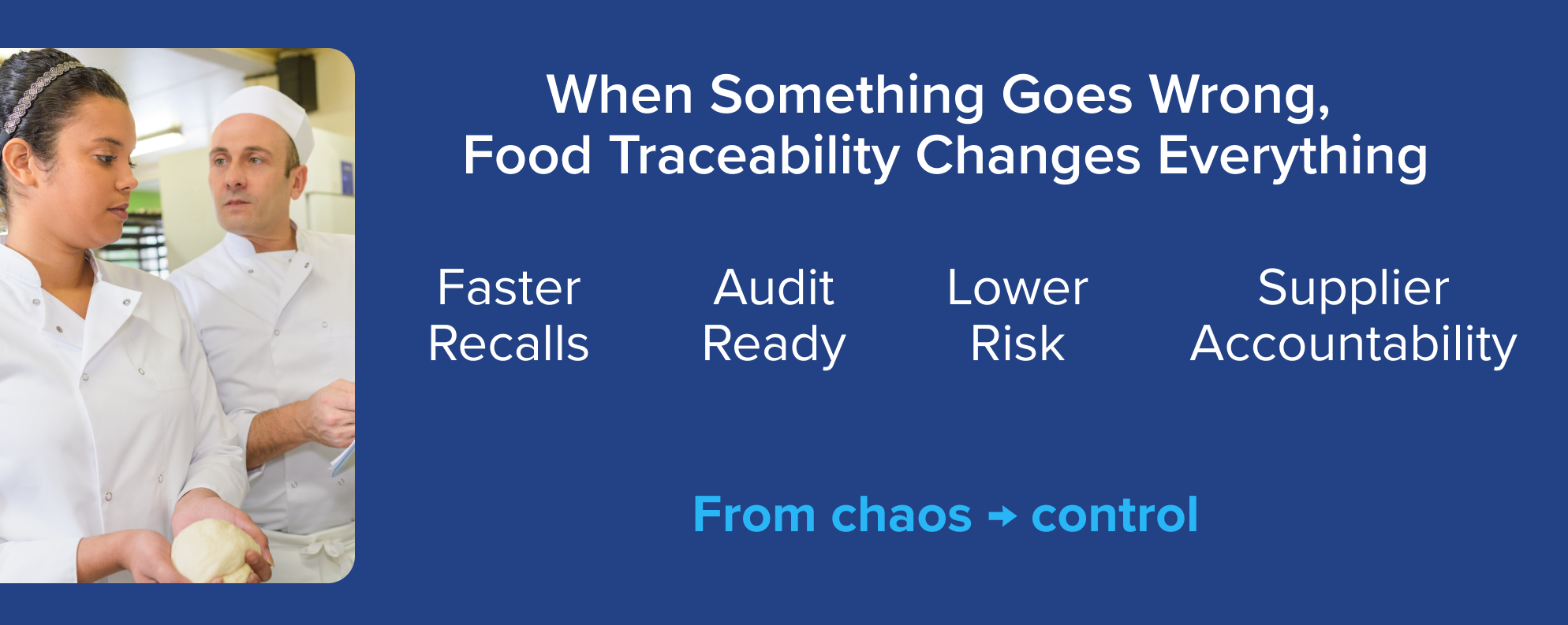
When something goes sideways, speed matters.
Food traceability helps you:
- Pinpoint the exact product involved
- Avoid pulling everything “just in case”
- Act fast without creating chaos
Instead of a massive recall, you’re making targeted decisions. That’s a big difference financially and operationally.
Regulatory Compliance and Audit Response
Regulations are not getting looser.
If anything, food traceability requirements are getting more detailed and more specific.
When an audit happens, you don’t want to be piecing things together last minute. You want to be able to pull records quickly and move on with your day.
Supplier Accountability and Transparency
Not all supplier issues are obvious right away.
Food traceability gives you a clearer view into:
- Who you’re sourcing from
- How consistent they are
- Where problems tend to show up
FDA Food Traceability Rule (FSMA)
If you’ve heard people talking about FSMA, this is where it comes into play.
The FDA’s Food Traceability Rule basically says: “If you’re handling certain foods, you need to track them more closely.”
That includes:
- Recording specific events (CTEs)
- Capturing detailed data (KDEs)
- Being able to share that information quickly if needed
For a lot of teams, this is the push that’s forcing food traceability to become more structured and less manual.
Key Benefits of Food Traceability Systems
Improved Visibility Across the Supply Chain
You can’t fix what you can’t see.
Food traceability gives you a clearer view of:
- Product movement
- Supplier activity
- Inventory flow
No more guessing where something is or how it got there.
Reduced Risk and Faster Issue Resolution
When something breaks, you want to fix it fast.
Food traceability helps you:
- Identify the issue quickly
- Narrow down the impact
- Take action without overcorrecting
Less downtime. Less waste. Less stress.
Increased Operational Efficiency
Manual tracking slows everything down.
With a solid food traceability system, you can:
- Cut down on spreadsheets
- Reduce manual entry
- Spend less time chasing information
Your team gets time back, which is never a bad thing.
Better Decision-Making Through Data
This is where things get interesting.
Food traceability data can actually help you:
- Spot trends
- Compare supplier performance
- Adjust sourcing strategies
It’s not just about tracking. It’s about learning from what you’re tracking.
Technologies Used in Food Traceability
Barcode and QR Code Systems
These are the basics, and they still work.
Scan a product, log the data, move on.
Simple, effective, and widely used.
RFID and IoT-Based Tracking
If you want less manual work, this is where things level up.
These tools can:
- Track products automatically
- Monitor conditions like temperature
- Update data in real time
Less scanning, more automation.
Blockchain for Traceability and Transparency
There is a lot of talk about blockchain, but its value is pretty clear.
It makes a record that everyone can see that:
- Not easy to change
- Can be seen by more than one person
- Makes people in the supply chain trust each other
Cloud-Based Traceability Platforms
This is what makes everything work together.
You can do the following with cloud-based systems:
- Get to data from anywhere
- Link up more than one system
- As your business grows, scale up.
Data won’t get stuck in one place anymore.
Challenges in Implementing Food Traceability
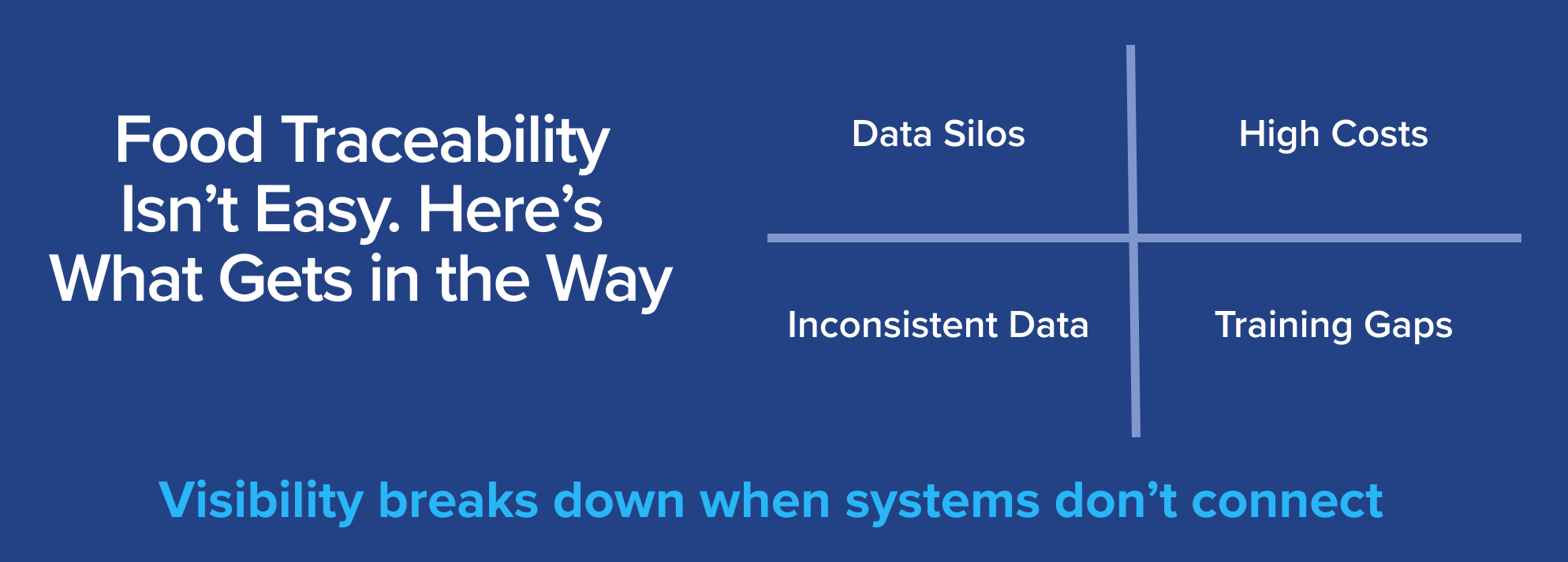
Complex Supply Chains and Data Silos
Most supply chains are not clean and simple.
You’re dealing with:
- Multiple suppliers
- Different systems
- Data that doesn’t always match
Getting everything aligned takes effort.
High Implementation and Maintenance Costs
Let’s not pretend this is free.
There’s an upfront investment, plus ongoing costs.
But the flip side is the cost of not having food traceability when something goes wrong. That’s usually much higher.
Data Accuracy and Standardization Issues
If the data is messy, the system won’t help much.
Common issues include:
- Missing information
- Inconsistent formats
- Manual errors
Clean data makes everything else work better.
Change Management and Training Gaps
Even the best system won’t fix things if no one uses it properly.
You need:
- Clear processes
- Proper training
- Team buy-in
Otherwise, food traceability becomes just another tool no one fully trusts.
How to Choose the Right Food Traceability Solution
Assessing Operational and Compliance Needs
Start with your reality, not a wishlist.
Ask:
- What do we actually need to track?
- What regulations apply to us?
- Where are our biggest gaps?
Scalability and System Integration
Your solution should grow with you.
Look for something that:
- Integrates with your current systems
- Doesn’t require a full overhaul
- Can scale as your operation expands
Security, Compliance, and Data Protection
You’re dealing with sensitive data.
Make sure your system covers:
- Security standards
- Compliance requirements
- Reliable data storage
Ease of Use and Long-Term Support
People won’t use it if it’s hard to use.
It’s that simple.
Check for:
- Clean interfaces
- Little training needed
- Help when things come up all the time
What’s Next in Food Traceability
Increasing Regulatory Expectations
More rules are coming.
Food traceability requirements will likely get more detailed, not less.
Greater Use of Automation and AI
Automation is already changing how teams handle data.
Expect to see:
- Less manual entry
- Faster insights
- Smarter alerts
Growing Demand for Transparency and Sustainability
People want to know where their food comes from.
Food traceability plays a big role in:
- Sustainability efforts
- Ethical sourcing
- Building trust with customers
Final Thoughts
Food traceability is one of those things you don’t fully appreciate until you need it.
But once you have it in place, it changes how you operate.
You move faster.
You make better decisions.
And you’re not scrambling when something unexpected happens.
That’s the difference between reacting and actually being in control.
FAQs
How does food traceability work across the supply chain?
It works by collecting data at important points like sourcing, processing, and distribution, and then linking that data so you can quickly track products going forward and backward.
What are Key Data Elements (KDEs) and Critical Tracking Events (CTEs)?
CTEs are the moments something happens. KDEs are the details recorded at those moments. Together, they create the full traceability picture.
What technologies are used in food traceability systems?
Barcodes, QR codes, RFID, IoT devices, blockchain, and cloud-based platforms that bring all the data together are some of the most common ones.
How can organizations implement food traceability without disrupting operations?
Begin with small steps, concentrate on the most dangerous areas, and then expand. Make sure your new system works with the ones you already have, train your staff well, and roll it out in stages instead of all at once.