
Most operators don’t sit around thinking about food service logistics… until something breaks.
The truck is late. The order is short. The produce doesn’t look right. Suddenly, what felt like a “back-of-house detail” becomes the thing putting your entire service at risk.
That’s the reality. Food service logistics isn’t just about moving product. It’s about protecting consistency, controlling costs, and making sure your kitchen can execute without surprises.
When it’s working, your team stays focused on food and service. When it’s not, you’re in problem-solving mode before the doors even open.
What Is Food Service Logistics?
Food service logistics is the system that moves food and supplies from suppliers to your operation, but more importantly, it’s how that movement is managed.
It includes sourcing, storage, transportation, delivery timing, and how products are handled at every step. It also includes the information tied to those movements, like order accuracy, inventory levels, and supplier performance.
From an operator’s perspective, food service logistics shows up in simple ways:
- Did the order arrive on time?
- Was everything correct?
- Is the product usable and high quality?
- Do I have what I need for service?
Behind those simple questions is a much more complex system. Every handoff in that system introduces risk. Strong food service logistics reduces that risk and gives you more control over your operation.
Why Food Service Logistics Matters
Food service logistics directly impacts how well your operation runs day to day. It’s not separate from your kitchen. It feeds into it
Ensuring Food Safety and Product Quality
You can’t out-cook poor product.
If something was mishandled in transit or sat outside of safe temperature ranges, that issue follows it into your kitchen. Food service logistics is what protects product integrity before it ever hits your prep table.
This is especially critical for proteins, dairy, and fresh produce. Even small temperature deviations can shorten shelf life or introduce safety risks.
Meeting Tight Delivery Timelines
Most kitchens don’t have a lot of cushion built into the day.
If a delivery is supposed to be there at 9:00 and it rolls in at 10:15, that throws everything off. Now prep is behind, your team is adjusting on the fly, and you’re already playing catch-up before service even starts.
Food service logistics really shows its value here. When deliveries are consistent, your team can build a rhythm around them. Prep gets done on time, labor stays tighter, and you’re not scrambling to rework the plan halfway through the morning.
Reducing Waste and Spoilage
A lot of waste gets blamed on over-ordering, but that’s not always the full story.
Sometimes product shows up already a little off. Maybe it sat too long somewhere along the way, or temperatures weren’t held as tightly as they should have been. By the time it hits your walk-in, you’ve already lost a day or two of shelf life without realizing it.
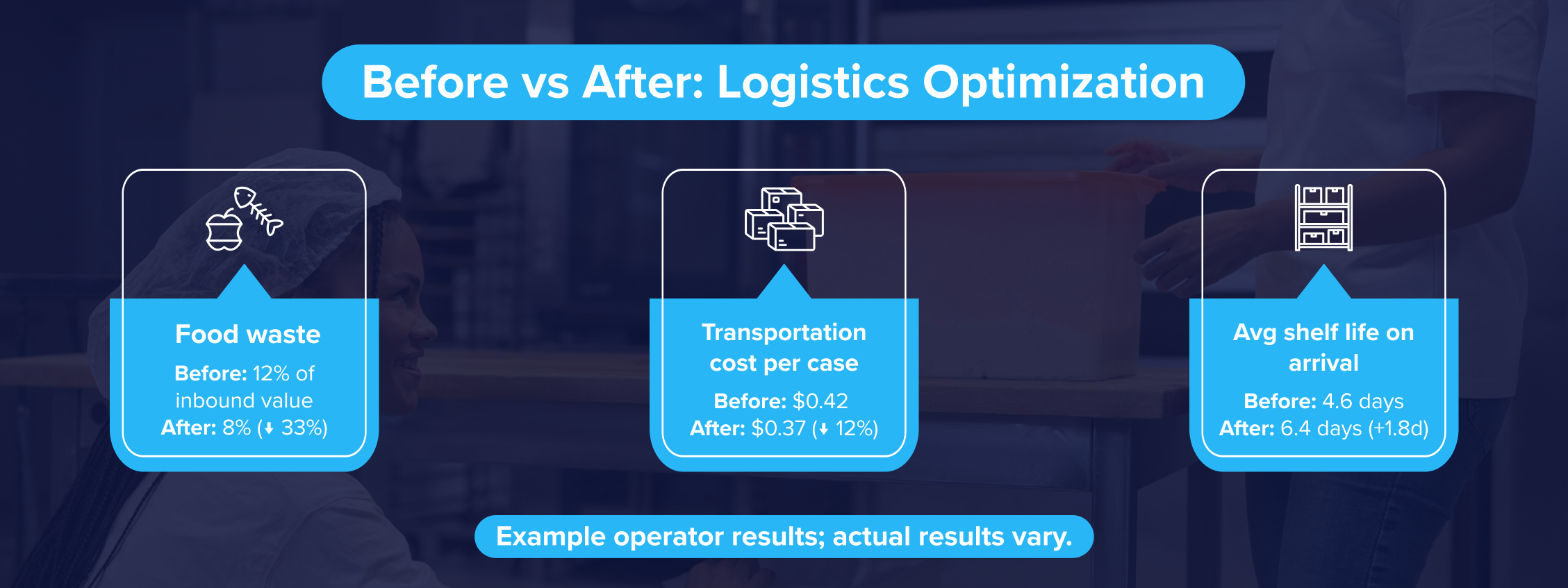
That’s where food service logistics makes a difference. When handling, storage, and delivery are consistent, product lasts longer, turns faster, and you’re not tossing things you just brought in a couple days ago.
Controlling Logistics and Transportation Costs
Transportation is one of the most overlooked cost drivers.
Fuel, routing, delivery frequency, and order consolidation all play a role in what you’re actually paying to move product. When food service logistics is optimized, those costs become more predictable and easier to manage.
Supporting Reliable Restaurant Operations
Consistency is what keeps an operation stable.
When your deliveries are predictable and your inventory aligns with demand, your team spends less time reacting and more time executing. That’s where food service logistics quietly supports better service, stronger margins, and smoother shifts.
Key Components of Food Service Logistics
Food service logistics works because multiple systems are working together. When one breaks down, you feel it quickly.
Transportation and Distribution
This is the movement of product from suppliers to your location.
But it’s not just about getting from point A to point B. It’s about timing, routing efficiency, and maintaining product conditions during transit.
Delays, route stacking, or improper handling during distribution can create issues that show up hours later during service.
Warehousing and Storage
Before your order is loaded onto a truck, it’s stored somewhere.
Warehouses need to maintain proper temperature zones, manage inventory rotation, and ensure product is handled correctly. If those processes aren’t tight, quality issues start before the product even leaves the facility.
Inventory Management
Inventory sits at the intersection of purchasing and operations.
Too much inventory ties up cash and increases spoilage risk. Too little creates gaps in service.
Food service logistics supports better inventory management by improving delivery consistency and giving operators more confidence in ordering patterns.
Order Fulfilment and Last-Mile Delivery
This is where accuracy matters most.
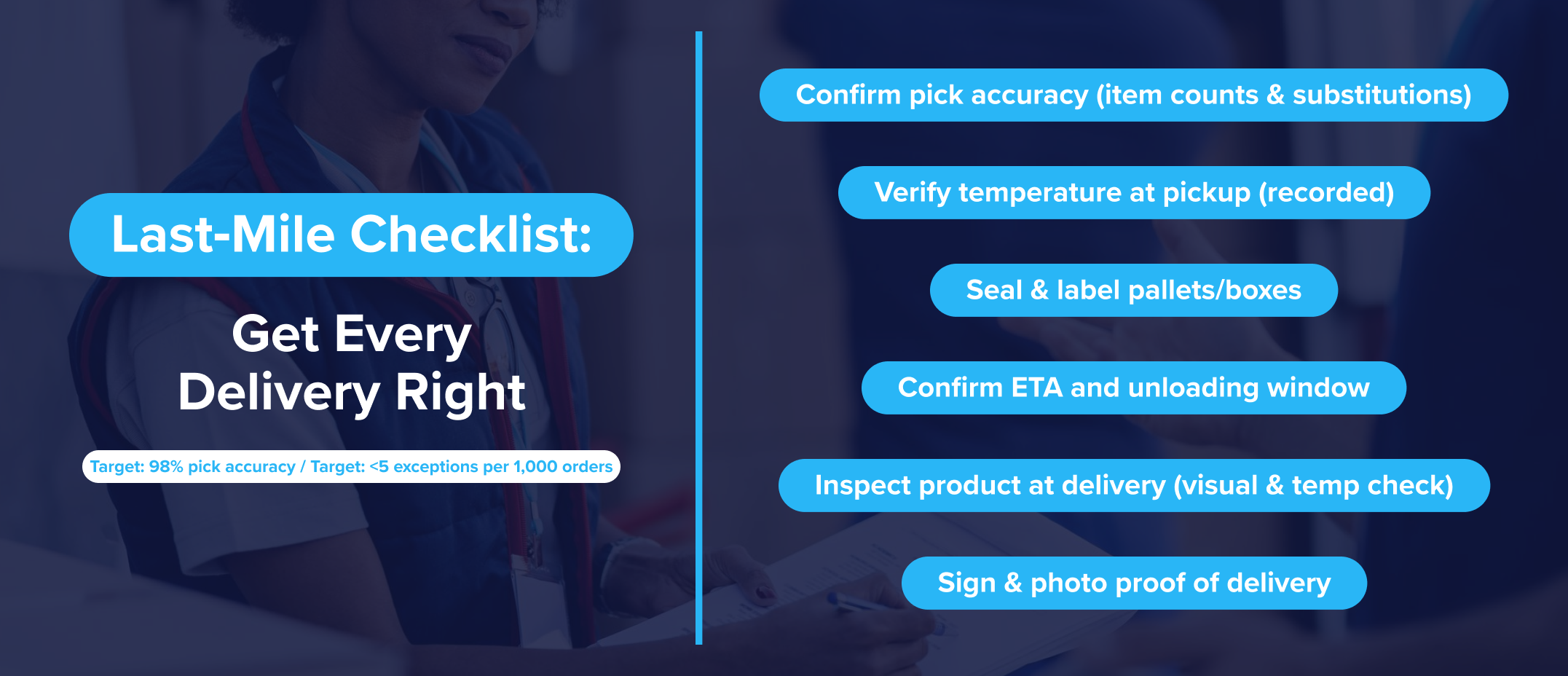
Picking errors, substitutions, and missed items typically happen during order fulfilment. Then the last-mile delivery adds another layer of risk with timing and handling.
For operators, this is the moment of truth. It’s where food service logistics either delivers what was promised or creates problems that need immediate solutions.
The Cold Chain in Food Service Logistics
The cold chain sounds technical, but it’s really pretty simple when you break it down.
It’s just making sure cold food actually stays cold the entire time it’s moving through the supply chain. From the moment it leaves a facility to when it lands in your walk-in, that temperature needs to hold steady.
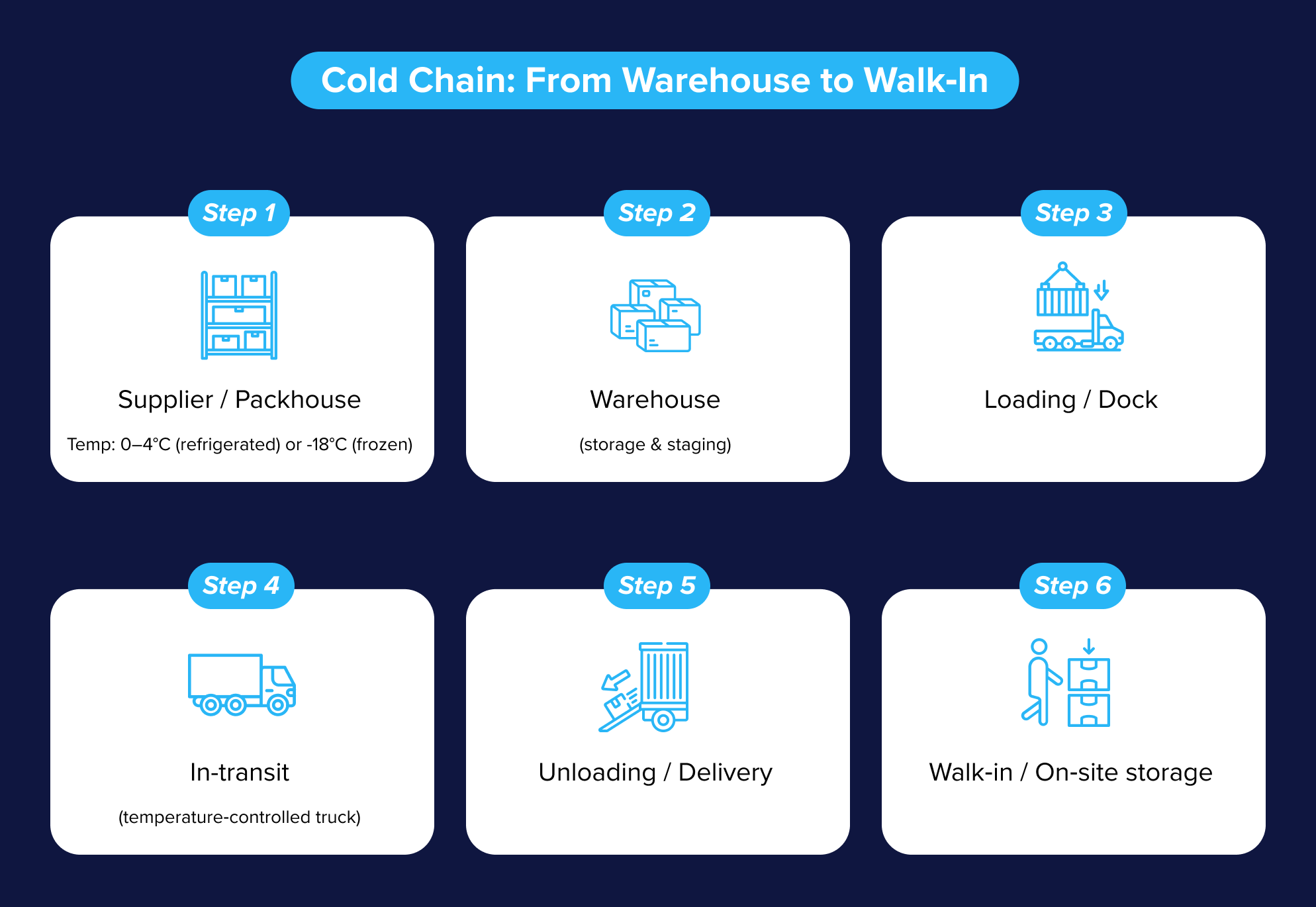
And the tricky part is, it doesn’t take much for things to go sideways. A door left open a little too long, a delay on the dock, a truck running warmer than it should… those small moments add up.
Once that temperature starts drifting, you’re not just dealing with quality issues. You’re getting into shelf life problems and, in some cases, food safety risks that aren’t always obvious right away.
Temperature-Sensitive Products and Risk Points
Items like meat, seafood, dairy, and certain produce require strict temperature control.
Risk points can happen during loading, unloading, storage, or transit. Even a short exposure to the wrong temperature can impact shelf life or create food safety concerns.
Cold Storage, Refrigeration, and Transport Controls
Cold chain management relies on the right infrastructure.
That includes refrigerated warehouses, temperature-controlled trucks, and proper storage practices at every stage. Equipment alone isn’t enough. It also requires consistent processes and trained teams to manage it correctly.
Monitoring, Alerts, and Exception Handling
Modern food service logistics uses technology to monitor temperature in real time.
If something drifts outside of acceptable ranges, alerts allow teams to respond quickly. This helps prevent product loss and reduces the risk of unsafe food entering your operation.
Common Challenges in Food Service Logistics
Even well-run operations deal with challenges. Food service logistics is influenced by a lot of variables that aren’t always controllable. Many of these issues mirror broader food and beverage supply chain challenges, where visibility gaps, transportation disruptions, and compliance pressures can quickly impact operations.
Perishable Goods and Shelf-Life Constraints
Every product has a limited window of usability.
Managing that window requires accurate ordering, proper storage, and consistent delivery timing. If any part of food service logistics slips, that window gets shorter.
Temperature Control Failures
Refrigeration issues, human error, and equipment failures all happen.
When they do, the impact can be immediate and expensive. A single temperature issue can result in lost product and potential safety concerns.
Regulatory and Food Safety Compliance
Food safety regulations are strict, and for good reason.
Food service logistics must support compliance at every stage, from sourcing to delivery. Failure to meet those standards can lead to fines, recalls, or reputational damage.
Limited Visibility and Traceability
It’s hard to deal with problems well if you can’t see your supply chain clearly.
Operators need to know where products come from, how they were handled, and where they are at all times. Strong food service logistics makes that visibility better.
Transportation Delays and Rising Fuel Costs
Deliveries can be delayed by things outside of the company’s control, like traffic, bad weather, and a lack of workers.
At the same time, the cost of transportation is still going up because of rising fuel prices. Because of these pressures, it’s more important than ever to have good food service logistics.
Food Safety and Compliance in Food Service Logistics
Food safety isn’t a separate function. It’s built into food service logistics from start to finish.
Regulatory Requirements and Industry Standards
Operators and suppliers must follow strict guidelines for handling, storing, and transporting food.
Food service logistics must support compliance at every stage, from sourcing to delivery. Regulations like FSMA Rule 204 are raising the bar for traceability and recordkeeping across the supply chain, making it more important than ever to have systems in place that can track products accurately and consistently.
Traceability From Source to Service
Traceability allows you to track a product from its origin all the way to your operation.
This is critical for managing recalls, identifying issues quickly, and maintaining accountability across the supply chain.
Handling Recalls, Returns, and Reverse Logistics
When something goes wrong, how quickly you respond is important.
Food service logistics must help with clear communication, safe product removal, and efficient recall processes so that operations can keep going with as little disruption as possible.
Technology’s Role in Food Service Logistics
Technology has changed how a lot of operators handle food service logistics, but not in some big flashy way. It’s more about removing the guesswork.
A few years ago, if something was off, you usually didn’t find out until it was already a problem. Now, you can catch things earlier, sometimes before they even impact the kitchen. That shift alone makes a big difference day to day.
Real-Time Shipment and Inventory Visibility
One of the biggest changes is simply knowing where things are.
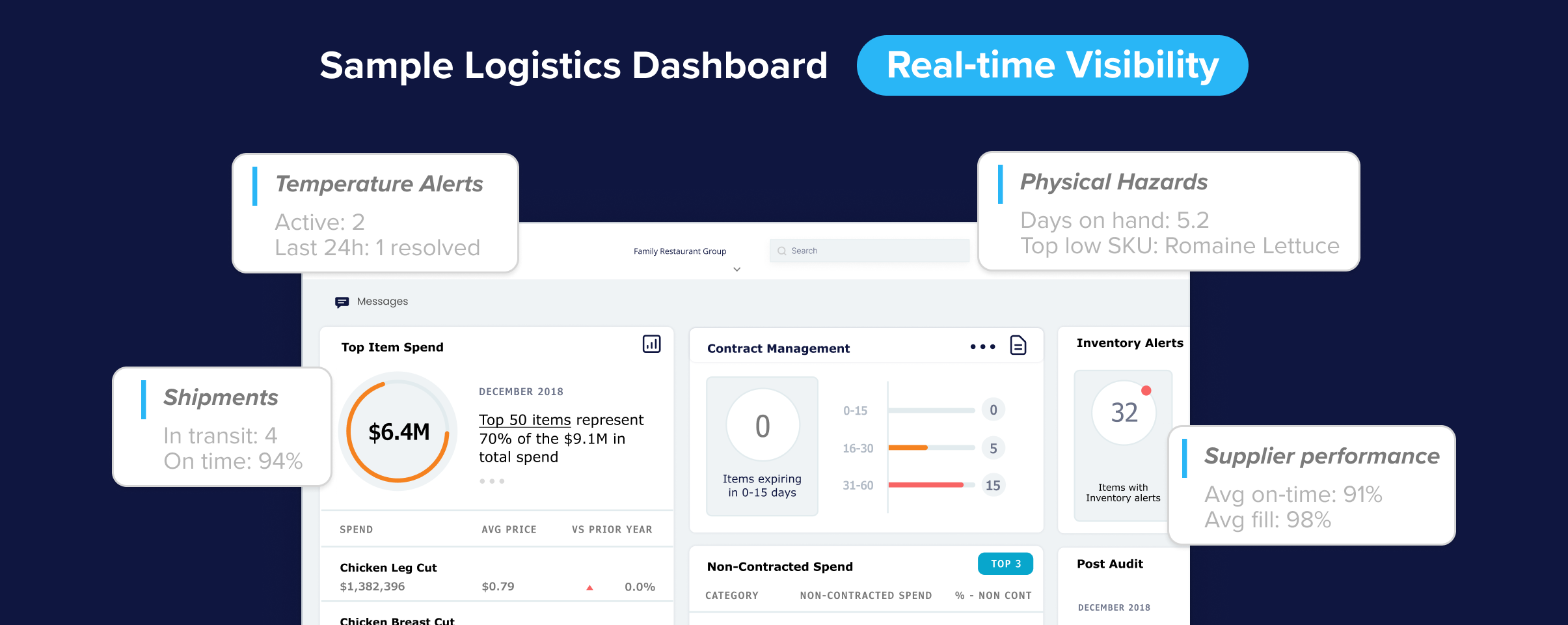
If a delivery is running behind, you can see it. If inventory is getting low faster than expected, you’re not finding out at the last minute.
That kind of visibility makes it easier to adjust. Maybe you shift prep, maybe you tweak an order, maybe you hold off on something. Either way, you’re making decisions with real information instead of guessing.
Supplier and Carrier Performance Tracking
Over time, patterns start to show up.
Some suppliers are consistently on time. Others tend to run late or have more order issues. Same goes for carriers.
When you can actually see that performance laid out, it changes how you make decisions. You’re not relying on memory or gut feel anymore. You’ve got something concrete to work off of.
Data-Driven Demand Planning
A lot of operators already have a sense of what they’ll need week to week. Technology just sharpens that.
Instead of relying only on experience, you can look at past orders, seasonal shifts, even small trends you might not have noticed otherwise.
That usually leads to tighter ordering. Less overstock, fewer surprises, and a little more confidence that you’re bringing in what you actually need.
Exception Management and Proactive Alerts
This is where things really start to feel different.
Instead of finding out something went wrong after the fact, you get a heads-up when something starts to drift. A delay, a temperature issue, an order discrepancy… you’re seeing it earlier.
It doesn’t mean problems disappear. But it does give you a window to respond before it turns into a bigger issue during service.
Best Practices for Effective Food Service Logistics
Strong food service logistics doesn’t happen by accident. It’s built through consistent practices.
Optimizing Transportation Routes and Schedules
Efficient routing reduces delivery times and transportation costs.
Even small improvements in scheduling can have a noticeable impact on reliability and spend.
Improving Coordination with Distributors and Suppliers
Clear communication helps prevent errors.
When suppliers and operators are aligned on expectations, food service logistics becomes more predictable and easier to manage.
Strengthening Cold Chain Processes
Maintaining temperature consistency requires both the right equipment and the right habits.
Regular checks, proper training, and reliable systems all contribute to stronger cold chain performance.
Using Data to Reduce Waste and Improve Efficiency
Data highlights where inefficiencies exist.
By tracking inventory, spoilage, and delivery performance, operators can make adjustments that improve overall efficiency.
Planning for Disruptions and Demand Fluctuations
Disruptions are inevitable.
Having backup suppliers, flexible ordering strategies, and contingency plans helps keep food service logistics stable when unexpected issues arise.
The Role of Third-Party Logistics (3PLs) in Food Service
As operations grow, managing logistics internally can become more complex.
That’s where third-party logistics providers come in.
When to Use 3PLs vs In-House Logistics
Outsourcing can provide access to infrastructure and expertise without requiring internal investment.
At the same time, some operators prefer to keep logistics in-house for greater control and customization.
Risks of Limited 3PL Visibility
One of the challenges with 3PLs is reduced visibility.
If systems aren’t integrated, it can be difficult to track performance and identify issues within your food service logistics.
Integrating 3PL Data into a Centralized Platform
The most effective approach is combining 3PL data with internal systems.
This creates a more complete view of operations and allows for better decision-making across the supply chain.
Final Thoughts
Food service logistics isn’t the most visible part of your operation, but it’s one of the most impactful.
When it’s working well, everything feels more controlled. When it’s not, small issues add up quickly.
The goal isn’t perfection. It’s consistency, visibility, and fewer surprises.
Because in this industry, the fewer surprises you have, the better your operation performs.
FAQs
How does food service logistics support restaurants?
Food service logistics helps restaurants by making sure that the right amount of food and supplies get to them on time and in good condition. This consistency helps kitchens run smoothly and keep up with quality standards.
Why is cold chain management critical in food service logistics?
Cold chain management ensures temperature-sensitive products remain safe and high quality throughout the supply chain. Without it, products can spoil, lose quality, or become unsafe to serve.
What are the biggest challenges in food service logistics?
Some common problems are keeping track of perishable inventory, keeping the temperature stable, dealing with delivery delays, making sure food safety rules are followed, and making the supply chain more visible.
How can technology improve food service logistics efficiency?
Technology makes food service logistics better by giving operators real-time tracking, better demand forecasting, performance insights, and proactive alerts that help them respond quickly and cut down on waste.