

Risk is not just a theory in the food service industry today. It works. A single wrong allergen label, a change in temperature, or a broken supplier can quickly lead to a recall, regulatory action, or damage to your reputation that takes years to fix. That’s why it’s so important for a responsible food service business to keep an eye on food safety risks.
Structured food safety risk management programs help restaurant chains, healthcare facilities, hospitality groups, and manufacturers find hazards, lower exposure, and protect both customers and brand equity.
What is Food Safety Risk Management?
Food safety risk management is the organized way to find, evaluate, control, and keep an eye on potential hazards that could make food unsafe.
Food safety is all about making and serving food that is safe to eat. Food safety risk management, on the other hand, goes deeper. It looks at how likely and bad possible hazards are and puts in place preventive measures before problems happen.
Food safety risk management that works usually includes:
- Finding hazards
- Evaluating and ranking risks
- Controls to stop things from happening
- Checking and monitoring all the time
- Keeping records and being responsible
It doesn’t respond. It is based on data, planned, and aimed at stopping problems before they happen.
Why Food Safety Risk Management Matters
Preventing Foodborne Illness and Contamination
The main goal of food safety risk management is to keep people healthy. Biological threats like Salmonella, E. coli, and Listeria can make people very sick, especially those who are already sick.
Proactive risk management systems help find important control points, keep an eye on temperature and handling practices, and lower the risk of contamination before guests get their products.
Meeting Regulatory and Compliance Requirements
Regulatory bodies anticipate that entities will implement risk-based food safety programs. Businesses must show that they have preventive controls and keep records of their compliance, whether they are following federal, state, or international rules.
A formal way to manage food safety risks makes sure that operators are ready for inspections, audits, and changing rules.
Reducing Recalls, Liability, and Business Disruption
Recalls cost a lot of money. In addition to losing money directly, they cause operational chaos and long-term damage to the brand.
Strong risk mitigation strategies lower the chances of recalls and limit the damage when problems do happen. Structured documentation also makes a company more legally defensible.
Protecting Brand Trust and Consumer Confidence
People want businesses to be open and responsible. A single well-publicized food safety incident can destroy trust in a matter of hours.
Managing food safety risks well protects your reputation by showing that you care about safety and are in charge.
Common Food Safety Risks Businesses Must Manage
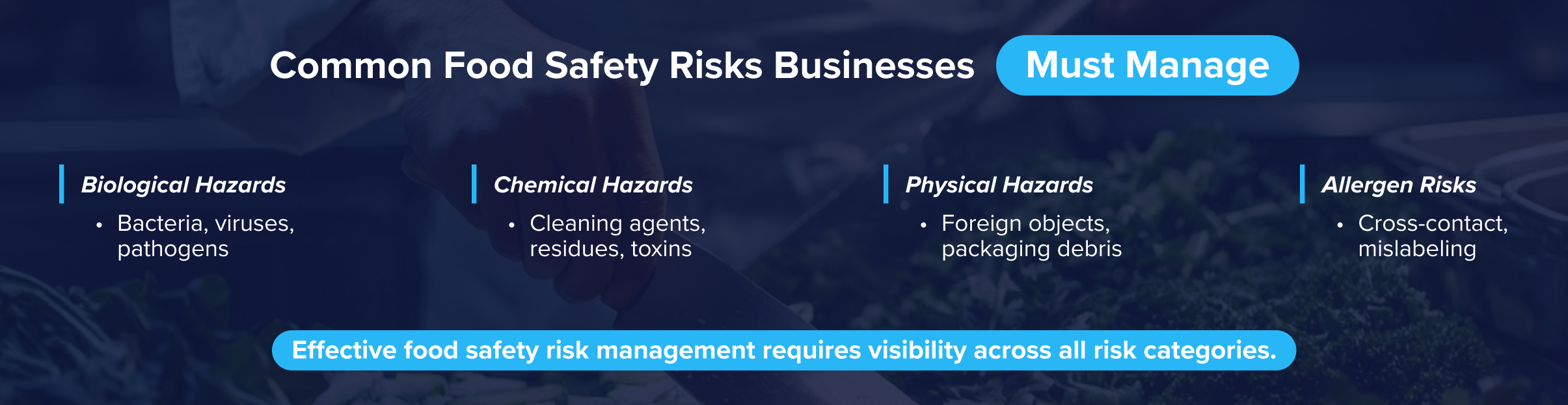
Biological Hazards (Bacteria, Viruses, Pathogens)
These include germs that make people sick from eating. Biological risk goes up when food is stored at the wrong temperatures, not cooked enough, or contaminated with other foods.
Chemical Hazards (Cleaning Agents, Residues, Toxins)
Improper use of sanitizers, pesticide residues, or the formation of toxins during storage and handling can all lead to chemical contamination.
Physical Hazards (Foreign Objects and Contaminants)
Equipment failure or mistakes in handling can let foreign materials like metal fragments, plastic, glass, or packaging debris get into food.
Allergen Cross-Contact and Mislabeling Risks
Exposure to allergens is still one of the most dangerous things that can happen in food service. Cross-contact in prep areas or wrong labels can cause reactions that could kill you.
Supply Chain and Supplier-Related Risks
Supply chains today are very complicated. The overall risk to food safety is affected by where the ingredients come from, how they are transported, and how well the suppliers follow the rules. Weak oversight at any point in the chain makes things more dangerous.
Core Principles of Food Safety Risk Management
Hazard Identification and Analysis
The first step is to find possible dangers at every stage, from getting the food and receiving it to storing it, preparing it, and serving it.
Risk Assessment Based on Likelihood and Severity
Not all risks are the same. To set the right priorities for controls, good food safety risk management looks at both the likelihood and the effect.
Preventive Controls and Mitigation Measures
Standards for cooking temperatures, sanitation procedures, supplier audits, and allergen segregation processes are all examples of preventive controls.
Monitoring, Verification, and Continuous Review
Monitoring makes sure that controls work as they should. Verification activities make sure that procedures are always followed and work.
Documentation, Communication, and Accountability
Risk management programs can’t show that they are following the rules or being consistent without documentation. Clear communication and clear responsibilities make it easier for teams to get things done.
Food Safety Risk Management Frameworks and Standards
HACCP (Hazard Analysis and Critical Control Points)
HACCP is a structured, preventive system that is used all over the world to find hazards and set up critical control points. It is the basis for many programs that help manage food safety risks.
FSMA and Regulatory Risk-Based Approaches
New rules put more emphasis on preventing problems than on fixing them. Structured food safety risk management principles and risk-based preventive controls go hand in hand.
International Food Safety Standards and Guidelines
International standards like ISO-based frameworks or GFSI-recognized schemes may also be followed by global food operations. These standards include risk assessment and preventive controls as part of their requirements.
Key Strategies for Effective Food Safety Risk Management
Strengthen Supplier Approval and Oversight
Supplier verification programs should have standards for documentation, performance tracking, audit reviews, and qualification criteria. Without structured oversight, it can be hard to control risks that come from suppliers.
Train Employees on Food Safety Risks and Controls
No matter how strong a system is, it won’t work if it’s not used correctly. Employees learn about biological, chemical, and allergen risks and how to avoid them through ongoing training.
Prevent Cross-Contamination and Allergen Exposure
Controlled storage, color-coded tools, clear labeling, and separate prep areas lower the risk of cross-contact and contamination.
Implement Strong Cleaning and Sanitation Programs
Structured sanitation protocols, verification logs, and standards for accountability are all very important parts of managing food safety risks.
Conduct Regular Risk Assessments and Audits
Risk environments change over time. Regular assessments help organizations find new weaknesses and make changes to their controls before they are needed.
Tools and Technology That Support Food Safety Risk Management
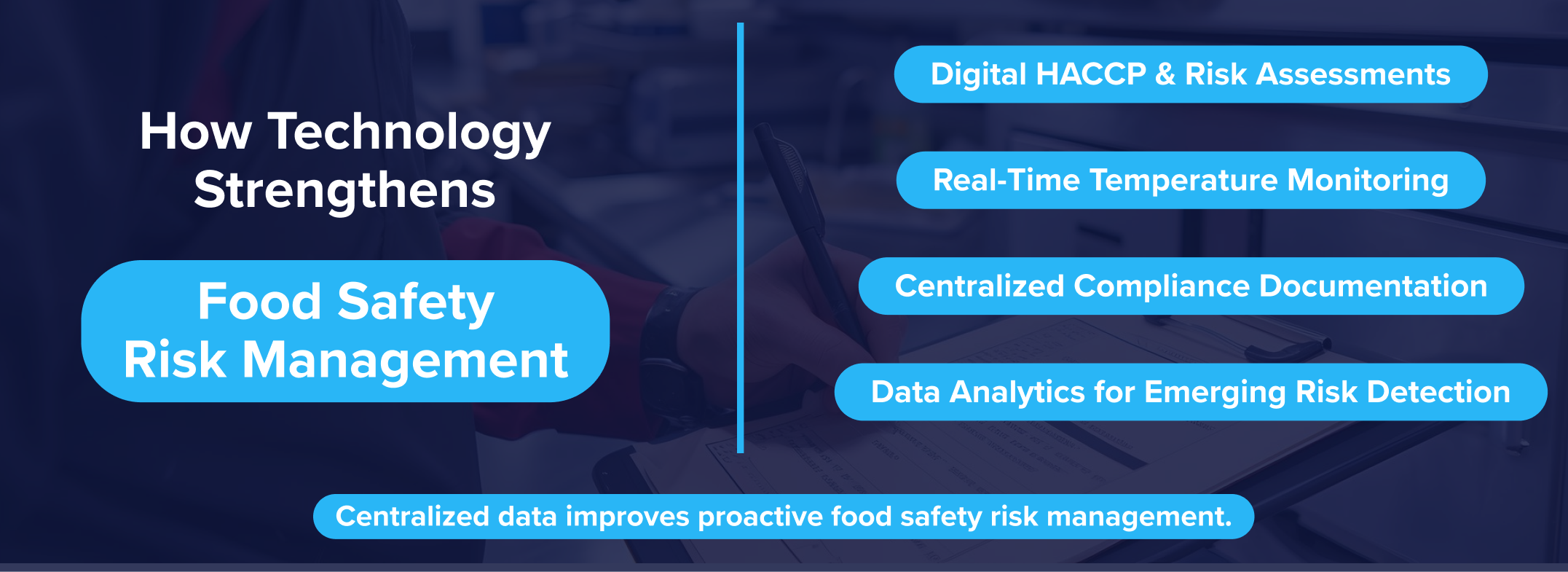
Digital Risk Assessments and HACCP Management Tools
Digital platforms make it easier to keep track of hazards, take corrective action, and keep compliance records. Automated workflows make it easier to see what’s going on and lower the chance of mistakes.
Real-Time Monitoring and Temperature Tracking
Connected sensors and monitoring systems let you see the temperatures in cold storage, transport, and holding all the time, so you don’t have to rely on manual logs as much.
Centralized Documentation and Compliance Reporting
Centralized systems make sure that inspections are ready and that reports are the same at all locations.
Data Analytics for Identifying Emerging Risks
Analytics tools can show patterns across locations, suppliers, and categories, which lets businesses see risks before they happen instead of after they happen.
Centralized data platforms give multi-unit and supply chain-focused businesses the visibility they need to consistently manage food safety risk across the whole company.
Managing Food Safety Risks Across the Supply Chain
Food safety risk management doesn’t end at the door to the kitchen. It goes up to suppliers and down to distribution partners.
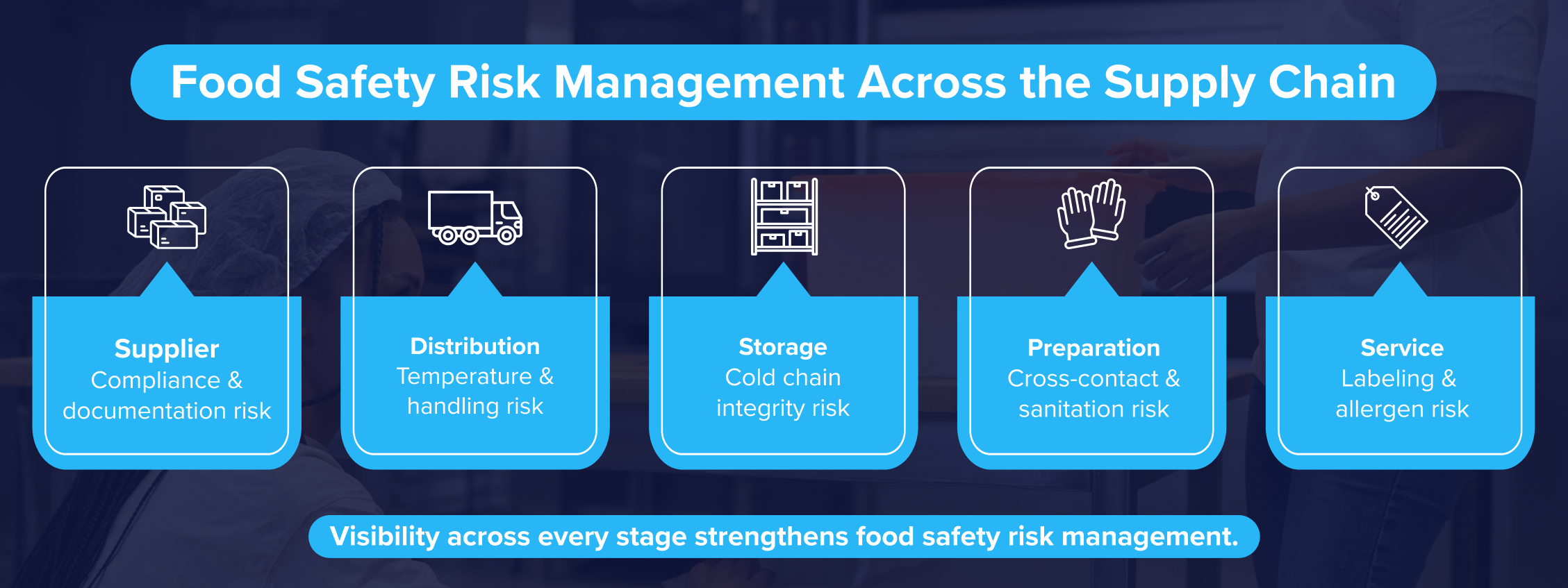
To effectively reduce supply chain risks, you should:
- Keeping an eye on how well suppliers are doing
- Seeing compliance with contracts
- Tracking distribution
- Standardized paperwork for food safety
- Data consistency across locations
Risk gaps can stay hidden if you can’t see across purchasing and supplier networks.
Common Mistakes in Food Safety Risk Management
Treating Risk Management as a One-Time Exercise
Managing food safety risks must be an ongoing process. In dynamic environments, yearly reviews are not enough on their own.
Incomplete Hazard Identification
Ignoring how to handle allergens, how different suppliers can be, or the risks of cross-contact leaves gaps in the system.
Poor Documentation and Monitoring
It can’t be checked if it isn’t written down. Incomplete records make it harder to follow the rules and defend yourself in court.
Inconsistent Training and Enforcement
Policies that aren’t enforced lead to uneven implementation and more exposure.
Final Thoughts
It is no longer possible to avoid managing food safety risks. It is a strategic must that keeps guests safe, protects brands, and makes operations more resilient.
Companies that use structured frameworks, disciplined execution, and technology to make things more visible are better able to lower the number of incidents, avoid recalls, and keep the trust of regulators.
Centralized data and supplier visibility tools are becoming more important for improving food safety risk management across the whole business in environments that are complicated, have many units, and are driven by the supply chain.
FAQs
What is the difference between food safety and food safety risk management?
Food safety means the steps that make sure food is safe to eat. Food safety risk management is the planned, risk-based way to find, evaluate, and reduce dangers before they hurt someone.
How does HACCP support food safety risk management?
HACCP gives you a structured way to look for and control hazards. It finds important control points and sets up ways to keep an eye on them. This is a key part of programs for managing food safety risks.
What are the biggest food safety risks for restaurants?
Biological contamination, cross-contact with allergens, not controlling the temperature properly, not cleaning properly, and variability among suppliers are all common risks.
How often should food safety risks be reviewed?
You should look over your risk assessments on a regular basis and whenever there are major changes to how you do business, like changes to the menu, suppliers, equipment, or rules.
How can technology improve food safety risk management?
Technology makes food safety risk management more proactive and consistent across locations by improving visibility, automating monitoring, centralizing documentation, and using data analytics to find new risks.