

If you’re in charge of a large-scale foodservice brand or restaurant chain, you know that risk isn’t just an occasional bump in the road – it’s a constant companion. From equipment failures at the busiest times to minor food-safety slip-ups, unexpected staffing gaps, payment fraud, and the ever-present threat of social media reputation hits, the list of potential problems is long. This is where Ai for risk management in hospitality truly shines, acting as a practical game-changer. It empowers you to identify small issues before they escalate into brand-threatening crises, helps slash unnecessary costs, and keeps your guests and operations safe across hundreds or even thousands of locations.
Role of AI for Risk Management in Hospitality
AI’s main job is making sense of the chaos. It pulls together data from POS systems, kitchen equipment, schedules, guest feedback, and payments, then turns it into clear signals teams can act on.
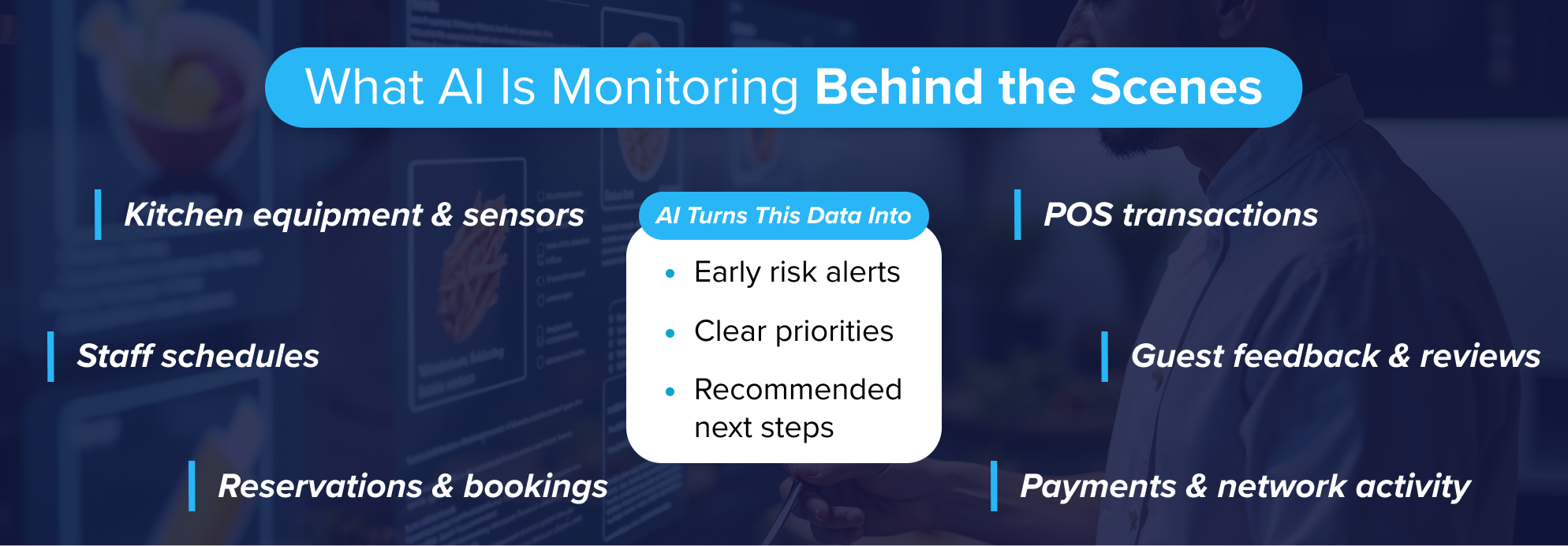
For big restaurant brands, that centralized view matters. AI catches patterns and red flags across locations that one manager would never see, like a cooler about to fail, food temps drifting, or a suspicious transaction. It doesn’t replace people. It just gives them the right alerts and next steps so problems get fixed faster and more consistently.
Traditional Risk Management vs. AI-Driven Risk Management in Hospitality
Risk management used to be reactive. Problems showed up during audits, through guest complaints, or after something broke, spoiled, or shut down a location. How it got fixed depended on the manager, the process they remembered, and how busy the day was.
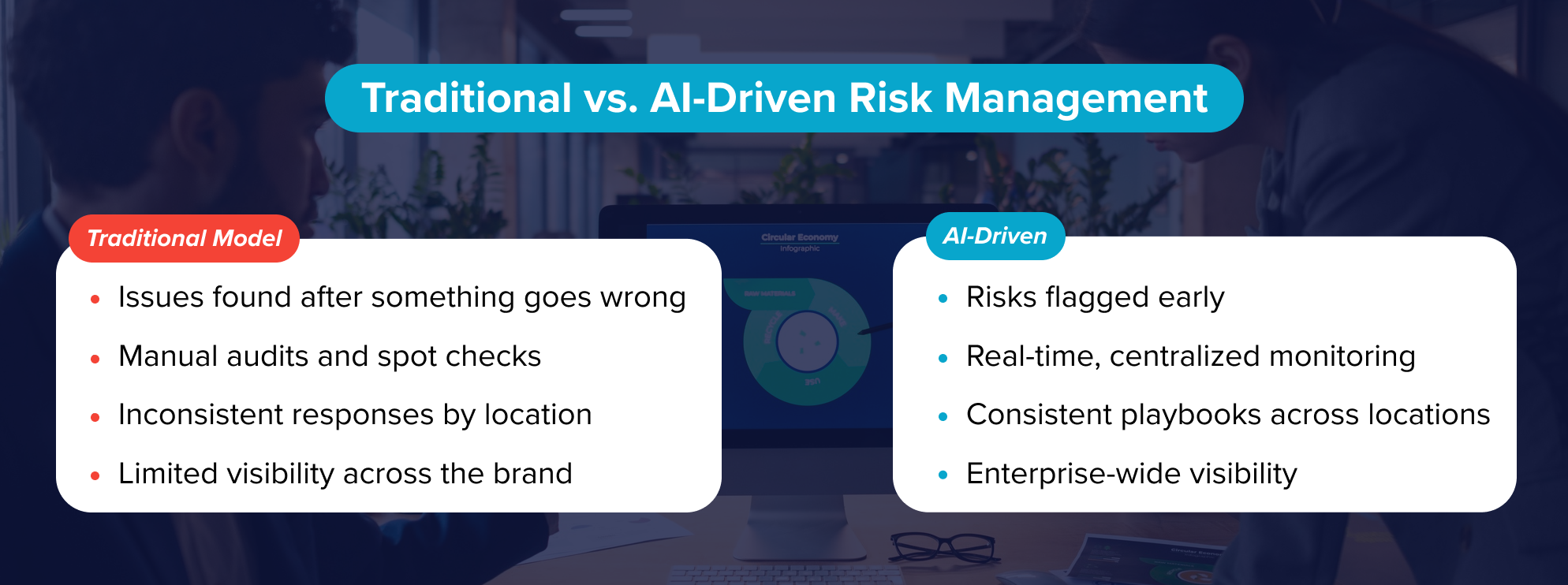
AI changes that dynamic. Instead of waiting for issues, it flags risks early using real operational data and applies the same response across every location. Fewer surprises. More consistency. Less chaos for managers. For large brands, that shift matters. Manual processes don’t scale, and gaps get expensive fast. AI strengthens coverage across the operation without adding more work to already stretched teams.
Why AI Is Critical for Modern Hospitality Risk Mitigation
Today’s restaurant world moves at warp speed and everything’s linked up tighter than ever. You’re juggling tricky supply chains, third-party delivery apps, digital payments, and a flood of customer data—all of which crank up your risk exposure big time.
AI steps in as your must-have because there’s just too much data flying around, and problems can explode in seconds. No way can you (or your team) watch every signal manually across dozens of locations. Think about a walk-in cooler crapping out right in the middle of lunch rush—disaster strikes fast. Plus, risks chain-react: short-staffed shift leads to long waits, bad reviews, and tanking sales.
AI-powered risk management in hospitality connects all these dots, so you can zero in on what really counts for protecting your brand.
Key Benefits of AI for Risk Management in Hospitality
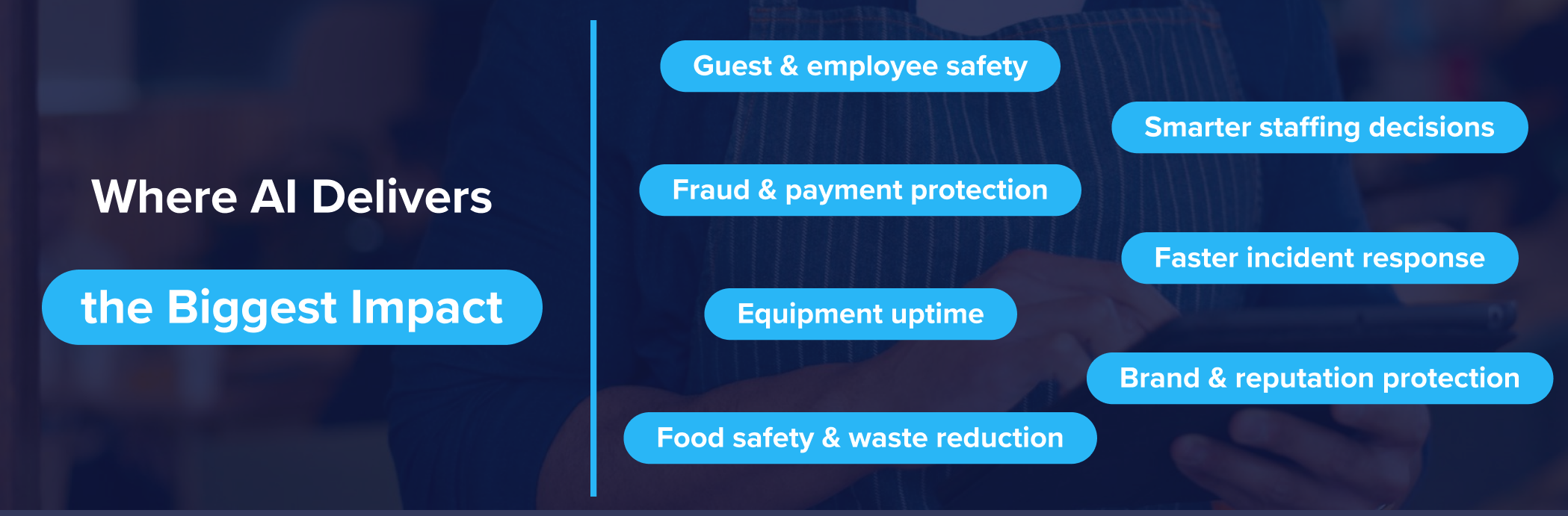
If you’re looking to scale your restaurant empire with rock-solid, safer operations across hundreds of locations, AI for risk management in hospitality packs a massive punch—delivering way more value than you’d expect. We’ve broken it all down below into bite-sized explanations and handy checklists, designed for quick reading (SEO-friendly!) and easy rollout in your business.
Enhanced Physical Security & Guest Safety
AI spots unusual activity via cameras and access logs before it becomes a problem. For chains, get faster, consistent alerts and documentation. Quick wins include piloting smart cameras at busy spots and automating after-hours alerts.
Advanced Cybersecurity & Fraud Prevention
Think of AI as your vigilant digital gatekeeper, constantly scanning payments and login attempts for anything that seems a little… off. It’s like having an expert eye catching potential fraud before it even gets a chance to cause trouble. For restaurant chains, this means a stronger defense against security breaches, fewer costly chargebacks, and the ability to see the bigger picture when it comes to fraud trends across your entire network. A simple way to start is by adding AI-driven scoring directly into your payment systems – you’ll see the benefits almost immediately.
Predictive Maintenance for Equipment Failures
AI watches sensor data to guess when your fridge or oven will break down, so you can fix them before they get too busy. Fewer repairs and less downtime are two benefits. Put sensors on important equipment in busy stores as a quick win.
Smart Staffing Optimization for Operational Risk
AI predicts demand (sales, weather, events) to recommend the best number of staff. This makes the food safer and makes fewer mistakes. For quick wins, optimize schedules for a region and combine forecasts with cross-training data.
Proactive Crisis & Reputation Management
AI monitors online chatter and incidents, flagging trends and suggesting responses. This allows for faster, unified PR that saves your brand image. Alert on sentiment spikes and build quick-response playbooks for quick wins.
Improved Food Safety & Waste Reduction
AI links temperature, inventory, and sales data to flag spoilage risks and reduce waste. This leads to safer food and lower costs. Monitor coolers at high-volume sites and automate corrective checklists as a quick win.
Real-Time Threat Detection & Incident Response
AI fuses various data points into high-confidence alerts, routing them instantly. This means shorter fix times and fewer cascading problems. Set high-confidence alerts and run drills with automated routing for quick wins.
Data-Driven Risk Forecasting & Decision-Making
AI analyzes enterprise trends to predict future risks (supply, region, seasonal). This enables smarter planning and better resource allocation. Share quarterly risk maps and prioritize store visits based on forecasts for quick wins.
Challenges and Considerations When Implementing AI for Risk Management
Implementing AI for risk management in hospitality isn’t just about adopting new technology; it requires a strategic approach to address potential hurdles and ensure successful integration. Here’s a breakdown to make it more conversational:
Data Privacy and Regulatory Compliance
- Privacy First, Always: Think of it like this: encrypt your data like a secret message, both when it’s being sent and when it’s stored. Give access only to those who absolutely need it, and whenever possible, use data that’s been anonymized or grouped together so it can’t be traced back to individuals.
- Know the Rules: Make sure you’re playing by the rules. This means sticking to payment card industry standards (like PCI DSS) for payments, local health and safety codes, and any privacy laws in the regions you operate, especially if you’re in Europe and need to consider GDPR.
- Easy Audits: A helpful tip is to keep your audit logs and data retention policies straightforward and well-documented. This makes compliance checks a breeze instead of a nightmare.
Algorithmic Bias and Ethical Concerns
- Data Tells the Story: AI learns from the data you give it. If that historical data has blind spots or skewed patterns, your AI’s suggestions and flags will likely be biased too.
- Set Up Safeguards: It’s important to check if the AI is being fair, understand why it’s making certain decisions (explainability is key!), and have humans review tricky outlier cases.
- Smart Training: To prevent the AI from only understanding one type of market or operation, make sure your training data includes information from a variety of locations and different times of year.
Balancing Automation with Human Interaction
- Don’t Overwhelm with Alerts: Fine-tune how often alerts are triggered, and perhaps start by focusing on the ones the AI is most confident about to avoid alert fatigue.
- Actionable Info, Not Just Noise: When automation kicks in, it should give you clear information and tell you what to do next, not just bombard you with alerts.
- People Still Matter: Always keep human oversight for complex issues that need more nuanced judgment. The goal is for AI to help people make better decisions, not to take over completely.
By tackling these points head-on, you’ll make your AI implementation much smoother and more effective.
From Firefighting to Foresight
For large foodservice brands, AI in risk management isn’t about chasing the next big tech trend. It’s about fewer bad surprises. Fewer shutdowns. Safer kitchens. Catching fraud and issues early so guests never feel the impact.
The smartest teams start small. They use AI where problems already cost real time and real money, prove it works, then expand. The goal isn’t more alerts, it’s better ones. If it doesn’t help someone take action, it’s just noise.
When it’s done right, risk management stops being reactive. You’re not scrambling after something breaks or shows up on the P&L. You’re preventing issues before they disrupt service, which makes the operation steadier, more scalable, and a whole lot easier to manage.
FAQs
Can AI prevent fraud and cyberattacks in hotels?
AI isn’t a magic shield that blocks every threat, but it’s very good at spotting trouble early. It can flag odd transactions, unusual login behavior, or activity that just doesn’t look right long before a human would catch it. When AI is layered on top of the basics like system updates, network controls, and PCI compliance, it gives teams a much stronger chance to stop issues before they turn into full-blown incidents.
Is AI risk management suitable for small and mid-sized hotels?
Yes, and it’s a lot more accessible than most people think. Many AI tools today are built as SaaS or managed services, which means you don’t need a massive IT team or a data scientist on staff. The smartest approach is to start with one or two use cases where the payoff is clear, like reducing fraud or monitoring equipment that’s expensive to replace when it fails.
What types of risks can AI identify in hospitality operations?
AI is especially useful anywhere data, sensors, or systems are already in place. That includes things like:
- Physical security concerns, such as loitering or break-ins
- Equipment issues, including HVAC and refrigeration failures
- Food safety risks and potential spoilage
- Payment fraud and identity misuse
- Staffing gaps and operational slowdowns
- Supply chain disruptions and reputation-related risks
If there’s a digital footprint or signal behind the issue, AI can usually help bring it to the surface faster.
Does AI replace human risk management teams?
Not even close. AI handles the heavy lifting when it comes to monitoring, prioritizing alerts, and managing routine responses. People are still essential for judgment calls, complex problem-solving, vendor conversations, and anything involving legal or ethical decisions. Think of AI as giving your team better tools, not replacing them.
What is the cost of implementing AI for hospitality risk management?
It depends on how far you go. Small pilots focused on a handful of locations or risks are often affordable and cloud-based. Larger rollouts across an entire portfolio take more investment, especially when it comes to integrating data and training teams. That said, many operators start seeing real payback within six to eighteen months through less downtime, fewer fraud losses, reduced waste, and smoother labor operations.