
If you’ve ever received a delivery that didn’t look, feel, or smell right, you already know this: transportation for food isn’t just logistics; it’s risk management.
From produce arriving wilted to proteins showing up out of temp, even small breakdowns in transportation can hit your margins, your menu, and your reputation.
The good news? When transportation for food is done right, it protects product quality, keeps operations running smoothly, and helps you stay ahead of food safety risks before they turn into real problems.
The Role of Food Transportation in the Supply Chain
Transportation for food is what connects every part of the supply chain.
It’s the bridge between suppliers, distributors, and your kitchen. And when that bridge isn’t solid, everything downstream feels it.
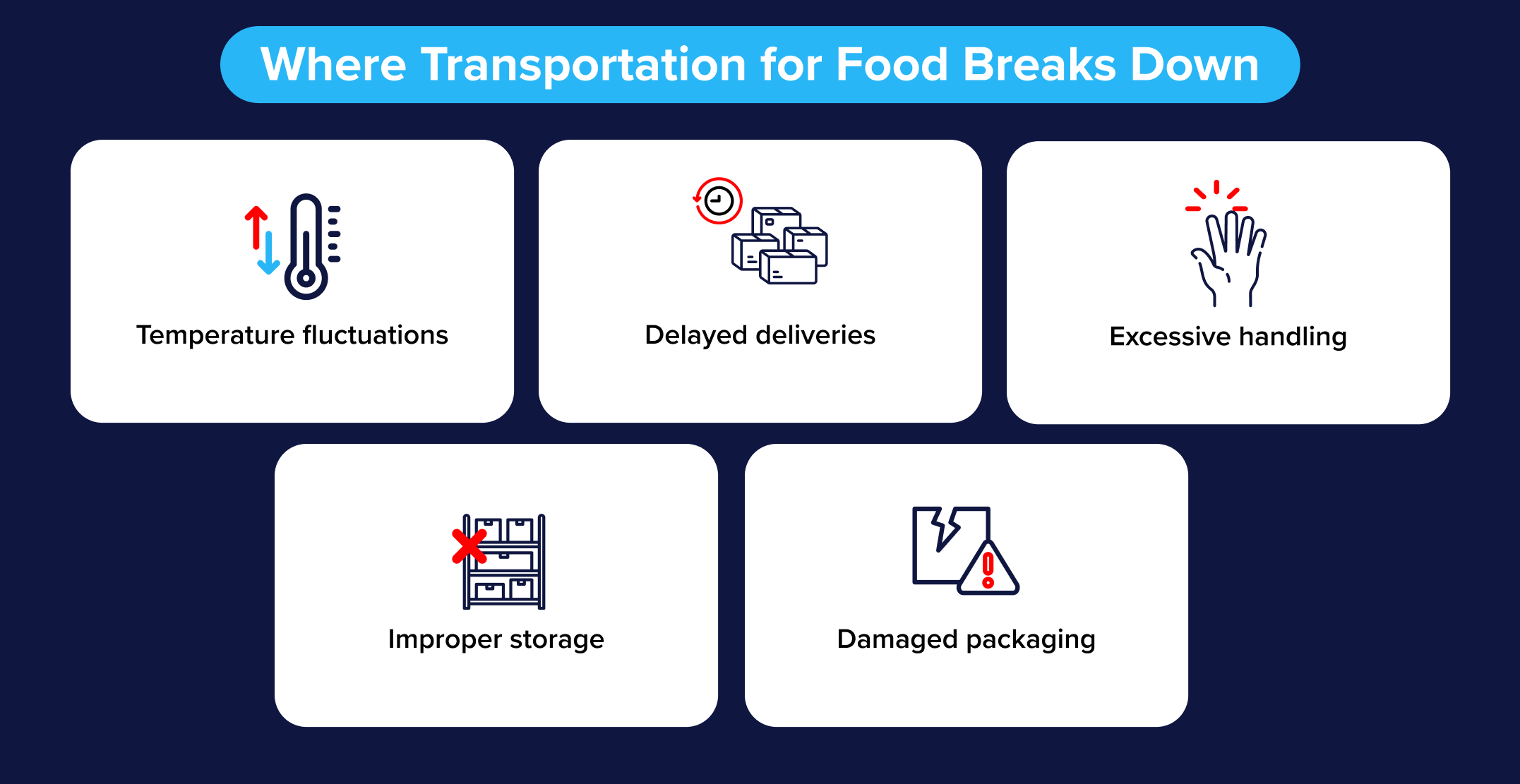
Delays, temperature issues, or mishandling during transport can lead to:
- Shortened shelf life
- Inconsistent product quality
- Increased waste
- Unexpected cost increases
For operators, transportation for food isn’t something you see every day—but you feel the impact of it every time a delivery hits your back door.
From Farm to Fork: How Food Transportation Works
Transportation for food doesn’t happen in one step. It’s a chain of handoffs, and every step matters.
Farm and Production Facilities
It starts at the source. Whether it’s fresh produce, meat processing, or packaged goods, products are prepped and staged for transport.
At this stage, proper handling and initial temperature control set the tone for everything that follows.
Warehousing and Distribution Centers
From there, products move into storage and distribution.
This is where transportation for food becomes more complex:
- Products are consolidated
- Loads are organized by route
- Temperature zones are maintained
One misstep here can affect multiple deliveries at once.
Retail and Last-Mile Delivery
The final leg is where things get real for operators.
Last-mile transportation for food is often the most vulnerable:
- More stops
- More door openings
- More handling
It’s also where consistency matters most—because this is the product you actually receive and serve.
Types of Food Transportation
Not all transportation for food works the same way—and if you’ve ever wondered why one delivery shows up perfect and the next one feels a little off, this is usually where the difference starts.
Different products move differently. And how they move has a direct impact on what you end up receiving.
Road Transportation (FTL, LTL, PTL, Shared Loads)
This is where most transportation for food happens, especially for day-to-day deliveries.
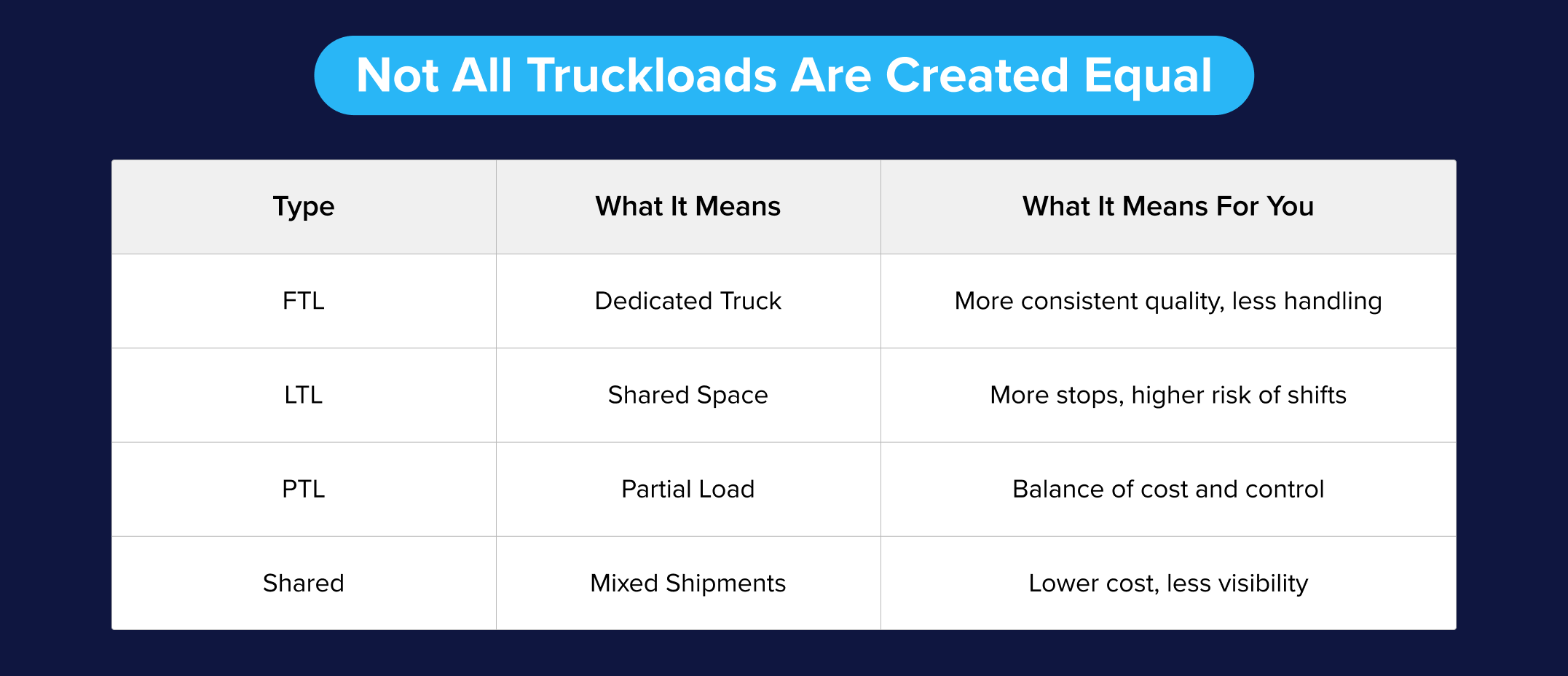
- FTL (Full Truckload): Your product is the main focus. Fewer stops, less handling, and typically more consistent quality.
- LTL (Less Than Truckload): You’re sharing space. That means more stops, more movement, and more opportunities for things to shift or warm up.
- PTL (Partial Truckload): A mix of both. Not fully dedicated, but not bouncing around like LTL either.
- Shared Loads: Cost-effective, but you’re trading some control for those savings.
If you’ve ever noticed certain orders arrive in better shape than others, there’s a good chance the load type played a role.
Refrigerated and Frozen Food Transportation
This is where transportation for food gets serious.
Cold chain isn’t just about keeping things cold—it’s about keeping them consistently cold the entire time. One temperature swing during transit can shorten shelf life before the product even hits your walk-in.
For operators, this is the difference between a product that holds… and a product you’re trying to use faster than planned.
Dry Food Transportation
Dry goods might seem low-risk, but they still need attention.
Even without refrigeration, transportation for food in this category still has to account for:
- Humidity is creeping into the packaging
- Crushed or damaged cases
- Exposure during loading and unloading
You don’t notice these issues until you open a case and realize something’s off.
Bulk Food Transportation (Liquid and Powder)
Think oils, dairy, flour—products that move in large volumes.
This type of transportation for food relies on specialized tanks or containers, and cleanliness matters a lot here. There’s no buffer between the product and the equipment, so if something isn’t properly cleaned, it carries over.
It’s efficient, but there’s no room for shortcuts.
Air Freight for Perishable Foods
This is the “we need it now” option.
Air transportation for food is typically used for high-value or highly perishable items where timing matters more than cost. It’s fast, reliable, and not something most operators deal with daily—but when you do, you feel the difference.
Ocean Freight and Refrigerated Containers
For international sourcing, this is the long game.
Products travel in refrigerated containers over extended periods, which means transportation for food has to stay consistent for days or even weeks.
When it works, it’s seamless. When it doesn’t, the issue started long before the product ever reached your supplier.
Importance of Food Transportation Safety
Most operators don’t think about transportation for food until something goes wrong.
A delivery shows up out of temp. Produce looks tired before it even hits prep. Or worse, you’re questioning whether something is safe to serve.
That’s when it clicks—what happens during transportation matters just as much as what happens in your kitchen.
Maintaining Food Quality and Freshness
You can order the best product in the world, but if transportation for food isn’t handled right, it won’t show up that way.
Temperature swings, delays, and excessive handling all chip away at quality. Sometimes it’s obvious. Other times, it shows up a day or two later when the shelf life is shorter than expected.
Preventing Contamination and Spoilage
There’s a lot of movement during transportation for food, and every touchpoint introduces risk.
- Products stored too close together
- Equipment that wasn’t properly cleaned
- Packaging that gets compromised in transit
None of that is visible on the invoice—but you deal with it when it hits your operation.
Meeting Food Safety Regulations
There are strict rules around transportation for food, and for good reason.
If something goes wrong, it doesn’t just impact one order. It can affect multiple locations, multiple suppliers, and your ability to stay compliant.
Reducing Food Waste and Losses
Every time you have to reject a delivery or rush to use a product before it turns, that’s money out the door.
Strong transportation practices help protect your inventory before it even gets to you.
Best Practices for Safe Food Transportation
You might not control the trucks, but you can absolutely set the standard for what you accept.
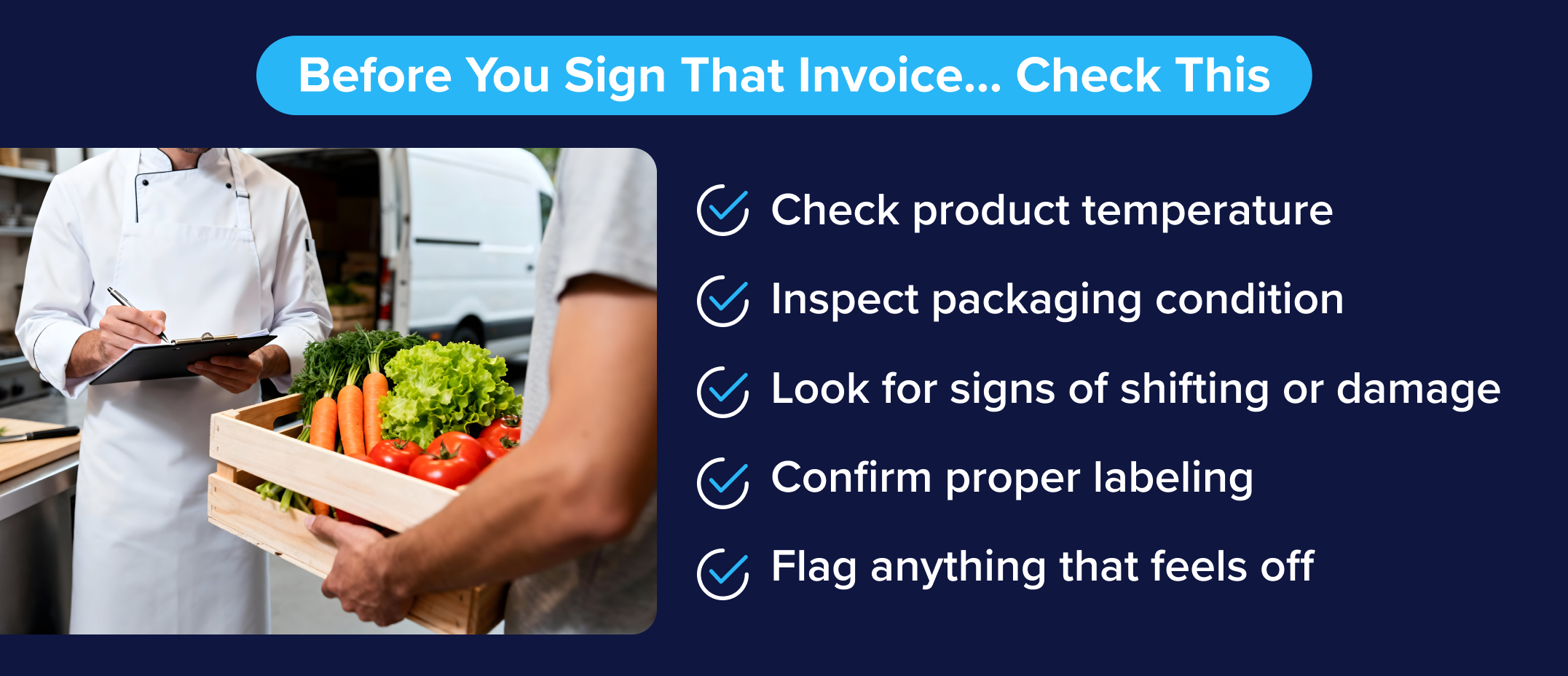
The operators who stay consistent are the ones who pay attention here.
Maintaining Correct Temperature Ranges
This is the big one.
If transportation for food isn’t holding the right temperature, nothing else really matters.
- Check temps at delivery
- Don’t rely on assumptions
- Call out anything that feels off
Catching it early is a lot easier than dealing with it later.
Using Proper Packaging and Insulation
Packaging does more heavy lifting than people realize.
It helps protect against:
- Temperature loss
- Damage during transit
- Cross-contamination
If packaging looks compromised, it’s worth a second look at the product inside.
Cleaning and Sanitizing Vehicles and Containers
Sanitation doesn’t stop at your back door.
Transportation for food should involve clean, well-maintained equipment every step of the way. If something looks questionable, trust your gut.
Securing Loads to Prevent Damage
You can tell when a load wasn’t secured properly.
Boxes are crushed. Items shift. Product arrives looking like it took a hit on the way over.
That’s not just cosmetic—it can impact usability and safety.
Training Drivers and Handling Staff
The people handling your product matter just as much as the process.
Well-trained drivers and warehouse teams help keep transportation for food consistent, especially when things get busy or routes get tight.
Food Transportation Safety Regulations and Compliance
There’s a reason transportation for food comes with a lot of rules—it directly impacts food safety.
And while operators aren’t managing compliance on the supplier side, it still affects what shows up at your door.
HACCP Principles in Transportation
HACCP is all about identifying where things can go wrong and controlling them before they do.
During transportation for food, that usually comes down to:
- Temperature control
- Clean equipment
- Proper handling
Simple in theory, but it requires consistency.
FDA and FSMA Transportation Requirements
FSMA set clear expectations around transportation for food, especially when it comes to sanitation and temperature management.
It’s not optional, and it’s not something suppliers can afford to overlook.
Compliance Documentation and Audit Readiness
This is where documentation comes into play.
Suppliers and carriers should be able to show:
- Temperature logs
- Cleaning records
- Handling procedures
If something goes wrong, that paper trail matters.
Managing Regulatory Risk Across Supplier Networks
The more suppliers and carriers involved, the harder it is to keep everything consistent.
That’s where visibility into transportation for food becomes important—because you can’t fix what you can’t see.
Technology’s Role in Modern Food Transportation
This is where things have shifted in a big way.
Operators used to rely on trust and gut checks. Now, there’s actual data behind transportation for food.
Temperature Monitoring and Cold-Chain Visibility
Real-time temperature tracking takes the guesswork out.
Instead of hoping everything stayed in range, you can see exactly what happened during transit.
Shipment Tracking and Route Optimization
Knowing where your delivery is—and when it’s actually arriving—helps you plan better.
It also helps explain those “what happened to this truck?” moments.
Supplier Compliance and Digital Documentation
Digital records make it easier to track what’s happening across suppliers.
No more chasing down paperwork when something doesn’t add up.
Network-Level Visibility Across Carriers
When you’re working with multiple suppliers, transportation for food can feel like a black box.
Technology opens that up, giving you a clearer view of performance across your entire network.
Common Mistakes to Avoid in Food Transportation
Even strong operations run into issues here—it’s just part of the process.
The goal is to catch patterns before they become bigger problems.
Poor Temperature Monitoring
If no one’s checking temps, issues slip through.
And once the product is in your cooler, it’s already your problem.
Inadequate Sanitation Practices
It doesn’t take much for contamination risks to increase.
Unclean equipment or poor handling practices can undo everything upstream.
Lack of Traceability and Documentation
When something goes wrong, you need to know where it happened.
Without documentation, you’re guessing—and that slows everything down.
Improper Packaging and Load Handling
A lot of damage happens before the truck even leaves.
If products aren’t packed or secured correctly, they show up at delivery.
Limited Visibility into Carrier Performance
If the same issues keep happening and no one’s tracking them, nothing changes.
Visibility into transportation for food performance helps you spot trends and push for better consistency.
Conclusion
Transportation for food is one of those things that works quietly in the background—until it doesn’t.
And when it doesn’t, it shows up fast in your operation. Quality issues. Shortened shelf life. More waste than expected.
The operators who stay ahead aren’t just focused on what they order. They’re paying attention to how it gets to them.
Because when transportation is consistent, everything else gets easier.
FAQs
What is food transportation?
It’s basically everything that happens between where food is produced and when it shows up at your door. Transportation for food covers how products are moved, handled, and stored along the way so they arrive in usable condition—not just technically “delivered.”
Why is temperature control important in food transportation?
Because it doesn’t take much for things to go sideways. A short window out of temp during transportation for food can impact safety, but more often, you’ll notice it in quality first—shorter shelf life, weird texture, or product that just doesn’t hold as it should.
What are the main types of food transportation?
Most operators deal with road transportation for food day to day, but behind the scenes, it can include refrigerated trucks, dry goods shipments, bulk transport for things like oil or flour, plus air or ocean freight depending on where the product is coming from.
What is cold chain transportation?
Cold chain just means the product stays within a specific temperature range the entire time it’s moving. Not “it left cold,” not “it arrived cold”—but that it stayed consistent throughout transportation for food without those in-between fluctuations.
What regulations govern food transportation safety?
There are a few layers to it, but the big ones are FSMA and HACCP. They set expectations around how transportation for food should be handled—things like cleanliness, temperature control, and making sure there’s a clear process if something goes wrong.