
Inventory management isn’t just a back-of-house chore anymore, it’s one of the biggest levers foodservice operators have to control costs, reduce waste, and keep menus consistent. Whether you’re running a national restaurant chain, a healthcare dining program, or school foodservice, the goal is the same: get the right products to the right locations at the right time.
Simple in theory. A juggling act in practice.
Between fluctuating demand, supplier variability, labor pressures, and limited storage space, operators are constantly working to keep shelves stocked without tying up cash or risking spoilage. That’s where smarter, more strategic inventory optimization comes in.
Importance of Inventory Optimization in Foodservice
Optimized inventory helps you stay on top of your budget, avoid running out of stock, plan production better, and know how much food will cost. When inventory is the right size and is watched closely, operators:
- Cut down on waste from products that have expired or are too many.
- Stop running out of high-volume menu items that cost a lot of money.
- Make sure that the prep is always the same and that guests are happy.
- Get better at predicting demand to give you more buying power.
- Make it easier for corporate supply chain teams and unit-level staff to see what’s going on.
These gains are not just nice-to-haves in an industry with low margins; they are necessary.
Common Challenges in Foodservice Inventory Management
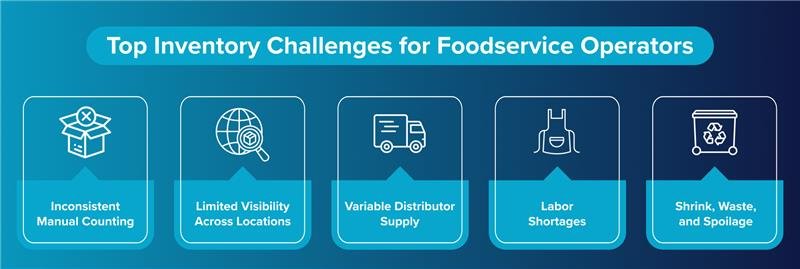
Foodservice teams have to deal with their own unique inventory problems, such as:
Inconsistent manual counting
Paper logs, siloed spreadsheets, and rushed end-of-day counts lead to inaccuracies.
Limited visibility across locations
Multi-unit brands often lack a unified view of stock levels and usage trends.
Variability in distributor supply
Operators must plan against fluctuating lead times, outages, and substitutions.
Labor shortages
Staff turnover makes it tough to maintain consistent inventory processes.
Shrink, waste, and spoilage
Incorrect ordering or poor timing can quickly translate to lost dollars.
Each challenge compounds the next, which is why structured inventory strategies matter.
Proven Strategies to Optimize Inventory Management
1. Automate Daily Inventory Tracking
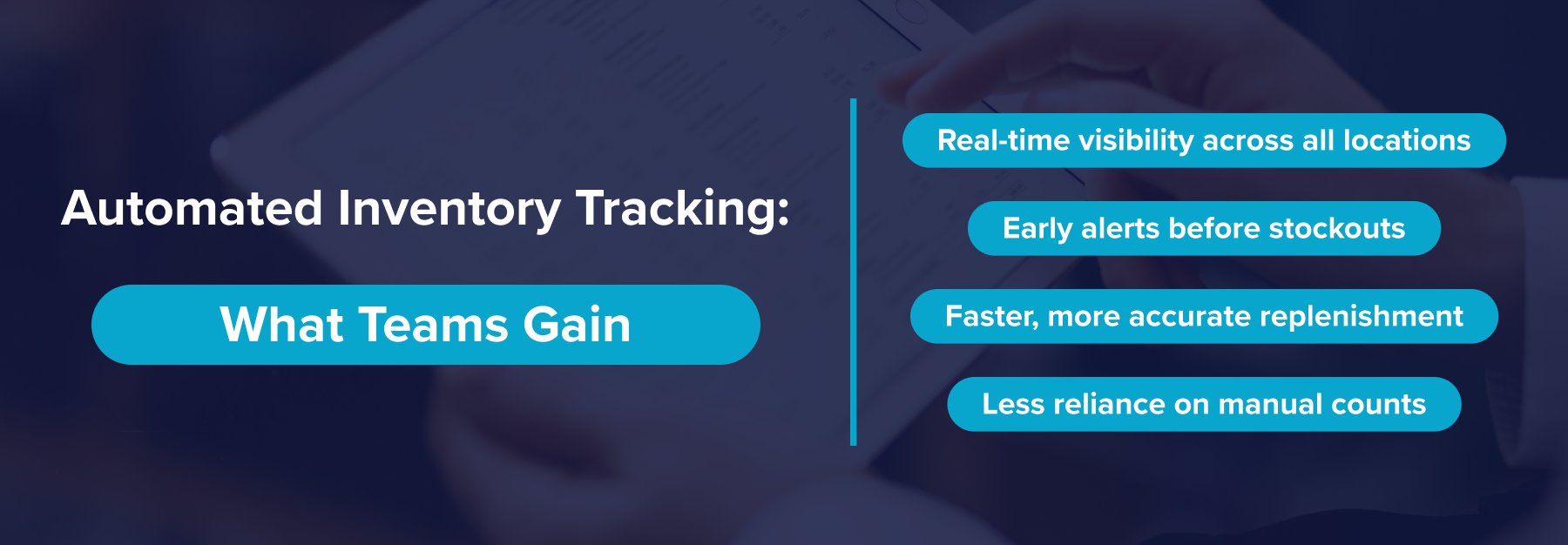
Manual counts only give snapshots. Automated or digitized inventory tracking provides near real-time visibility so teams can:
- See stock levels across all locations
- Identify items trending toward stockout
- Compare on-hand inventory to par levels
- Trigger replenishment before shortages occur
Modern systems allow operators to set custom alerts so the right people are notified when thresholds are hit — no more guessing, no more emergency runs to the distributor.
2. Strategic Planning with Historical Data
Historical inventory, usage, and distributor performance data is one of the most accurate predictors of future demand. When operators analyze trends such as seasonality, promotions, weather patterns, or supplier fill rates, they can:
- Adjust ordering proactively
- Smooth out over-purchasing
- Plan for menu changes
- Reduce waste and unpredictability
The more historical data operators use, the stronger their planning becomes.
3. Implementing Safety Stock Levels
Forecasting is useful, but nothing in the food service industry is 100% certain. Safety stock acts as a buffer when:
- Sales go up out of the blue
- Deliveries are late
- Suppliers are having trouble making things
- There are problems with transportation
The goal isn’t to overstock, but to create margin for error on essential SKUs so units can continue operating without panic or improvisation.
4. Employing ABC Analysis
ABC analysis helps operators prioritize their attention where it matters most:
- A-items: High-value or high-velocity items requiring close control
- B-items: Moderate-value items with steady usage
- C-items: Low-value or slow-moving items that require minimal oversight
This method creates clarity, structure, and more efficient use of labor for inventory tasks.
Best Practices for Foodservice Inventory Optimization
In addition to formal plans, high-performing operators use best practices like:
- Checking par levels on a regular basis to make sure they match how things are really used
- Standardizing inventory processes across units to cut down on differences
- Teaching teams how to count correctly and what to do to fix mistakes
- Working closely with the kitchen teams to make sure that the menu and inventory
- Keeping an eye on prep waste to see where ordering or portioning could be improved
When used across a network of multiple units, small improvements in efficiency add up quickly.

Role of Technology in Streamlining Foodservice Supply Chains
Technology has become one of the most important tools for modern inventory management. Advanced supply chain platforms give operators centralized visibility into:
- Distributor product availability
- On-hand inventory by location
- Forecasting models
- Usage trends
- Fill rate performance
- Order accuracy and reconciliation
With real-time insights, operators move from reactive problem-solving to proactive planning, and that’s when costs stabilize, waste shrinks, and supply chain decisions become more strategic.
How ArrowStream Helps You Take Control of Inventory
Today’s most successful operators rely on connected, data-driven systems to bring clarity to their supply chain. ArrowStream supports this approach by centralizing multi-location inventory visibility, historical data analytics, forecasting tools, and vendor performance insights in one platform, helping operators make faster, more confident decisions.
If you want to explore how better inventory visibility can support your supply chain strategy, ArrowStream is here to help. Click here to learn more.